Fire hoses and hose reels
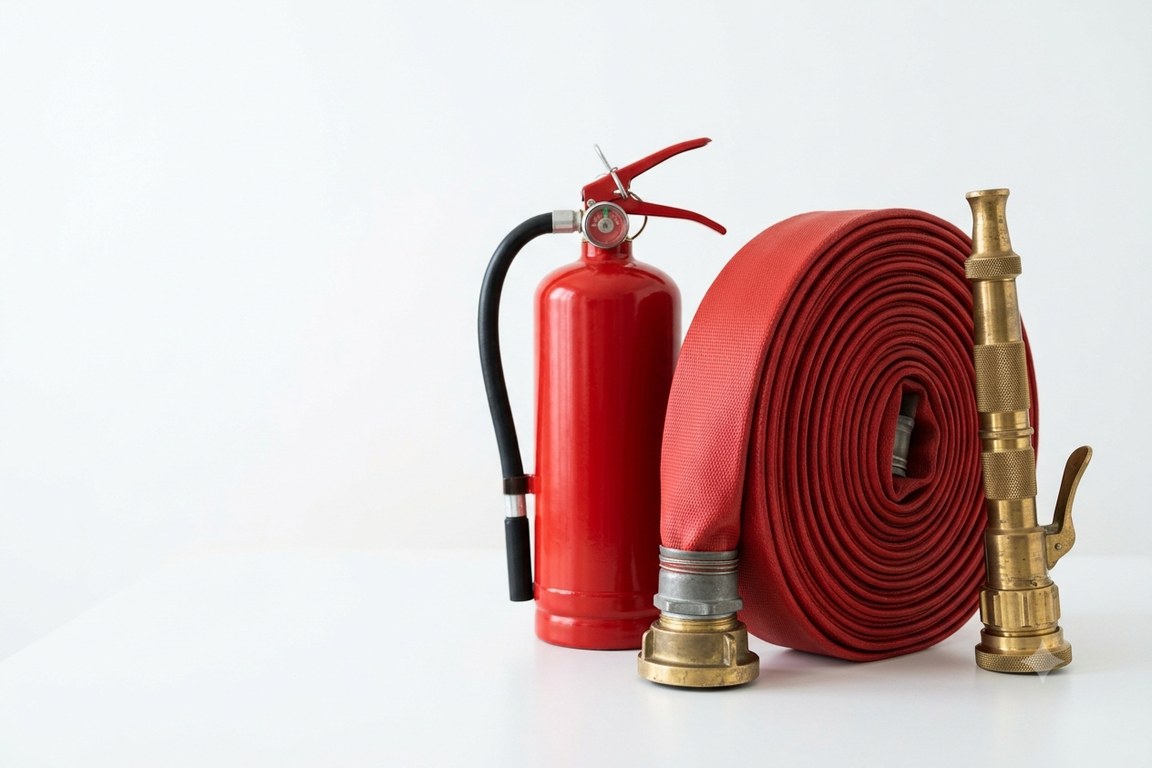
Layflat and semi-rigid hose, reels and cabinets. Diameter, layer construction, lining material and working pressure define the product.
Planning to export firefighting products to Saudi Arabia? We help review product functions, Saudi HS Codes, applicable fire-control regulations, test reports and certification requirements before shipment.
Send to scope a fire safety file:
Send the exact product description, intended use, Saudi HS code if available, manufacturer and technical specifications. Related items may need different classifications or certification routes.
Layflat and semi-rigid hose, reels and cabinets. Diameter, layer construction, lining material and working pressure define the product.
Portable and wheeled extinguishers and their extinguishing media, where the charge, the rating and the pressure vessel are assessed together.
Couplings, branch pipes, nozzles and adaptors. Connection standard and pressure rating carry the specification.
Blankets and related materials supplied for fire control, assessed against the standard for the material rather than for a device.
Cabinets, brackets, hydrant accessories and related items, which may be independently traded articles with their own classification.
A fire-control regulation exists — whether your device sits inside its scope is the question.
SASO publishes a Technical Regulation for Fire Control Materials and Equipment. Whether the exact device falls within its scope, and whether other sector-specific approvals apply alongside it, is confirmed per product rather than assumed from the fact that the item is used in firefighting.
Fire alarms, electrical detection systems and firefighting protective equipment may follow additional or different requirements. One SABER certificate covering every fire product in a catalogue is not something this page will promise.
The full Saudi HS code, the product specifications and the intended use together determine which technical regulation applies and which assessment route follows from it. No universal code is published here for the fire-safety family — see our HS code check.
Where the product is regulated, a Product Certificate of Conformity and shipment documentation may be required. For other products a different registration or declaration route may apply. Additional sector approvals or a factory assessment are discussed only once they are verified for the particular product — see PCoC versus SCoC for how the two certificates differ.
Three product families that are regularly submitted as one, and should not be.
A firefighting catalogue usually spans more than one regulatory world. The fire-control materials and equipment — hoses, nozzles, extinguishers, blankets — are one group. The electrical detection and alarm products are another, with their own requirements behind them. Protective clothing and equipment worn by firefighters is a third, assessed under the PPE regulation rather than as fire-control material — see PPE certification.
There is a fourth boundary worth knowing: the Saudi regulation covering pipes used in water, electricity and gas networks expressly excludes water pipes and accessories used in firefighting systems from its scope. Those items are screened separately rather than folded into a pipe file — see pipes, valves and fittings certification.
Import conformity is not project approval
Clearing a fire safety product into the Saudi market and having it accepted for a particular installation are separate questions, settled by separate parties. This page addresses import conformity; project and civil defence acceptance is confirmed with the responsible authority for the project.
A preliminary preparation list — the final evidence set is decided by the applicable regulation.
This is what lets an assessment start. The certification body and the applicable Saudi regulation determine the final technical evidence, and existing reports are not guaranteed to be accepted — what counts is whether they cover the product actually being supplied. See technical documentation review for how a file is checked before submission.
Send the product functions and the model list. We will separate the regulatory assessments before anything is applied for.
Five steps, from product details to shipment documentation.
Product name, function, specifications, photographs, the manufacturer and the Saudi HS code if you have it.
Establish whether the exact device falls within the fire-control regulation, within another route, or within more than one.
Check test reports, model coverage, labels, instructions and manufacturer consistency against what the route calls for.
Arrange testing, a factory assessment or other approvals only where the applicable scheme actually calls for them.
Coordinate with the authorized Saudi importer and the approved conformity assessment body, as applicable to the product.
Driven by how many regulatory groups the range breaks into.
The total depends on the SABER platform charges, the certification body’s review, any testing, an inspection where the scheme calls for one, and the agreed professional support. Timelines depend on the scope, the evidence and reviewer availability. On fire safety products, what usually moves the figure is a range that spans fire-control equipment and electrical detection at the same time.
We quote once the actual product has been reviewed, and we do not promise guaranteed approval or a fixed turnaround. See SABER certificate cost for how a quotation is itemized.
Six recurring issues in fire safety files.
Evidence issued against a different diameter, layer construction or lining than the hose being shipped. Check sizes, layers and materials together.
An extinguisher and an electrical detection panel submitted as one family. Their regulatory assessments are separated before anything is applied for.
Instructions absent or generic, where the product route expects authentic operating and maintenance information supplied with the device.
A working pressure claimed on the datasheet that the test records do not support. Reconcile the product and the evidence.
Cabinets, brackets and adaptors added to the consignment that were never part of the assessed range.
Hoses, extinguishers, nozzles and blankets are different products. One certificate across all of them is not something that can be promised in advance.
The parent service page, the adjacent categories, and the certificates a fire safety file is assessed toward.
Hose routes, alarm panels, factory audits, existing reports, what a PCoC covers and accessories.
The route has to be confirmed under the product and Saudi HS code classification that actually applies. SASO publishes a Technical Regulation for Fire Control Materials and Equipment, and whether a particular hose falls within its scope — and what the scope requires — is established before a route is chosen.
No. Fire alarms, electrical detection systems and control panels may follow additional or different requirements from fire-control materials and equipment. Submitting them as one product family is one of the more common ways a fire-safety file is delayed.
Only if the applicable conformity scheme requires it. It is not a general obligation across the category, and it is settled at the assessment stage rather than assumed. Where it applies it needs scheduling early — see our factory inspection page.
Only where they are accepted and where they cover the actual product and the relevant standards. A report for a different construction, diameter or rating does not transfer to the item being shipped, and acceptance is decided by the approved certification body.
No. A product certificate addresses what it was assessed for. Other applicable approvals and technical requirements still have to be checked for the device as supplied, and project or civil defence requirements are a separate question from import conformity.
Only when they fall within the accepted certification scope. Cabinets, brackets, couplings and adaptors are reviewed for what they actually are before being treated as part of the certified product.
Send your product details and existing technical documents. We will check the applicable Saudi requirements and prepare the next steps with the authorized parties.
Tell us the product function, intended application, specifications and model count. We reply within one business day with the likely route and what to send next.