SASO Certificate for Building Materials

Here they assess the factory, not only the sample

Construction products are permanent, load-bearing or fire-relevant, and Saudi Arabia assesses them accordingly. Expect consignment testing alongside the annual certificate, an assessment of the production site for several families, and a fire classification that is nobody's afterthought.

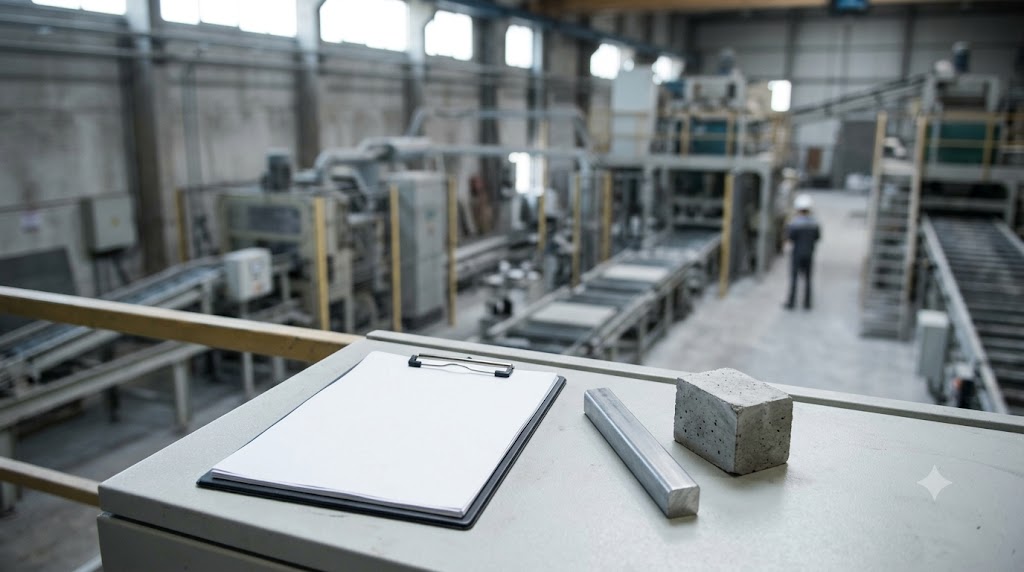
A control desk with blank charts and material samples on a plant floor

Send to scope a construction file:

  • Product datasheet
  • Declared grade or class
  • Saudi HS code
Scope a Construction File

What makes this category different

Six things that separate a construction file from a consumer goods file, and each one changes the plan.

The category sits high on the risk scale

Construction products are permanent, load-bearing or fire-relevant, so they are assessed harder than consumer goods. Expect a fuller technical file and, for several families, an assessment of the factory rather than only the product.

The production site is assessed, not just the sample

Where the scheme demands it, a conformity body looks at process control, raw material traceability and in-house testing at the works. A good sample from an uncontrolled plant does not carry a construction certificate.

Batch and consignment testing is normal here

Cement, steel, aggregates and several other families are commonly assessed per consignment as well as per product. Planning for testing at the shipment stage, not only once a year, is what keeps deliveries on programme.

Fire performance is its own requirement

Cladding, insulation, panels, doors and finishes carry reaction-to-fire or fire-resistance requirements with their own test methods. A structural or thermal result says nothing about them, and they are not interchangeable.

The Saudi Building Code sits behind the regulation

Conformity gets the goods through customs. The Saudi Building Code decides whether the consultant on site will accept them. Products specified against another code are often technically compliant and still rejected at the project.

Marking is part of the product

Grade, class, dimension, batch and origin marking on the product itself — rolled into rebar, printed on a pipe, stamped on a bag — is checked against the certificate. It is not a packaging matter in this category.

Where your product sits

Construction HS codes are wide, and the families inside them are assessed very differently from one another.

Cement, concrete and aggregates

Assessed on composition and strength class with consignment testing the norm. Among the most tightly controlled families in the Saudi market, and one where the mill certificate is read closely.

Steel reinforcement and structural steel

Rebar, sections, plate and mesh, assessed on grade, mechanical properties and chemistry. Mill test certificates are matched against independent results, and rolled-in marking has to correspond to the declared grade.

Pipes, fittings and valves

Water, drainage and gas systems in plastic, ductile iron and steel. Potable water contact brings a health requirement on top of the mechanical one.

Insulation and cladding

Thermal performance and reaction to fire assessed side by side. In this family the fire classification, not the thermal figure, is what most often decides whether a product can be used.

Tiles, sanitary ware and fittings

Ceramic and porcelain tiles, basins, cisterns, taps and showers, assessed on dimensional tolerance, water absorption, flow and durability. Water conservation requirements apply to several of these.

Doors, windows and glass

Safety glass, glazing units, frames and fire doors. Fire-rated assemblies are certified as assemblies, not as their components, which is a frequent and costly misunderstanding.

Paints, coatings and adhesives

Assessed on composition, restricted substances, durability and, for interior products, emissions. Chemical documentation is as central here as physical testing.

Electrical installation products

Conduit, trunking, cable, distribution equipment and wiring accessories that reach site as building materials but are regulated as electrical goods, under a different technical regulation.

From classification to the first delivery

Five steps. The declared class in step two is the decision the rest of the file is built on.

  1. Classify the product against the right regulation

    Construction HS codes are wide and the families inside them are assessed very differently. Cement, steel and pipe all carry distinct requirements, and the code decides which one governs your file.

  2. Establish the grade and class you are declaring

    Almost every construction requirement is expressed as a class — strength, fire, thickness, pressure rating. The declared class is what gets tested and what appears on the certificate, so it is agreed before sampling.

  3. Sample and test to the declared class

    Sampling for this category is prescribed, not convenient: quantity, location in the production run and identification all matter. An accredited laboratory tests against the standard the regulation names.

  4. Open the factory where the scheme requires it

    Process control, raw material records and in-house test data are assessed at the works. Scheduling this early matters, because a site visit cannot be compressed the way a document review can.

  5. Certify, then plan the consignment evidence

    The product certificate is registered on SABER, and the per-consignment testing or inspection the family requires is built into the shipping rhythm rather than discovered at the first delivery.

What a conformity body reads

Ten items, and in this category two of them — the marking and the batch traceability — are checked against the physical goods.

  • Test report against the standard and the class you are declaring
  • Mill or batch certificate traceable to the production run being shipped
  • Fire performance classification report, where the family calls for one
  • Factory process control and in-house testing records
  • Product marking artwork — rolled, printed or stamped as the standard requires
  • Technical datasheet stating grade, class, dimensions and tolerances
  • Raw material declarations and restricted substance documentation
  • Laboratory accreditation scope covering the construction standard, not a general scope
  • Manufacturer declaration naming the production site being assessed
  • Packing list identifying batch or heat numbers against the consignment
Unbranded construction material samples laid out for assessment

Good thermal data, the wrong fire method

An insulation manufacturer supplying a Riyadh project, holding full thermal performance data and a European fire classification.

  1. Classified

    The HS code placed the boards under the construction regulation, with reaction to fire as the governing requirement rather than thermal conductivity.

  2. Evidence read

    The European classification used a test method the Saudi regulation does not name. The thermal data carried across; the fire result did not.

  3. Retested narrowly

    Two thicknesses, chosen as worst case, were tested to the named method. The rest of the range was covered by the classification rules for the family.

  4. Factory assessed

    A works assessment ran in parallel with testing rather than after it, which kept four weeks out of the critical path.

  5. Delivered

    One product certificate covering the range, consignment sampling agreed in advance, and the first two deliveries cleared without a hold.

Where construction files come unstuck

Six failures, and the last one costs most because it happens after the goods have already cleared.

A class declared before it was proved

The datasheet promises a strength or fire class the test results do not support. Testing is then repeated against the achievable class, and every downstream specification has to be revisited.

Fire treated as an afterthought

Thermal and structural results arrive complete, with nothing on reaction to fire. For cladding, insulation and doors that is the requirement the project actually turns on.

A component certificate offered for an assembly

Fire doors, glazing units and partition systems are certified as built assemblies. Certificates for the leaf, the glass or the frame alone do not add up to one.

Marking that does not match the certificate

The grade rolled into the bar or printed on the pipe differs from the class on the paperwork. In this category the mark is checked physically, on site as well as at the port.

Consignment testing discovered at the port

The annual certificate is in place, and no one planned the per-shipment evidence the family requires. The cargo waits while sampling is arranged against a live demurrage clock.

Certified for customs, rejected on site

Conformity and the Saudi Building Code are two different tests of the same product. Clearing customs does not oblige a project consultant to accept a product specified to another code.

Construction certification questions

This category specifically, including the one that catches every new supplier: customs against the project.

Do building materials need SASO certification for Saudi Arabia?

Yes. Construction products are regulated, and most families need a product certificate registered on SABER supported by accredited testing, followed by a shipment certificate per consignment. Several families — cement, steel and some pipe products among them — are also assessed per batch rather than only per product.

What is the difference between SASO certification and the Saudi Building Code?

Conformity assessment decides whether the goods may enter the country. The Saudi Building Code decides whether the design and the project will accept them in the works. A product can clear customs on a valid certificate and still be rejected by the consultant because it was specified against a different code, so both need answering before you ship.

Is a factory inspection required for construction products?

For a number of families, yes. Where the conformity assessment scheme includes a factory element, an assessor examines process control, raw material traceability and in-house testing at the production site. It is scheduled early because a site visit cannot be compressed the way a document review can.

Do cement and steel need testing on every shipment?

Commonly, yes. These families are typically assessed against the consignment as well as against the product, with sampling and testing arranged before or on arrival. The practical implication is that per-shipment evidence has to be part of the shipping plan from the first order, not discovered at the first delivery.

Which fire test results does Saudi Arabia accept?

The technical regulation names the test method and the classification system it will read, and results produced to a different method are not automatically converted. Where your existing classification was generated under another system, expect the specific fire scope to be retested even when the rest of the file carries across.

Can I certify a fire door using certificates for its components?

No. Fire-rated doorsets, glazing units and partition systems are assessed as complete assemblies, because performance depends on how the parts behave together. Separate certificates for the leaf, the glass, the frame and the hardware do not combine into an assembly certificate.

Does the marking on the product itself matter?

In this category it matters as much as the paperwork. Grade rolled into reinforcement, class printed along a pipe, batch and origin stamped on a bag — these are checked against the certificate at the port and again on site. A mismatch between the mark and the declared class stops the consignment.

How long does certification take for building materials?

Testing runs longer than in consumer categories, and a factory assessment adds a scheduling constraint rather than just a duration. A straightforward family with existing accredited results is often four to six weeks; a family needing a works assessment and full-scale fire testing should be planned in months.

Do I need a Saudi Quality Mark as well?

For certain construction families the Quality Mark is expected in the market even where the conformity certificate is what customs requires, and for some it is a condition of supply into public projects. Which applies is a per-family question, and it is worth settling at the classification stage rather than after the first tender.

My product is made at two factories. Does one certificate cover both?

Not usually. In construction categories the certificate is tied to the production site that was assessed and whose control data was reviewed. A second plant normally means its own assessment, even where the specification, the tooling and the raw materials are nominally identical.

Get the class right before you test

Send the datasheet, the declared grade and the HS code. We confirm the regulation, the testing, whether a works assessment applies and what each consignment will need — before sampling is arranged.