Accredited, and in scope
ISO/IEC 17025 accreditation is granted per standard. A laboratory signed for electrical safety cannot sign your EMC report, however capable it is.
Every document the technical file needs, and what each one has to show. Send your file and we check it before submission.

Send for a file review:
Quick Answer
The Product Certificate is issued once per product model. These are the documents most files are built from.
Your regulation may add to the list. It never removes from it.
The Shipment Certificate is issued per consignment. Raise it before each shipment leaves for Saudi Arabia.
For regulated products you need a valid PCoC first. The rest is paperwork about the batch itself.
This is where most files are won or lost. Each check takes minutes before submission and weeks after a rejection.

ISO/IEC 17025 accreditation is granted per standard. A laboratory signed for electrical safety cannot sign your EMC report, however capable it is.
The regulation names the SASO standard. A report written against an old edition is refused, even where the product would pass today’s test.
Reports age out. What was fine two years ago may no longer be accepted. The check takes minutes before submission and weeks after a rejection.
A report on one model does not cover a whole family. Where you claim a series, the worst-case choice has to hold up.
A valid IECEE CB certificate and report can shorten testing where the regulation accepts the route. It narrows the work, not the requirement.
The site on the report should be the site on the record. A different factory is a different product as far as the file is concerned.
Manufacturer documents prove where the product comes from and how it is made. Test reports alone do not do that.
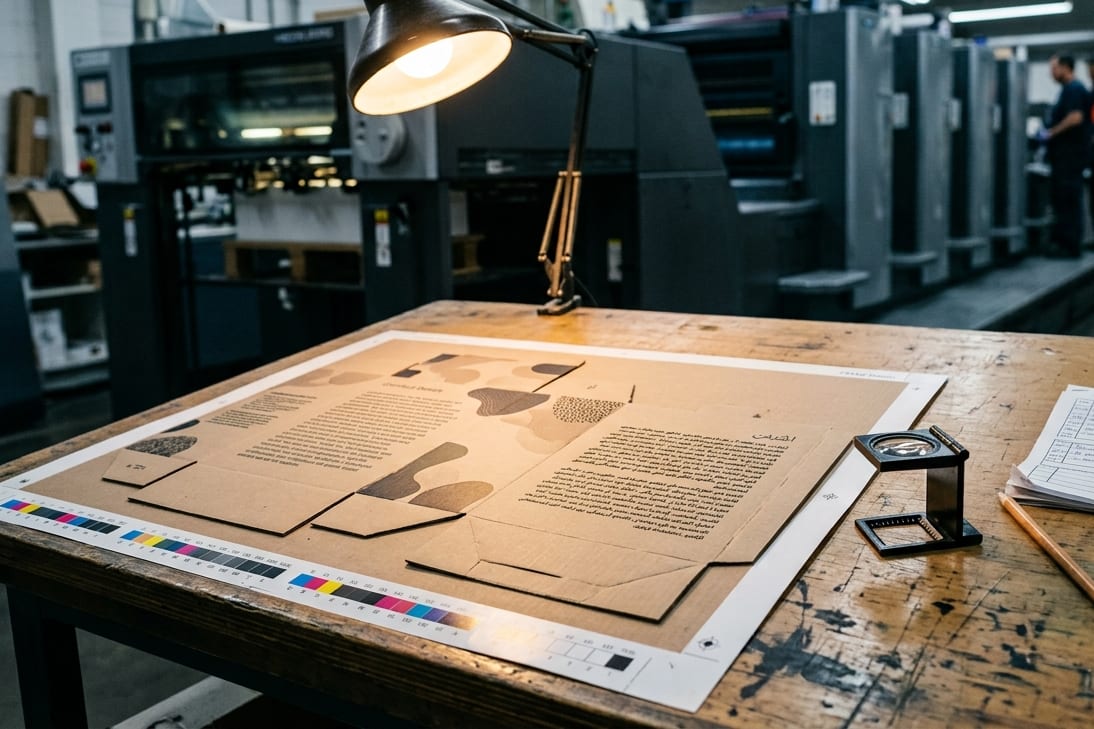
Products sold in Saudi Arabia must carry Arabic labels. The label is part of the technical file, so it is assessed like any other document.
We proof artwork against the certificate content before the print run — model identification, electrical data, origin wording, Arabic declarations, and the energy label and G-Mark where they apply. Fixing it here costs a revision. Fixing it after production costs a relabelling operation at the port.
Tip
For Type 3 regulated products, the route includes a factory inspection. Both the media and the paper are part of it.
We prepare every document in this package. Share your product and HS code and we will confirm whether the inspection applies to you.
Work through the checklists in order: confirm you are export-ready, gather everything for the PCoC application, then run the shipment checklist for every dispatch.
The PCoC checklist applies per product model. The SCoC checklist applies per consignment.
Before you begin
Send your product name and HS code. We confirm the regulation and return the exact document list for the PCoC and SCoC.
Everything on the checklists above exists to support one of these. If one fails, no amount of paperwork rescues the file.
Not a proposal, not the exporting country’s code. The Saudi tariff line at full depth, because it selects the technical regulation the whole file is judged against.
An active Commercial Registration, in a relevant activity, agreed in writing. The certificate names this company and does not transfer.
Reports from a laboratory accredited for the standard it signed, at the edition in force, naming models that appear on your list.
Every variant you intend to ship this year. Anything not listed is not covered, and late additions are amendments.
Arabic text, origin statement, model identification, energy label and G-Mark where they apply — agreed before the print run.
File, invoice, packing list, origin and label telling the same story. Disagreement between them is the most common reviewer query.
The core file is common. These are the additions each family typically carries — confirmed against the regulation, never assumed from the product name.
Safety and EMC reports, rating plate data, and an energy label with its own test evidence. G-Mark applies to most low-voltage equipment.
Performance testing to the cited standard, batch traceability, and marking that matches the certified specification.
Safety documentation, risk assessment, and pressure or mechanical testing where the regulation calls for it.
Mechanical, chemical and flammability testing, plus age marking, Arabic warnings and G-Mark on the retail pack.
GHS classification, a safety data sheet, and Arabic hazard labelling. Check first whether the formulation sits with SFDA.
Testing to the standard the Saudi regulation names, with performance class marked on the product.
Category-specific testing, often under a dedicated regulation, with its own marking and traceability rules.
Fibre composition, care labelling, restricted substance testing, and Arabic content declarations on the retail label.
Six rejection reasons behind most technical-review queries — each caught in a pre-submission audit.
The most common rejection. Accreditation is per standard, and the scope certificate is checked — so check it yourself first.
A good result against last edition’s standard. Costs a gap test when caught early, and a schedule when caught at review.
A variant claimed under a family without a defensible worst-case rationale gets pulled out of the certificate.
Submitted as a placeholder to be finished later. Reviewers assess what is in the file, not what you plan to add.
Different model numbering, a different description or a different origin between invoice and file generates an immediate query.
When the description in the file does not fit the tariff line it was filed under, the assessment itself is in question.
The procedure this checklist feeds, the record it is filed against, and the services that close the gaps it exposes.
Documents and evidence. Procedure and timing are answered on the how-to-apply page.
For a regulated product: product details and model numbers, the Saudi HS code, manufacturer name and address, a technical datasheet, photographs, accredited test reports, a declaration of conformity, and the importer’s CR number. Non-regulated products need fewer documents, because only a shipment certificate is issued. The exact list follows the technical regulation for your HS code.
The shipment certificate is issued per consignment. You need a valid PCoC number, the commercial invoice, packing list, a draft bill of lading or airway bill, photographs of the actual batch and the importer’s details. Add a pre-shipment inspection report where the route requires one.
For regulated products, yes — from a laboratory accredited for that specific standard. Products with no applicable technical regulation need no product certificate and no test report, though a shipment certificate is still raised on a self-declaration basis.
Often, in part. They are checked for three things: the laboratory’s accreditation covers the standard it signed, the edition is the one in force, and the models match your list. What holds is reused and only the gap is tested.
Sometimes. A CE or IECEE CB report is accepted if it comes from an accredited laboratory, covers the right model, meets the Saudi standard and is still valid. We check the scope before advising whether new testing is needed.
Yes, where the regulation calls for it — declarations, safety warnings, origin statements and often the manual. It is a product requirement, so it must be settled before the print run, not at the port.
Send us the product name and HS code. From that we identify the technical regulation and conformity route, and return the exact document list your product needs.
Send your product and HS code. We identify the technical regulation and return the exact documents your product needs.