A recognition route for high-risk equipment
SASOEX is SASO’s conformity certificate for equipment intended for potentially explosive atmospheres. It exists so that international Ex evidence can be recognised rather than reproduced from scratch.
Equipment going into a Saudi refinery, gas plant or petrochemical site is judged on its Ex evidence and on whether the marking agrees with it. The route is built around IECEx, it recognises rather than repeats good testing, and it is unforgiving about the details most suppliers treat as print detail.
Six things to settle before a supplier quotes you on the strength of certification they already hold.
SASOEX is SASO’s conformity certificate for equipment intended for potentially explosive atmospheres. It exists so that international Ex evidence can be recognised rather than reproduced from scratch.
The route is anchored on the IECEx system — the certificate of conformity, its test report and the quality assessment report behind them. This is the evidence the recognition is designed to read.
European ATEX documentation is respected and is often accepted as supporting evidence, but the Saudi route is built around IECEx. A supplier holding only ATEX paperwork should expect questions an IECEx holder does not get.
Recognition shortens the technical assessment. The document customs reads is still a SABER shipment certificate, raised against a live product certificate under the Saudi importer’s account.
Ex manufacture is assessed as a system, not a sample. The quality assessment behind an IECEx certificate names a plant, and equipment produced somewhere else is not covered by it.
Protection concept, equipment group, category, gas or dust group, temperature class and ambient range are all on the nameplate. They are checked against the certificate, character by character.
Both are credible engineering regimes. Only one of them is the currency the Saudi route is denominated in, and that distinction decides how long your assessment takes.
Five steps. The first two take hours and decide whether the remaining three are worth starting.
Not everything sold into a plant is Ex equipment, and not every Ex-marked item is regulated the same way. The HS code and the protection concept together decide the route, and settling it in writing avoids certifying the wrong thing.
The IECEx certificate, its status, its issuing body and the site named on the quality assessment are checked against the public register. Withdrawn, expired or superseded certificates are the most common stopping point.
Nameplate against certificate: protection concept, group, temperature class, ambient range, ingress rating and any conditions of safe use. A discrepancy here is a technical review query, not a formality.
The Ex evidence is presented for the Saudi recognition certificate, with the commercial and manufacturing particulars that go alongside it. Where evidence is thin, the gap is identified as named testing rather than a full programme.
Recognition feeds the technical file behind the product certificate, and each consignment then draws a shipment certificate under the Saudi importer’s account.
Eight checks against the register, the certificate and the nameplate. Each one is cheaper now than at technical review, and far cheaper than on site.

Eight families, and what carries the assessment in each.
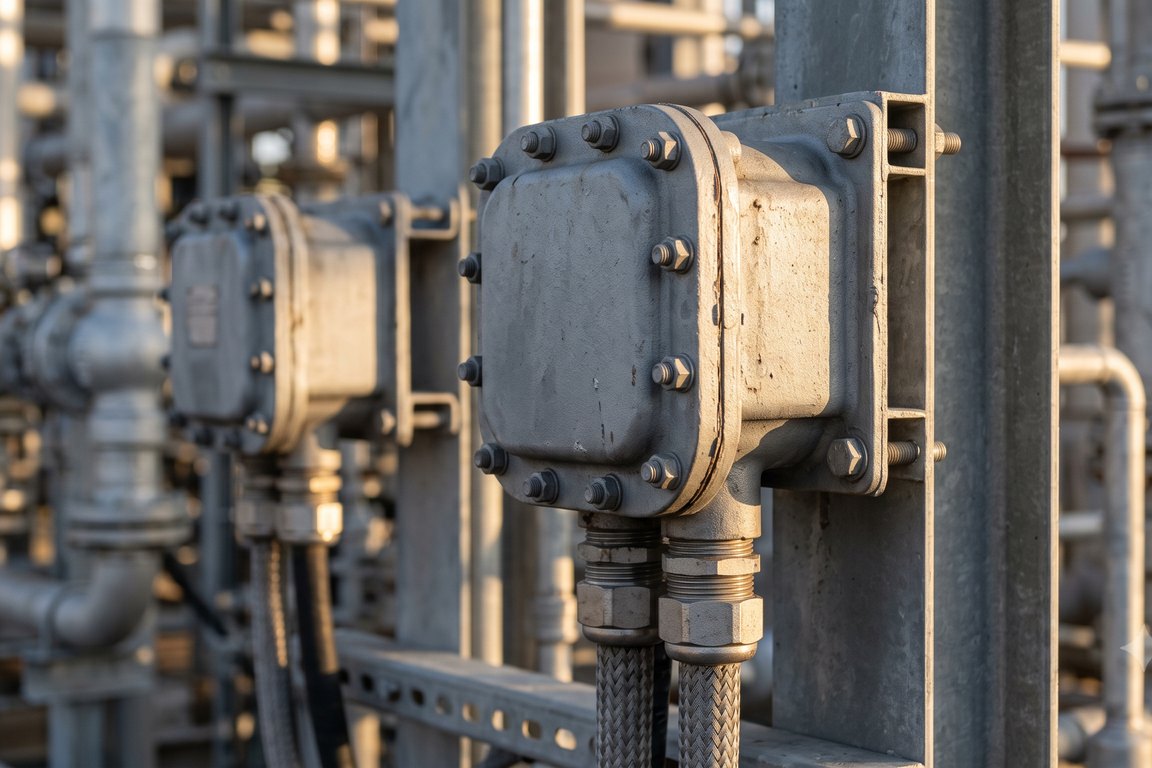
Enclosures with cable glands, usually under increased safety or flameproof concepts. The gland selection is part of the certified assembly and is where mismatches most often appear.
Local control stations and instrument housings. The certificate covers the enclosure and its declared configuration, not whatever has been mounted inside it on site.
Luminaires for hazardous areas, including linear fittings and floodlights. Temperature class and ambient range carry most of the assessment.
Connection devices rated for the area classification, where the interlocking arrangement is part of the protection concept.
Electric pumps and driven equipment, assessed as the combination that will actually be installed rather than as a motor in isolation.
Detectors, transmitters and detection systems. Performance approval sits alongside the Ex protection, and both are expected.
Intrinsic safety barriers and galvanic isolators, where the system documentation matters as much as the individual device certificate.
Small components that carry their own certificates and are the most frequently forgotten line on an otherwise complete file.
A supplier of hazardous-area lighting and control stations to a Saudi petrochemical contractor, nine equipment types across two plants.
Seven types held live IECEx certificates. Two carried ATEX documentation only, inherited from a European product line that had never been sold outside the EU.
Three nameplates disagreed with their certificates on ambient range. The drawings were corrected before the order was released to production.
The declared ceiling on the luminaires was below the summer design temperature at the installation. A higher-rated variant was selected rather than derated on paper.
The two ATEX-only types were taken through targeted testing against the Ex standard rather than a full requalification, using the existing reports where they held up.
One product certificate covering the range, with the accessory certificates listed in the file so shipment certificates could be raised per consignment without fresh queries.
Six failures, and the expensive ones are the two that surface after the equipment is already installed.
A complete European file with no IECEx certificate behind it. It is not worthless, but it turns a recognition exercise into an assessment, with the schedule to match.
A temperature class or ambient range reprinted from a datasheet rather than transcribed from the certificate. It is checked field by field and it is checked every time.
The quality assessment names one plant and the goods were built at another. Under an Ex scheme this is a substantive failure, not an administrative one.
Equipment rated to an ambient ceiling that a Saudi plant exceeds in summer. It passes the certificate and fails the application, usually after installation.
The enclosure is certified, the glands fitted to it are not. The assembly as shipped is then uncertified, and the fix arrives with the equipment already on site.
Recognition is an input to the product certificate. Without the product certificate and the per-consignment shipment certificate, there is still nothing for customs to read.
The parallel route for ordinary electrical goods, the certificate this feeds, and the file review behind both.
Hazardous-area equipment specifically. Ordinary electrical safety is answered on the IECEE page.
It is SASO’s conformity certificate for equipment intended for use in potentially explosive atmospheres. Rather than retesting high-risk equipment from scratch, the route recognises international Ex evidence — principally IECEx certification — and uses it to support the Saudi conformity assessment.
It is the evidence the route is designed around. A live IECEx certificate of conformity with its test report and quality assessment report, matching the equipment and the producing plant, is the strongest position you can arrive in. It is not an approval in itself — it supports the SABER product certificate rather than replacing it.
Not on its own, in most cases. ATEX is a European legal framework, and Saudi recognition is built around IECEx. ATEX documentation is often accepted as supporting evidence, but expect a longer assessment, more technical queries, and in some cases targeted testing to close what the ATEX file does not demonstrate in the form required.
No. Customs looks for a shipment certificate raised against a live product certificate. Ex recognition is an input to the technical file behind that product certificate. Both exist, in that order, and neither does the other’s job.
Equipment intended for hazardous areas — junction and control boxes, fixed lighting, plugs and connectors, pumps and motors, gas detection, intrinsic safety barriers and the certified accessories fitted to them. Scope follows the HS code and the protection concept together, so borderline items are worth settling before certification starts.
Because in Ex equipment the marking is the specification. Protection concept, equipment group, gas or dust group, temperature class, ambient range and conditions of safe use are what an inspector and an installer rely on. A nameplate that disagrees with the certificate makes both documents unreliable, so it is checked field by field.
Yes, and a serious one. Ex certification assesses the manufacturing quality system, not only the sample. The quality assessment report names the plant, and equipment produced at an unassessed site is outside the scope of the certificate regardless of how identical the design is.
It affects the selection rather than the certificate. Equipment rated to a European ambient ceiling can be certified correctly and still be unsuitable for a Saudi plant in summer. Checking the declared ambient range against the actual installation conditions is part of a sound file, and it is frequently skipped.
Yes, where they form part of the protection. An enclosure is certified with a declared range of entries, and the glands fitted to it carry their own evidence. Shipping a certified enclosure with uncertified glands produces an uncertified assembly, which is one of the most common gaps we find in otherwise complete files.
The Ex evidence belongs to the manufacturer. The Saudi product and shipment certificates are raised under the Saudi importer’s SABER account. That split means your recognition work is portable across buyers, while the SABER side has to be repeated if you change importer.
Send the certificates, the nameplate drawings and the equipment list. We verify them on the register, reconcile the marking field by field, and tell you what remains before a conformity body sees the file.