Lighting & LED
Lamps, drivers and luminaires.
Six digits decide your duty, your regulator and your certificate. We determine the code, write down the reasoning and name every approval it triggers.

To classify a product we need:
Quick Answer
The Harmonized System is an international number used to classify traded products. Saudi customs uses it to apply duties, and SABER uses it to decide which technical regulation — if any — applies to your product.
Correct classification matters. The wrong code changes the duty you pay and makes customs expect a different set of conformity documents — a common reason shipments are held.
| Digits | Level | What it identifies |
|---|---|---|
| 1–2 | Chapter | Broad product category — e.g. 85, electrical |
| 3–4 | Heading | Product group within the chapter |
| 5–6 | Subheading | Specific product type (global level) |
| 7+ | National code | Saudi tariff detail used at customs |
Each category carries its own testing and documentation requirements. Send your product and we confirm the code and the route together.
Lamps, drivers and luminaires.
Switches, sockets and appliances.
Industrial and general machinery.
Construction products.
Fabricated steel articles.
Vehicle components.
Home and office furniture.
Polymer products.
Once your HS code is confirmed, we can tell you whether a technical regulation applies and which conformity route your product follows. This is the shape of the assessment we return — illustrative only.
| Field | Example result |
|---|---|
| Product | Electric water pump |
| HS code | 8413.70 (to be confirmed for your model) |
| SABER registration | Required — check applicable regulation |
| Technical regulation | Applicable / to be confirmed by category |
| Likely documents | Test report + technical datasheet + photos |
| Next step | Request a product assessment |
Note
Send the product name, HS code and country of manufacture. We identify the applicable technical regulation, the certification route and the documents you need — usually within one working day.
Most HS codes in circulation came from a keyword match. They travel from a supplier’s invoice to a forwarder’s file to a conformity application without anyone asking which heading was considered and rejected along the way. That works until the code is questioned — and then there is nothing to answer with.
Classification is a reasoned determination made under a fixed set of rules. The output that matters is not the number; it is the number plus the argument that produced it, at the tariff depth Saudi Arabia actually assesses.
One document, written to be read by a customs reviewer or a conformity body — not a code pasted into an email.
The code we determine, at Saudi tariff digit depth, stated as a position we will defend — not a suggestion to check with your broker.
Which rule decided the code, which headings were considered and rejected, and why. A position without reasoning cannot survive a customs challenge.
What the code sets off at SASO, SFDA, MIM, telecom and energy level — including the regulators that do not apply, named explicitly.
The tariff treatment the code carries, plus any exemption, agreement rate or valuation note that changes what your importer pays.
The datasheets, composition breakdowns, marketing claims and photographs the opinion rests on, in the order a reviewer reads them.
If your code, your broker’s code and ours disagree, you get all three side by side with the consequence of each.
The General Interpretative Rules are applied in order, and the order is the point — most disputed codes come from skipping a rule rather than misreading one.
Trade names and marketing categories are set aside. What the goods are made of, what they do and how they are presented is what classifies them.
Every heading the goods could fall under is listed before any is chosen. Classification narrows from a set; it does not start from a guess.
The heading texts and section or chapter notes are applied first. Most goods are decided here.
For composite goods, sets and incomplete articles, the component that gives the product its essential character governs.
Only subheadings at the same level are compared. Skipping this rule is how a good heading ends in a weak eight-digit code.
The code is checked against the Saudi national tariff, not just the WCO six digits — national digits carry the duty and the trigger.
The confirmed code is run against each Saudi regulator’s scope, so the file names every approval required, and every one that is not.
You receive the code, the rule that produced it, the evidence it rests on and the approvals it triggers, in one document.
Free tools are useful for orientation. They are not evidence, and they stop exactly where the Saudi-specific risk begins.
The value of a hub assessment is the regulators it rules out. A SABER-only view of your code cannot tell you that the product was never a SABER product.
The largest trigger set. Most industrial and consumer chapters land here.
The code decides whether the product is regulated, which technical regulation applies, and whether test evidence is needed before a product certificate can exist.
Food, cosmetics, supplements, medical devices, feed and related chapters.
A code inside SFDA scope removes the product from SABER entirely. The two are not alternatives — misrouting here costs weeks, not days.
Selected industrial, machinery and raw-material categories.
Certain codes carry a declaration or approval owed to the Ministry, alongside or instead of the SASO route. Checked per code, never assumed.
Telecom and radio equipment, energy-efficiency categories, and other specialist scopes.
These sit outside the obvious path and are the ones most often missed. Every assessment checks them so nothing falls between regulators.
Misclassification is rarely discovered where it happened. It surfaces at a port, in a reassessment, or in a certificate that describes something else.
An understated code invites a reassessment with arrears; an overstated one means you have been overpaying on every consignment.
Certificates are issued against the code. If the code is wrong, the certificate is valid and useless at the same time.
When customs assigns a different code on arrival, the approvals that code requires are approvals you do not hold, and the cargo waits.
A code in SFDA scope filed through SABER is not a delay, it is a restart. Establishment registration alone can outrun the shipment.
Lab scopes follow the regulation, and the regulation follows the code. Test against the wrong standard and the reports are unusable.
The first code used for a product tends to be repeated by brokers for years. A quiet early error compounds across every SKU that copies it.
From a single new product to a catalogue classified by five different people over ten years.

A new product with no code yet. The full determination, before you print a label or quote a landed cost.
You have a code from a broker, a supplier or a tool. We test whether it holds, and say so plainly either way.
A catalogue classified over years by different people. We find the codes that drift, duplicate or contradict each other.
Customs or a conformity body has disputed your code. We rebuild the position and decide whether to defend or correct it.
Tariff schedules and technical regulations both move. Codes that were right at first import are not automatically right later.
A fast check that the code on the draft invoice matches the code the certificate was issued against, before the container is booked.
Classification runs on facts about the goods, not on the category you file them under internally. Partial evidence produces a partial opinion, and we will say which parts are provisional.
The national digits carry the duty rate, and the duty rate is what your importer notices first. Where an agreement rate, exemption or valuation treatment applies to the determined code, the opinion states it — so landed cost is calculated once, correctly, rather than revised after the first consignment.
It also means the code on the draft invoice, the code on the certificate and the code declared at clearance are the same code. Most port-side disputes we untangle are not classification arguments; they are three documents quietly disagreeing.
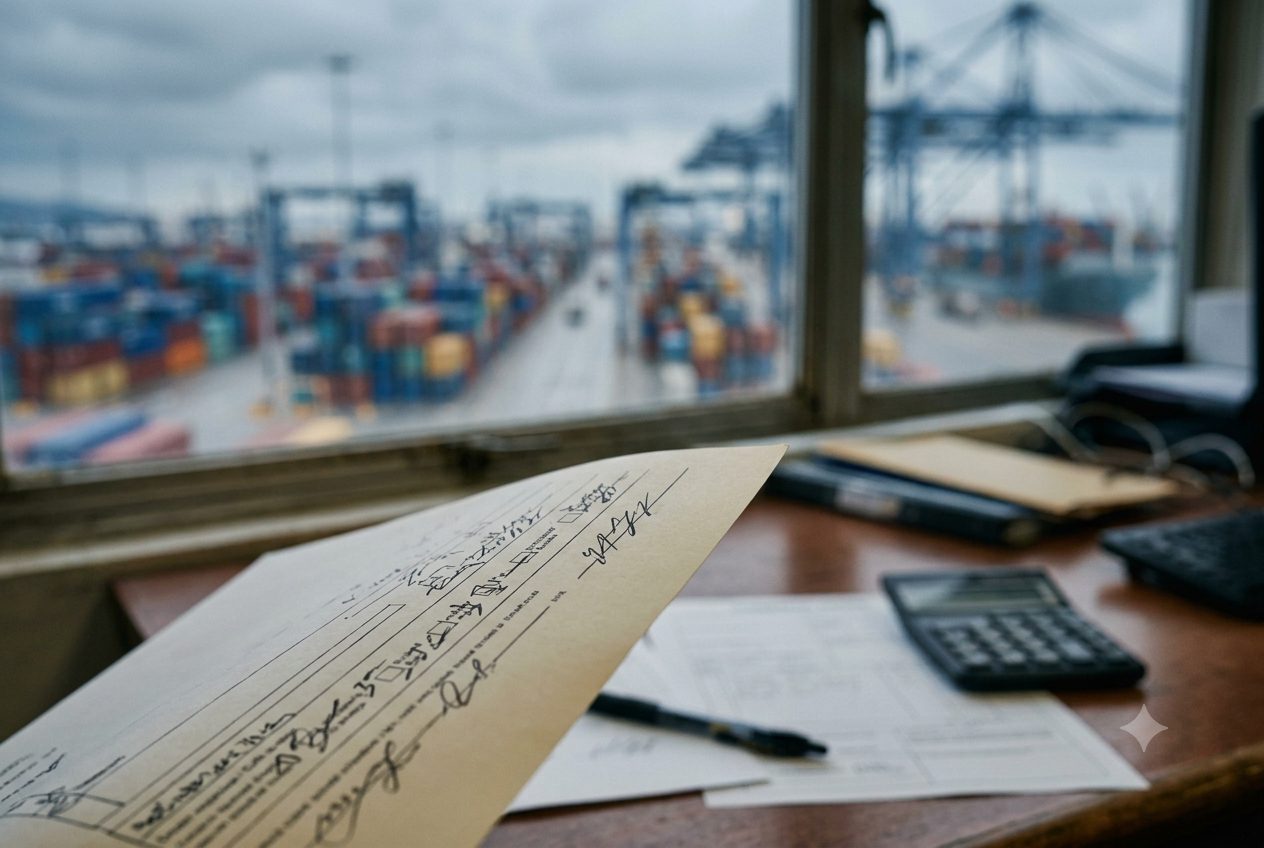
The product never changed. The marketing copy did — and that moved it to a different regulator.
A percussion massage device, coded by the supplier as a domestic appliance and routed to SABER. Catalogue copy described relief of muscle pain.
Presentation governs. Therapeutic claims on the packaging push a device out of the appliance heading and toward medical apparatus — and medical apparatus is not a SABER product.
Two positions were set out: the appliance heading with the claims removed from all Saudi-facing artwork, or the medical heading with an SFDA route accepted.
Claims stripped from the Saudi artwork, appliance code confirmed, SABER route preserved. The alternative was a registration the launch window could not absorb.
One paragraph of marketing copy was the difference between a routine product certificate and a registration track measured in months.
The code is the first decision. These are the ones it makes for you.
Tariff and classification questions. Certificate and shipment questions live on the compliance and import pages.
You start with what your product is made of and what it does. Many online lookups return the six digits but miss the Saudi national digits or choose the wrong subheading. We determine the code under the WCO General Interpretative Rules and check it against the Saudi tariff, then map what it triggers across regulators.
Yes. The HS code determines the technical regulation, if any. Some products fall under a SASO/SABER regulation tied to that code, some under SFDA, some under both and some under neither. The assessment states all of that explicitly.
No. A lookup matches a product name. A classification opinion states a position and a reason for it. This page is about the written determination (the opinion), not a self-serve search.
No. The example is illustrative only. Classification depends on the exact material, function, presentation and other product characteristics. Only a determination based on your datasheet can be correct for your goods.
Not always. Forwarders often choose a code to clear quickly, but that code may not match the product’s correct heading or may miss a regulatory trigger. We compare it to the correct position and flag any divergence before you lodge documentation.
That is what the reasoning is for. We reconstruct the determination, assess whether the position is worth defending or correcting, and prepare the supporting file. Arguing a code without documented reasoning rarely succeeds.
A single straightforward product is usually turned around in one to two working days once the evidence is complete. Ambiguous goods and multi-SKU portfolios take longer, and we say so before starting.
A datasheet, a photograph and your current code is enough to start. You get back a determination you can hand to a broker or defend to a reviewer.