Smoke detectors
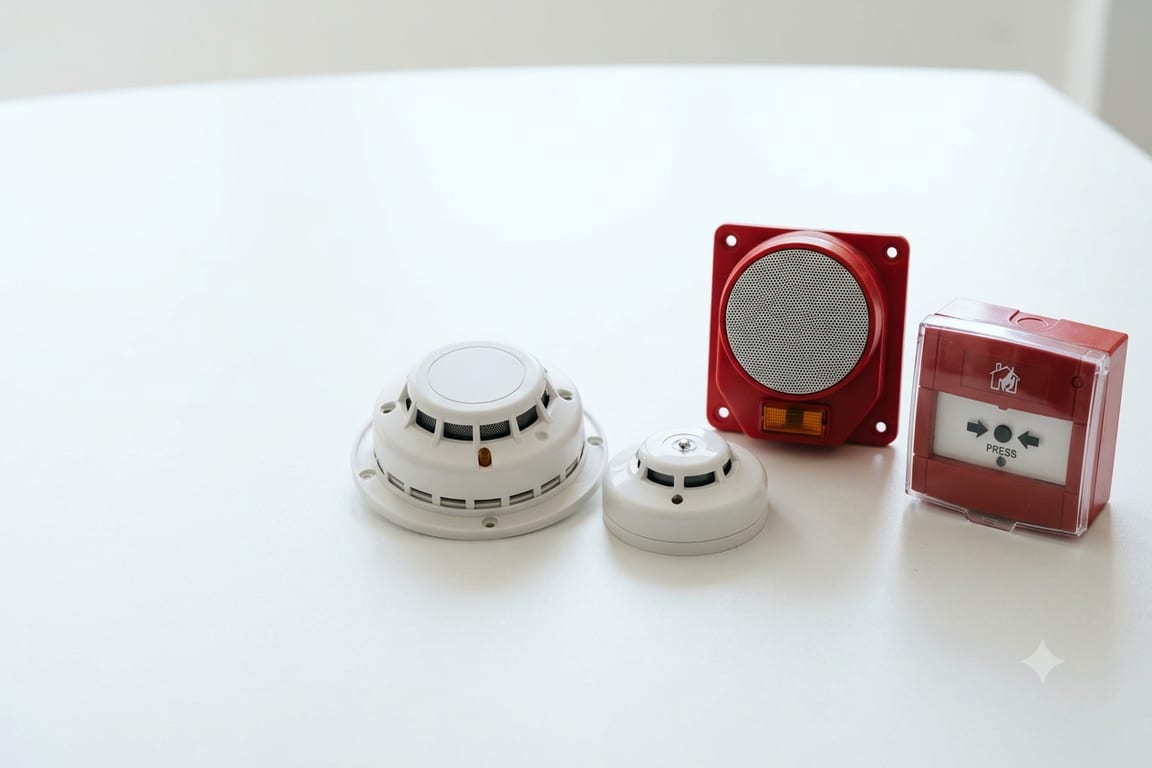
Optical, ionisation and multi-sensor point detectors. The detection principle is declared, because it changes the test evidence.
Exporting fire detection and alarm equipment to Saudi Arabia? BenzilaCert helps manufacturers and exporters separate the system into its certifiable components, confirm what each one must demonstrate, and prepare the testing and model lists for SABER certification.
Send to scope a detection file:
Detection and alarm, not suppression. Each component below is a product in its own right.
Optical, ionisation and multi-sensor point detectors. The detection principle is declared, because it changes the test evidence.
Fixed-temperature and rate-of-rise devices, defined by declared class and response behaviour.
Conventional and addressable panels. The panel is a product in its own right, separate from the devices connected to it.
Audible and visual alarm devices and break-glass units, assessed on output performance and construction.
Public address and voice alarm amplifiers and controllers, where intelligibility and fault monitoring are part of the assessment.
Dedicated firefighter communication equipment, assessed separately from general telecoms.
A system is a set of products, not one product
Six factors that separate one detection file from another, read from the equipment rather than from the system name.
| Factor | Why it changes the answer |
|---|---|
| Component or complete system | Panels, detectors and sounders are separate products; a system is not certified as one undifferentiated unit |
| Detection principle | Optical, ionisation, heat and multi-sensor devices carry different test evidence |
| Conventional or addressable | The architecture affects the panel assessment and the device-to-panel compatibility evidence |
| Power and battery arrangement | Standby supply and battery backup within a panel bring additional checks |
| Communication interface | A network, radio or telephone interface can bring screening beyond the product regulation |
| Declared environment | Devices declared for harsh, outdoor or hazardous locations carry additional construction evidence |
We do not publish an HS code for detection equipment, because the code follows the component rather than the system. Detectors, control panels, audible devices and parts can classify differently, and the classification is what determines the applicable regulation. It is confirmed per component family — see our HS code check.
What may apply to a detection file, and what has to be confirmed rather than assumed.
Where the confirmed classification falls under an applicable Saudi technical regulation, each component generally needs a product certificate registered on SABER, followed by a shipment certificate for each consignment. The product certificate is issued by an approved conformity assessment body against the technical file and the test evidence for that component.
Fire detection equipment is one of the categories where requirements can extend beyond the product conformity route, depending on the installation and the authority involved. We do not state on this page that any particular additional approval applies to your equipment — it is confirmed against the current requirements for the specific product and project, and flagged before a timeline is committed to.
Existing international third-party listings are treated as supporting evidence that may reduce the testing gap, not as a substitute for the Saudi product certificate. What can be relied on is decided by the approved conformity assessment body for the declared models.
Checks a detection assessment commonly draws on. Which apply depends on the component and the standard edition the regulation names.
| Check | What it looks at |
|---|---|
| Detection response | Response to the declared fire phenomenon against the device class |
| Repeatability and reproducibility | Consistency of response across samples of the same model |
| Electrical safety | Construction, insulation and protection against electric shock |
| Electromagnetic compatibility (EMC) | Emissions produced, and immunity to interference |
| Fault monitoring and signalling | That faults are detected and indicated as declared — for panels |
| Sound output and intelligibility | Declared sound pressure level, and speech intelligibility for voice systems |
| Environmental endurance | Behaviour across declared temperature and humidity, and after vibration |
| Standby power performance | Battery backup duration against the declared standby period |
Testing is carried out by laboratories accredited for the relevant tests. Fire response testing needs laboratory capability for the declared device class, and repeatability across samples is assessed as well as the response itself — a single passing sample is not the same as a demonstrated model.
What a detection submission is built from. Panel-to-device compatibility evidence is the part most often absent.
Send them with the component model lists and the declared device classes. We will check what the existing evidence covers and what still needs testing for the Saudi file.
Five steps from the component split to certified consignments.
Detectors, panels, sounders and voice alarm equipment are split first, because each is a product in its own right with its own evidence.
Confirm the Saudi HS code per component family, the applicable technical regulation, and whether any approval beyond the product route applies to fire detection equipment.
Check existing test reports and any third-party listings against the declared device classes, response behaviour and standby performance, and identify the gaps.
Prepare the technical file per component family, then submit for assessment by the approved certification body.
Each consignment is applied for against the product certificates, with the invoice models matching the certified lists.
Separate the government fees from the body, testing and service charges before comparing quotations.
Four things move the cost of a detection programme: how many component families the system splits into, how much of the required evidence existing reports and listings already cover, whether fire response testing is needed for declared device classes, and whether anything beyond the product route applies to the project.
Government and SADAD fees, conformity body charges, laboratory testing and service charges are separate lines and are quoted separately. Our SABER certificate cost page sets out how those lines work. We do not publish a flat price or a guaranteed turnaround for a detection file, because both depend on the component split and the evidence already held.
Six issues we see repeatedly on fire alarm and detector submissions.
A detection system is a set of products, not one. Panels, detectors and sounders carry separate evidence, and submitting them as a single item is the most common reason a fire alarm file is rebuilt.
An international listing or approval held for a detector is useful supporting evidence. It is not in itself the Saudi product certificate, and assuming it substitutes delays the file.
Optical, ionisation and heat devices have different response evidence. Grouped as one family, the submission is normally separated.
An addressable panel declared to work with a device range needs that compatibility supported. Declaring it without evidence is found at review.
A declared standby period is a tested performance claim. Where the reports do not cover the declared duration, the claim has to be reduced or retested.
Wireless detectors and networked voice alarm equipment can need screening beyond the product regulation. Leaving the interface out of the declaration surfaces late.
Firefighting equipment, emergency power, and the certificates each component family ends up on.
System versus component certification, approvals beyond SABER, third-party listings, detector grouping, voice alarm and the shipment stage.
Where the confirmed Saudi HS code for a component falls under an applicable technical regulation, it generally needs a product certificate registered on SABER and then a shipment certificate per consignment. It is assessed per component — detectors, panels and sounders are separate products — rather than as one system.
Each part separately. A control panel, a smoke detector and a sounder are distinct products with distinct test evidence. A project may need several product certificates, and the model lists are kept separate so the shipment paperwork can be reconciled per item.
Fire detection equipment can attract requirements beyond the product conformity route, depending on the installation and the authority involved. Whether anything additional applies to your specific equipment and project is confirmed against the current requirements rather than assumed, and we flag it before a timeline is committed to.
It is usually valuable supporting evidence, and may reduce the testing gap. It is not itself the Saudi product certificate. The approved conformity assessment body decides what of the existing evidence it can rely on for the declared models.
Normally not as one family. The detection principle changes the response testing, so they are generally assessed separately. Variants within one principle that share construction and standards can often be grouped.
Not identically. Voice alarm and PAVA equipment is assessed on amplifier performance, fault monitoring and speech intelligibility rather than on fire response, and networked or radio-linked equipment may bring additional screening.
The commercial invoice and packing list with model numbers exactly as certified for each component, the relevant product certificate references, and the transport and origin documents as they become available. Our SABER documents checklist sets out the full list.
Send the component model lists, the system architecture and any listings or test reports you hold. We will review how the equipment separates into product certificates and what evidence is missing.
Tell us about the detection and alarm equipment you ship, the component types and any approvals you already hold. We reply within one business day with the likely route and what to send next.