PCoC — Product Certificate
Covers the registered product or model, and is usually valid for the applicable certification period. Issued by a SASO-approved certification body.
We help manufacturers and exporters identify, prepare and complete the required Saudi product certification.

To check your requirement, send us:
We will confirm:
If you are exporting regulated products to Saudi Arabia, your product may require SABER registration, a PCoC, an SCoC or another Saudi approval.
What decides it is the HS code, not the product name. Two products that look identical on a shelf can sit in different regulations — so the code is the first thing we check, and it is checked before anything is quoted.
Most exporters need the first two. The third is what we check for, so nothing surfaces late.
Covers the registered product or model, and is usually valid for the applicable certification period. Issued by a SASO-approved certification body.
Required for each applicable shipment, raised against a live product certificate and quoted at customs clearance.
Some products may also require IECEE, G-Mark, the Saudi Quality Mark, an energy efficiency label or SFDA approval. We confirm which apply before you spend anything.
The same sequence every time, whatever the product.
We identify the applicable Saudi requirement for your product and tariff line.
We review your documents and advise if lab testing is required.
The application is submitted and reviewed by the applicable certification body.
Shipment documents are submitted for shipment certification before the goods sail.
Two lists, and the importer's side is shorter than most exporters expect.
Send it to us first. We will check whether it can be used before recommending any new testing.
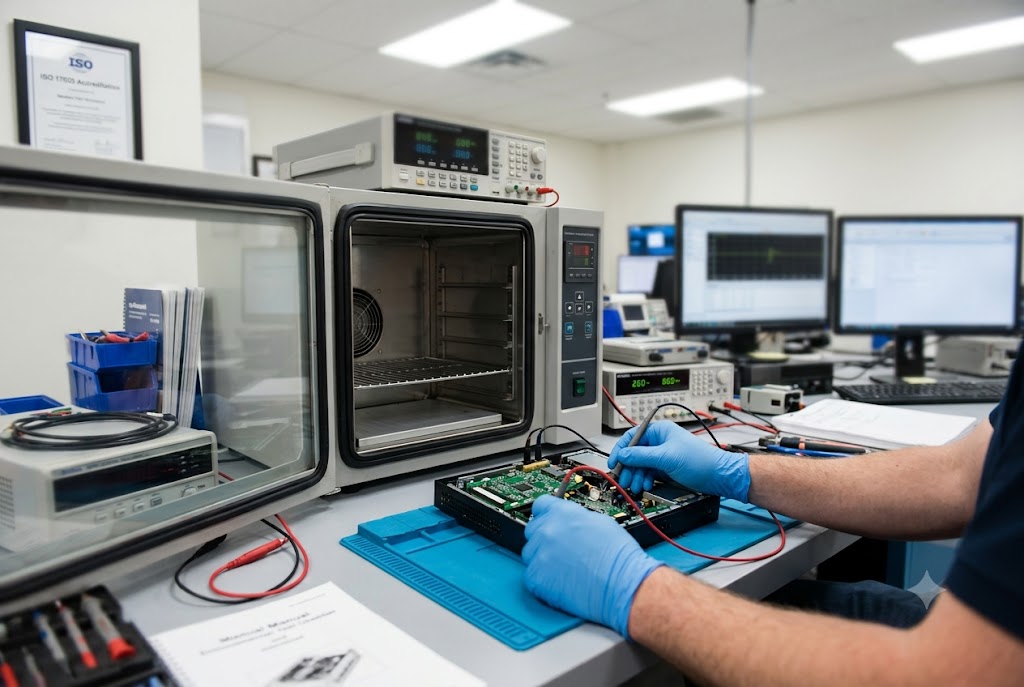
If testing is required, we will confirm the applicable standard and the test parameters, and the work is done at an ISO/IEC 17025 accredited laboratory.
Most manufacturers arrive holding more usable evidence than they think, and a report that can be reused takes weeks out of the schedule.
No two products cost the same, so here is what moves the number rather than a figure that would not apply to you.
So the job is one conversation with us, not nine separate ones with laboratories, bodies and your importer.
If one of these is where you are, it is routine work — not a dead end.
Send the product and a photo. We confirm the tariff line to Saudi depth and tell you which regulation it lands in.
We confirm which tests the regulation actually needs and arrange them at an ISO/IEC 17025 accredited laboratory.
We group models into families where the regulation permits it, so you are not paying for one certificate per variant.
We work directly with your Saudi importer on the account, the OTP and the SADAD payment.
We tell you the shortest honest route, what can run in parallel, and what genuinely cannot be compressed.
We read the rejection, find what the reviewer actually objected to, and rebuild the file around it.
Some products need more than SABER, and some need less than an agent has told you. The assessment settles it in writing.
If your product falls under a Saudi technical regulation, yes — the consignment cannot be cleared without it. Products with no technical regulation still need a shipment certificate on SABER, raised on a self-declaration basis. Send the product name and HS code and we will confirm which case you are in.
The Product Certificate of Conformity. It covers the registered product or model against the applicable Saudi technical regulation, and is issued by a SASO-approved certification body under your Saudi importer’s SABER account. It is usually valid for the applicable certification period, after which it is renewed.
The Shipment Certificate of Conformity. It is raised for each applicable shipment against a live product certificate, and it is the document quoted at customs clearance. A valid PCoC on its own does not clear a container.
Not always, and not always a new one. Send any report you already hold — we check whether its scope, laboratory accreditation and standard edition let it be used before recommending any new testing. Where testing is required, we confirm the applicable standard and test parameters first.
With a complete and current technical file, the product certificate is typically issued in about three to ten working days. If new laboratory testing is needed, add roughly one to three weeks depending on the product and the standard.
Often yes. Where the regulation allows it, models that share a technical platform can be grouped into one family on a single certificate. The model list has to be settled before the application, because adding a variant afterwards means a new application.
Yes, and it is usually the fastest way. Certificates are raised under the importer’s SABER account, which is tied to their Commercial Registration, so we work with them on the account access, the OTP and the SADAD payment while you handle the technical evidence.
Everything below is the detail behind the answers above — useful when you need to check a position rather than start one.
The Saudi Standards, Metrology and Quality Organization is the kingdom’s national standards body. It publishes the technical regulations that decide what a product must achieve before it may be sold in Saudi Arabia, and it approves the conformity assessment bodies permitted to certify against them.
So “SASO certification” is not a single document you buy. It is the outcome of a chain: your HS code points at a technical regulation, that regulation cites SASO standards, those standards dictate the testing and marking, and a SASO-approved body issues the certificate once the evidence holds. Every expensive mistake we are called in to fix happens at the first link, not the last.
Six levers, and your product meets most of them before it ever reaches a port.
SASO publishes the technical regulations and SASO standards that define what a product must achieve — safety, performance, energy efficiency, marking and labelling.
A conformity assessment body cannot certify for Saudi Arabia unless SASO has approved it for that specific technical regulation. Scope is granted per regulation, not per company.
SABER is SASO’s conformity platform. Every product and shipment certificate for a regulated good is raised, paid for and stored there.
The Gulf Conformity Mark (G-Mark), the SASO Quality Mark and the Saudi energy efficiency label are all SASO instruments, each with its own rules of use.
Certification is not the end of it. SASO samples goods already on shelves, and a failure there reaches back to the certificate and the importer who holds it.
Where a technical regulation allows it, IECEE CB reports and other accredited results are accepted in place of repeat testing — narrowing cost, not the requirement.
The two certificates above in their full context — plus the marks that sit alongside them, and the one document you should refuse to buy.
The modern form of SASO certification for a regulated product. Issued by a SASO-approved body against the technical regulation your HS code falls under, valid one year, tied to one Saudi importer.
Raised per consignment against a live PCoC and quoted at customs clearance. Without it the container does not leave the port, however good the product is.
A GCC-wide mark applied to low-voltage equipment and toys. It is a marking obligation with its own technical file — it does not replace the SABER certificates.
A separate, factory-audited scheme for selected product families. Slower to obtain and rarely the fastest route to a first shipment — we advise on it only where it genuinely applies.
Air conditioners, washing machines, refrigerators, lighting and similar goods carry a Saudi energy label with its own SASO test evidence, settled before the PCoC completes.
The pre-2019 certificate of conformity issued under the old ICCP programme. It is retired. If an agent offers you one today, the goods will still be stopped.
Scope follows the tariff line, not the product name. These are the families we assess most — but the code decides, and near-identical products can sit in different regulations.

Appliances, power tools, chargers, luminaires, cable and switchgear — the largest regulated family, carrying both safety and EMC evidence.
Cement, steel reinforcement, cladding, insulation, sanitary ware, pipes and fittings, each against its own standard and marking rule.
Industrial machines, pumps, compressors and pressure equipment — scope follows the exact tariff line far more than the product name.
Mechanical, chemical and flammability requirements plus G-Mark, age marking and Arabic warnings on the retail pack.
GHS classification, safety data sheets and Arabic hazard labelling. Some formulations sit with SFDA instead — confirmed at assessment, never assumed.
Helmets, gloves, footwear, eye and respiratory protection, tested to the standard the regulation names rather than a European equivalent.
Tyres, batteries, filters, lubricants, brake components and accessories, several carrying their own dedicated Saudi regulations.
Fibre composition, care labelling, azo dye restrictions, furniture, cookware and household articles.
The four steps above, expanded. Skipping the first two is how exporters end up holding a certificate that does not describe the goods in the container.
The Saudi HS code is confirmed to tariff depth. This is what decides whether SASO owns the product at all, and which technical regulation applies.
The technical regulation and the SASO standards it cites are named in writing, with the edition in force — editions move, and old reports fail on that alone.
Existing test reports are checked for laboratory accreditation scope, standard edition and validity. What already passes is reused; only the gap is quoted.
Missing tests are run at an ISO/IEC 17025 accredited laboratory, and a factory audit is arranged where the regulation’s certification scheme requires one.
Labels, rating plates, Arabic text, energy cards and the G-Mark are corrected before print, not after a rejected consignment.
A SASO-approved body issues the Product Certificate against the technical file, under your Saudi importer’s account.
A Shipment Certificate is raised per consignment and reconciled against the invoice so customs finds no disagreement.
Not all of it applies to every product. The assessment says which lines are live for your regulation — and which you can stop chasing.
What disqualifies a test report is rarely the result. It is scope: a laboratory accredited for one standard signing another, an edition that has since moved, or a model number on the report that does not appear on the invoice.
A European file is a strong starting position and a poor finishing one. Here is the honest split.
Every rescue case we take on began as one of these — and all six are cheap to prevent, expensive to unwind.
A CE declaration is self-issued and carries no Saudi legal effect. The test data behind it is useful; the marking itself buys you nothing at Jeddah.
The old ICCP certificate has not been valid since the SABER transition. Agents still sell them, and customs still rejects them.
A report against last edition’s standard is refused at technical review even where the product itself would pass today’s test.
Accreditation is scope-specific. A laboratory accredited for electrical safety cannot sign your EMC report into a SASO file.
Arabic labelling is a product requirement, not a customs formality. Added after production it means relabelling a whole consignment in a bonded warehouse.
A PCoC is tied to one Saudi importer. Change distributor and the certificate does not travel with the product — it is raised again from scratch.
An Indian manufacturer of industrial LED high-bay luminaires, already selling into Europe, opening Saudi Arabia for the first time.
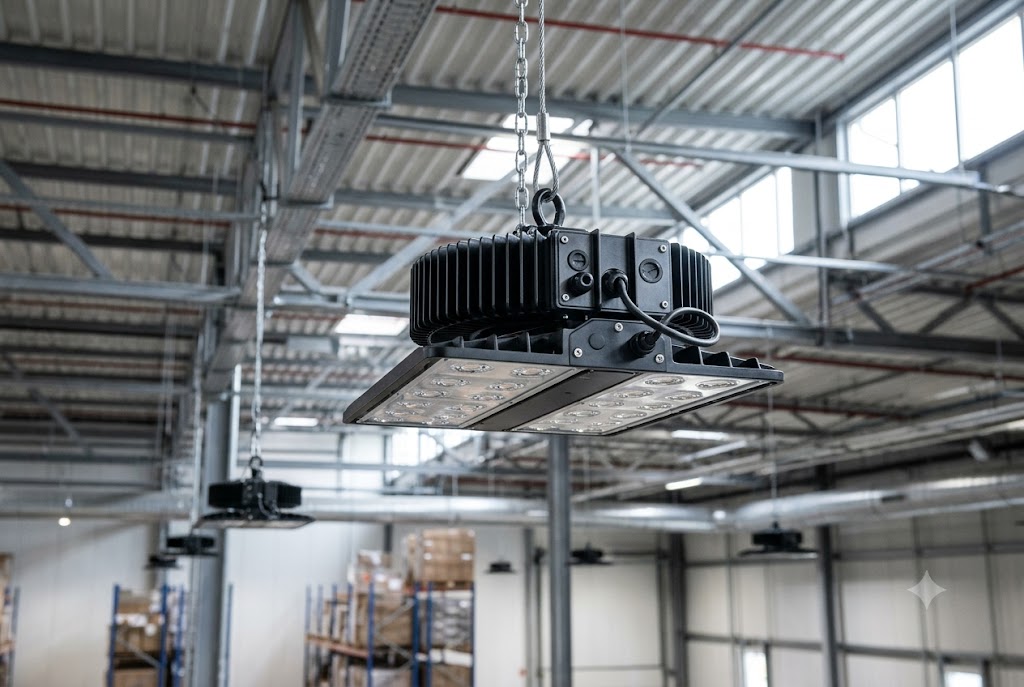
Proposed 9405.40 confirmed to Saudi tariff depth, placing the product inside the low-voltage electrical technical regulation with an energy-efficiency overlay.
The existing CB report covered safety in scope and was accepted. The EMC report was against a superseded edition, and photometric data was missing entirely.
Two tests quoted rather than a full retest — current-edition EMC, plus photometric and efficacy data for the Saudi energy requirement.
Rating plate redrawn with the Arabic origin strip and the energy label, and the artwork proofed before the print run rather than after it.
PCoC issued against the model family under the importer’s SABER account, with the first SCoC raised the same week the container loaded.
This page covers the regulator. These cover the platform, the paperwork and the products SASO does not own.
Send your product name, photo and HS code. Our team will check the requirement and tell you the next steps.