Saudi Product Label Review

The cheapest review you will ever skip

Artwork is the earliest thing a production run commits to and the most expensive thing to change afterwards. A Saudi label has mandatory Arabic content, format rules it cannot bend, and a script that most design software quietly breaks. We check all of it against the regulation — before it goes to press.

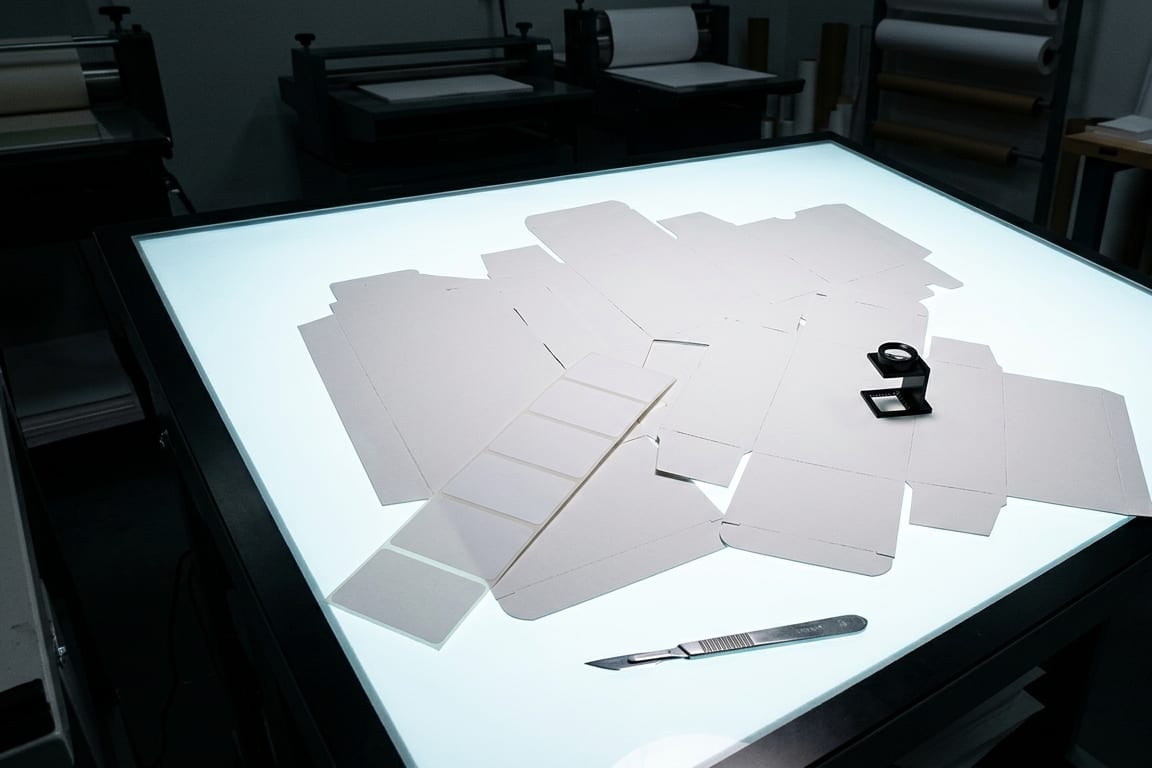
Printed packaging proofs spread across a light table with a loupe resting on one of them

Four rules before you send anything to print:

  • Arabic is mandatory, not a courtesy
  • Review before pre-press, not before packing
  • The product, the pack and the carton differ
  • Origin on the label must match the declaration
Review My Artwork

A label is evidence, not decoration

In a Saudi compliance file, the label is a statement about the product that has to agree with everything else in the file — the certificate scope, the technical ratings, the manufacturer, the declared origin. An inspector who opens a carton is not admiring the design. They are comparing what is printed on the box with what the declaration says is inside it.

That makes labelling a compliance deliverable with a printing deadline, which is an awkward combination. The regulation does not move and the print run does not wait, so the review has to happen in the narrow window where the artwork exists and nothing has been committed to a press.

Ten elements a Saudi label carries

The common set across regulated families. Your specific technical regulation adds to this list rather than shortening it.

  • Product name and type: In Arabic, describing what the item actually is rather than a brand-led marketing phrase. A name that does not correspond to the tariff heading invites the reviewer to question the classification.
  • Country of origin: Stated on the product and on the packaging, and matching the certificate of origin and the customs declaration exactly. An origin discovered on a carton that contradicts the paperwork ends a physical inspection badly.
  • Manufacturer name and address: The legal name and full address of the plant that made the goods — the same site named in the certificate scope, not a head office in another city.
  • Importer details: The Saudi importer, named as they appear on the Commercial Registration. This is an element that changes when the distributor changes, which is why artwork and importer relationships should be planned together.
  • Model, type or reference number: Matching the model list on the conformity certificate character for character. A carton marked with a shortened or marketing version of the model is a mismatch.
  • Technical ratings: Voltage, frequency, power, pressure, capacity — whatever the product family carries — marked permanently on the item itself, not only on the box it arrives in.
  • Net content or quantity: In metric units, positioned and sized according to the rules for the product family. Dual units are permitted in some families and not in others.
  • Batch, lot or production date: Traceable back to a production run, so a market surveillance query or a recall can be scoped to the affected goods rather than to everything you ever shipped.
  • Safety warnings and instructions: In Arabic, and complete rather than abbreviated. Warnings are the element most often cut when Arabic text runs longer than the English it replaced.
  • Regulated marks: The energy efficiency label, the GCC Conformity Mark or a halal mark where the product family attracts them. Each has its own format, size and placement rules and is not a logo you may resize to fit.

Four surfaces, four sets of rules

A label is not one artwork. Confusing the layers is why products arrive with a perfect retail box and an unmarked item inside it.

Permanent product marking

On the item itself — rating plate, moulded text, etched mark.

  • Not removable
  • Tooling lead time
  • Ratings live here

Has to survive ordinary handling and use. This is the layer with the longest lead time, because changing it usually means changing a tool, a plate or a print process rather than a file.

Retail packaging

The box the consumer sees on the shelf.

  • Fullest Arabic content
  • Consumer facing
  • Print-run risk

Carries the fullest set of Arabic content — name, origin, importer, contents, warnings and instructions. It is also the layer print runs commit to earliest, which is why the review belongs before pre-press.

Shipping carton

The outer, seen by the carrier and the inspector.

  • Marks and numbers
  • Matches packing list
  • Inspector facing

Marks and numbers that reconcile with the packing list and the bill of lading, plus origin and handling marks. Simpler than the retail layer and the one most often left in domestic format.

Regulated label overlays

Energy labels, G-Mark, halal and sector-specific marks.

  • Fixed format
  • Registered rating
  • Position specified

Governed by their own format rules — colours, proportions, position and minimum size. The rating printed on an energy label has to be the registered one, so the registration has to come first.

Eight checks on every file

Three of these — Arabic accuracy, script rendering and sizing — cannot be done by anyone who does not read the language. That is the part most internal reviews are missing.

A hand marking a blank packaging proof with a red pencil, colour swatches and a steel ruler alongside

Element completeness

Every mandatory element for your product family checked off against the regulation, on the layer where it is required rather than wherever it happens to appear.

Arabic accuracy and register

Translation checked by someone who reads technical Arabic — not for elegance, but because a mistranslated warning or a guessed technical term is a compliance failure, not a style note.

Typesetting and rendering

Arabic letterforms join, and design software routinely breaks that. We check the artwork as it will print: connected script, correct right-to-left flow, no reversed or isolated glyphs.

Sizing and legibility

Minimum heights, contrast and placement against the rules for the family. Arabic text expands and contracts against English, so a compliant English layout is not automatically a compliant Arabic one.

Consistency with the file

Model numbers, ratings, origin and manufacturer checked against the conformity certificate and the technical file. The label is evidence, and evidence that contradicts other evidence is a finding.

Regulated mark conformity

Energy label format and registered rating, G-Mark proportions and placement, halal mark where applicable. These have exact specifications and are frequently redrawn by well-meaning designers.

Permanence and application

Whether the marking method is acceptable for the layer it sits on. A sticker is adequate in some places and refused in others, and the distinction is regulatory rather than practical.

Print-ready sign-off

A final check on the actual pre-press file, at the resolution and in the colours it will print — because the compliant artwork and the file that reaches the printer are not always the same file.

Six failures an English proof never shows

The first two are invisible to a team that does not read Arabic, which is exactly why they survive internal sign-off and reach the press.

Arabic run through machine translation

Fluent-looking output that mistranslates a safety warning or invents a technical term. It passes an internal review by people who do not read Arabic, and fails the one that matters.

Disconnected or reversed letterforms

Arabic script joins. Placed into design software without proper shaping, it renders as isolated characters or reversed order — legible as nonsense to a reviewer, invisible to the designer.

Reviewed after the print run

Artwork signed off internally, a season of packaging printed, then the review. The finding is correct and the remedy is a reprint, because there is nothing else to do with fifty thousand printed cartons.

Warnings cut to fit the layout

Arabic often needs more space than the English it replaces. Where the layout was fixed first, the text that gets trimmed is almost always the safety content.

Origin on the label contradicts the paperwork

Assembled in one country, marked with the brand country, declared with a third. This is caught by eye at a physical inspection and is treated as a marking offence, not a clerical slip.

An energy label with an unregistered rating

The rating printed before the registration was completed, or carried across from a similar model. The label is then a claim the file does not support.

Where the review belongs in the cycle

Five steps. Step four is the review, and every step after it is expensive to revisit.

  1. Confirm the regulation and the family

    Which technical regulation covers the HS code, and therefore which labelling rules and which regulated marks apply. Nothing about artwork can be settled before this.

  2. Register what has to be registered

    Energy rating, and any mark that depends on a declared value. A label cannot print a figure that has not been established.

  3. Draft artwork with Arabic in the layout

    Not an English layout waiting for a translation to be dropped in. Arabic is designed in from the start, or the layout will fight it later.

  4. Review against the regulation

    Element by element, layer by layer, with the Arabic checked by someone who reads it. This is the step that belongs before pre-press.

  5. Sign off the print-ready file

    A final check on the file actually going to the printer, then production. Changes after this point are reprints.

What you receive

Marked-up artwork and a written sign-off, not a verbal opinion — so your printer and your importer are working from the same document you are.

  1. A pass or fail against each mandatory element, for each label layer
  2. Marked-up artwork showing exactly where a change is required and why
  3. The Arabic copy reviewed for accuracy, terminology and completeness
  4. Rendering check on the joined script as it will actually print
  5. Confirmation that model, origin and manufacturer match the certificate file
  6. Energy label, G-Mark and halal mark checked against their format rules
  7. A note on the marking method, where permanence is in question
  8. A written sign-off on the final pre-press file you can send to the printer

Labelling questions

Arabic requirements, stickers, energy labels and what happens when a shipment is mislabelled.

What are the labelling requirements for products sold in Saudi Arabia?

Regulated products must carry, in Arabic, the product name, country of origin, manufacturer name and address, importer details, model or type reference, technical ratings, net content, batch or production identification, and safety warnings and instructions. Some families additionally carry an energy efficiency label, the GCC Conformity Mark or a halal mark. The exact set comes from the technical regulation covering your HS code.

Does the label have to be in Arabic?

Yes. Arabic is mandatory for regulated goods sold in Saudi Arabia. Bilingual Arabic and English labelling is accepted for most families, and for some — food in particular — the rules are stricter about what Arabic must carry on its own. Arabic is a requirement of the label, not an addition to it.

Can I use a sticker instead of reprinting the packaging?

Sometimes, and it depends on the layer and the family. Permanent product marking, ratings in particular, generally cannot be satisfied by a label that comes off. Retail packaging can often be over-labelled where the sticker is properly applied and does not conceal other mandatory content. Confirm it for your product before you rely on it as a plan.

When should artwork be reviewed?

Before pre-press, and therefore well before packing. Artwork is the earliest-committed part of a production run and the most expensive to change afterwards. A review that happens once cartons are printed produces a correct finding and a reprint.

What happens if a shipment arrives incorrectly labelled?

It is held. The realistic outcomes are relabelling in a bonded facility at destination, which is slow and costly and not permitted for every defect, or re-export. Marking that contradicts the customs declaration — origin in particular — is treated more seriously than an omission.

Is Google Translate good enough for the Arabic?

No, and it is the single most common cause of a failed label. Machine output reads plausibly to someone who cannot check it, while mistranslating technical terms and abbreviating safety warnings. It also produces text that design software then renders with disconnected letterforms, which is obvious to any Arabic reader and invisible to the designer.

Does the energy label apply to my product?

It applies to specified families — air conditioning, refrigeration, washing machines, lamps and similar. Where it does, the rating printed on the label must be the registered one, so the registration has to be completed before the artwork is finalised rather than alongside it.

Do the shipping cartons need Arabic too?

The outer carton carries marks and numbers that reconcile with the packing list and bill of lading, plus origin and handling marks — a lighter requirement than the retail pack. It is still the layer most often shipped in purely domestic format, and it is the layer an inspector sees first.

We sell the same product across the GCC. Can one label serve?

Often largely, since several requirements are Gulf-wide and the G-Mark is a GCC marking. But importer details are country-specific by definition, and national requirements differ around the edges. Design the artwork so the country-variable elements sit in a panel that can change without redrawing the whole layout.

What do you need to review our artwork?

The print-ready files for each layer, the HS code, the conformity certificate or the model list it will be issued against, the manufacturer and importer details as they are registered, and the product photographs. If the Arabic already exists, send the source of it too — where the translation came from is usually the first thing worth knowing.

Send the artwork while it is still a file

Print-ready files for each layer, your HS code, and the model list the certificate will carry. You get marked-up artwork and a written sign-off you can hand straight to the printer.