SABER Certificate in India

Exporting from India changes the file

A SABER certificate works the same way wherever the goods are made. What changes when the exporter is Indian is everything around it — which of your test reports will be accepted, what your BIS licence is worth in Riyadh, whose factory the certificate names when you are a merchant exporter, and how much of your week overlaps with your importer's.

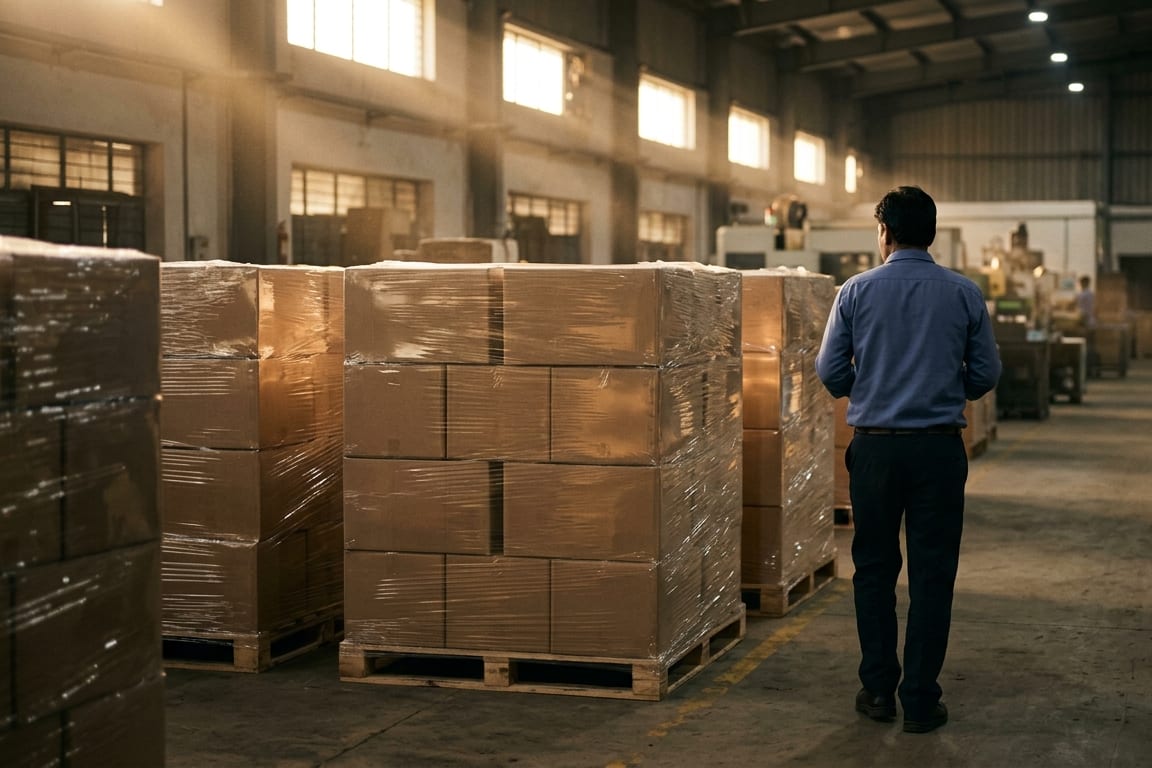
An Indian factory floor at the end of a shift with finished cartons stacked for export, a supervisor turned away

Four things Indian exporters get wrong:

  • BIS and ISI do not carry into Saudi
  • Indian test reports accepted on scope, not on nationality
  • Certificate names your factory, not your office
  • Four overlapping working days per week
Start My SABER File

The certificate is the same. Your path to it is not.

There is no Indian version of a SABER certificate. It is issued in Saudi Arabia, to your Saudi importer, by a conformity body holding SASO approval for your product regulation. Nothing about that changes because the goods left Nhava Sheva rather than Shanghai.

What changes is the work that happens in India before it. Indian exporters arrive with a specific set of assets and a specific set of assumptions — NABL reports, a BIS licence, a contract manufacturer, a domestic carton design, an invoice written for DGFT — and each of those meets the Saudi file differently. This page is about those meetings, because that is where Indian files stall.

Eight things that change in an Indian file

Everything here is specific to exporting from India. None of it appears on a generic SABER page, and all of it has cost an Indian exporter money.

Your test reports are judged on scope, not on origin

An Indian laboratory report is accepted on the same terms as any other: ISO/IEC 17025 accreditation covering the specific standard, under an ILAC mutual recognition arrangement. NABL accreditation qualifies. What fails is a report from a lab accredited for adjacent tests, or an in-house report on lab letterhead.

BIS certification is not a head start

ISI marking and BIS registration evidence conformity to Indian standards under Indian law. Saudi Arabia assesses against Saudi technical regulations. The underlying test data sometimes transfers; the certificate and the mark never do, and assuming otherwise is the most expensive assumption Indian exporters make.

The certificate names the manufacturing site

Contract manufacturing and job work are ordinary in India and awkward on a certificate. The site that made the goods is named in the scope, so moving a production run to a second unit mid-season makes that run uncertified even though the product is identical.

Merchant exporters own none of the evidence

If you buy from a manufacturer and ship under your own name, the technical file, the test reports and the factory access all sit with someone else. The certificate still requires them, so the commercial relationship has to be arranged to release them before the file starts.

Attestation is an India-side task with an India-side clock

Certificates of origin are issued by an Indian chamber and then authenticated. It happens in India, before the goods sail, and it cannot be retrofitted from Riyadh once a consignment is sitting at the port.

Arabic artwork is a pre-press decision, not a packing one

Indian production lines print cartons and labels well ahead of dispatch. Arabic content, the energy label and origin marking have to be settled before that print run, or the correction is a reprint of the whole order.

You share four working days with Saudi Arabia

The Saudi week runs Sunday to Thursday. Friday is their weekend and your working day; Sunday is the reverse. Anything needing a same-day exchange between your factory, us and a Saudi importer has four usable days, and a file planned on five will slip.

Your invoice has to support your tariff code

Indian export invoices are often written for DGFT and drawback purposes, with descriptions that do not match the Saudi heading the certificate was issued against. Saudi clearance compares the two, and a description written for one audience fails in front of the other.

Your ISI licence does not travel

Worth reading in full if a Saudi tender has been answered on the strength of Indian certification. The two columns share almost nothing but the word certificate.

What BIS or ISI gives you

  • Conformity to an Indian Standard, assessed under Indian law
  • A licence to apply the ISI mark in the Indian market
  • Test data generated at a laboratory recognised by BIS
  • A factory inspection under the BIS scheme, to BIS criteria
  • Nothing that a Saudi conformity body is obliged to accept

What a SABER certificate requires

  • Conformity to the Saudi technical regulation for your HS code
  • Testing against the standard editions that regulation cites
  • A report from a lab accredited for that exact scope under ILAC
  • Issue by a body holding SASO approval for that regulation
  • A Saudi importer with a valid Commercial Registration to hold it

Which kind of Indian exporter are you?

The answer decides who has to cooperate for the file to proceed — and whether that cooperation needs negotiating before you quote.

Manufacturer exporter

You own the plant, the drawings and the test reports.

  • Own technical file
  • Direct lab instruction
  • Audit-ready

The straightforward case. The technical file already exists in-house, the factory can be audited where the scheme requires it, and additions to the model list are yours to make.

Merchant exporter

You buy finished goods and export under your own invoice.

  • Supplier consent needed
  • Factory named is theirs
  • Agree before quoting

Agree evidence access with the manufacturer in writing before you quote. The certificate scope names their factory, so a supplier who will not release the technical file or admit an auditor cannot be certified through you.

Private label and OEM

Your brand, somebody else’s production line.

  • Brand in scope
  • Shared evidence possible
  • One line, several names

Brand and model list are certified together. Where several brands come off one line, they can often share evidence, but each brand still has to appear in the scope that reaches the border.

Multi-unit manufacturer

The same product made at more than one Indian site.

  • List all units
  • Amendment if added later
  • Per-site evidence

List every site that might produce the order at the outset. Adding a unit later is an amendment, and a consignment made at an unlisted unit is uncertified regardless of how it was made.

The India-side file

Eight inputs, gathered in India. Two of them belong to your manufacturer rather than to you, which is why merchant exporters should read this list before accepting an order.

An export documentation desk in an Indian office with a rubber stamp, invoice pads and a laptop
  • IEC and exporter identity: Importer Exporter Code and the exact registered name you invoice under. This has to be the name that appears on the certificate of origin and the bill of lading.
  • Manufacturer details, not just yours: Legal name, full address and contact for the plant that actually produces the goods, even where you are a merchant exporter and never visit it.
  • Test reports in the manufacturer name: Accredited reports naming the manufacturer and the model, with the accreditation scope attached. A report addressed only to a trading company invites a question you cannot answer.
  • Certificate of origin from an Indian chamber: Issued against the shipping documents, then authenticated for Saudi use. Start it early enough that authentication is not on the critical path to the sailing.
  • Product photographs and artwork proofs: The product, the rating plate and the retail packaging, plus the print-ready artwork before it goes to the press.
  • Saudi importer CR and SABER account: The certificate is raised in your importer’s name. Confirm their Commercial Registration is live and their SABER account works before the file opens, not after.
  • Commercial invoice draft: In the form it will actually be issued, so the goods description can be checked against the tariff heading the certificate will be issued under.
  • Model and variant list: Every model number, rating and variant that could appear in a carton this season — including the ones sales has not confirmed yet.

Six ways an Indian file goes wrong

Every one of these is recoverable early and expensive late. Five of the six are settled before a single sample is despatched.

Quoting Saudi delivery on an ISI certificate

A tender answered on the strength of BIS approval, with SASO discovered afterwards. The gap between them is measured in weeks of testing, not in paperwork.

The supplier will not release the technical file

A merchant exporter finds out at certification that the manufacturer treats drawings and reports as confidential. Nothing proceeds until that is renegotiated, usually at a worse price.

Production moved to the second unit

Capacity shifts to another plant to meet a delivery date. The goods are identical, the unit is not on the certificate, and the consignment arrives uncertified.

Cartons printed before the label review

A full season of packaging printed without Arabic content or the energy label, because artwork was signed off on the Indian domestic version.

Planning a file across the Friday-Sunday gap

A four-day approval chain scheduled as though both sides work the same week. Each handover that lands on a non-shared day costs a calendar day nobody budgeted.

Attestation discovered after the vessel sails

The certificate of origin is complete but not authenticated. It is an India-side task, and there is no way to complete it once the goods are at a Saudi port.

Indian exporter questions

Test reports, BIS, merchant exporting, cost and timelines from India.

How do I get a SABER certificate in India?

The certificate itself is issued in Saudi Arabia, to your Saudi importer, by a conformity body holding SASO approval for your product regulation. What happens in India is the preparation: confirming the HS code, testing at an accredited laboratory, assembling the technical file, settling Arabic artwork and getting the certificate of origin issued and authenticated. An Indian exporter cannot hold the certificate in its own name.

Are Indian test reports accepted for SABER certification?

Yes, where the laboratory holds ISO/IEC 17025 accreditation covering the specific standard being tested, under an ILAC mutual recognition arrangement. NABL accreditation meets that description. Acceptance turns on the scope of accreditation rather than on the country — a report from a lab accredited for a neighbouring test is refused wherever it was issued.

Does BIS or ISI certification help with SASO approval?

Not as a certificate. BIS attests conformity to Indian standards under Indian law and carries no weight in a Saudi assessment. Where it helps is indirectly: the product has already been through accredited testing, so the data and the sample history exist, and some of that testing may be reusable if it was run against a standard the Saudi regulation also cites.

I am a merchant exporter and do not own the factory. Can I still certify?

Yes, but only with the manufacturer’s cooperation. The certificate scope names the production site, and the assessment needs the technical file, the test reports and — where the scheme requires it — access for an audit. Agree that access in writing with your supplier before you quote a Saudi buyer, because it is the step that most often stops a merchant export file.

What does a SABER certificate cost for an Indian exporter?

The certificate fee is a small part of it. The cost is driven by whether accredited testing already exists, how many models and variants the scope has to carry, whether the regulation requires a factory audit, and whether artwork has to be reworked. Two exporters shipping the same product can differ by a multiple on those four alone.

How long does it take from India?

Where valid accredited test reports already exist, the certification step is usually a matter of weeks. Where testing has to be commissioned, the laboratory queue governs the timeline and it is materially longer. Plan around the shared working days too — India and Saudi Arabia overlap on four days a week, not five.

Does my certificate of origin need attestation for Saudi Arabia?

It is issued by an Indian chamber of commerce and then authenticated for use in Saudi Arabia. Requirements vary with the document type and the counterparty, and Saudi Arabia’s accession to the Apostille Convention has changed the route for some documents while commercial documents still begin with chamber attestation. Confirm the exact route per consignment before the goods sail — it cannot be completed afterwards.

Can I use the same certificate for shipments to the UAE or Qatar?

No. A SABER certificate is a Saudi certificate. Other GCC states run their own conformity regimes, and while the G-Mark is a Gulf-wide marking for some product families, it is not a substitute for each country’s own requirements. Budget separately for each market you quote.

Which Indian products most often need a SABER certificate?

Electrical goods and fittings, cables, lighting, building and construction materials, chemicals and paints, auto components, toys, textiles and home appliances all commonly fall under Saudi technical regulations. Food, cosmetics and medical goods route to SFDA instead, which is a different process entirely rather than a harder version of this one.

Do you work with exporters outside Mumbai?

Yes. The file work is document-led, so location within India makes little difference to how it runs. What does need arranging locally is laboratory sample despatch and, where the regulation calls for it, the factory audit at the site that will actually produce the goods.

Tell us what you make and who makes it

The product, the HS code, whether you own the factory and what testing already exists. That is enough for us to tell you what your Indian file actually needs — and what it does not.