
Factory Inspection

Testing proves one unit. The audit proves the next thousand.

A test report describes a sample. For higher-risk product families, Saudi regulations are not satisfied by that alone — they specify a certification scheme in which the production system is assessed too, and re-checked while the certificate stands. Whether that applies to you is decided by the regulation, not by anyone's preference.

An auditor holding a clipboard walking away from camera down a production line, machinery receding into soft focus

Four things to know before a date is booked:

  • The scheme decides whether you are audited
  • ISO 9001 helps, it does not substitute
  • The line is compared to the tested sample
  • Findings are closed with evidence, not promises
Prepare for an Audit

A certificate covers production, not a sample

Type testing answers a narrow question well: did this article, on this day, meet this standard. It says nothing about the thousand units that follow it, which is precisely what a Saudi importer is relying on when they clear a container against your certificate.

Certification schemes exist to close that gap, and they range from sample testing alone to a full assessment of the quality system with continuing surveillance. The technical regulation for your product family names which one applies. Establish that early: an audit requirement discovered late does not merely add a visit, it adds the time it takes to be worth visiting.

Four schemes, and only you are not choosing

The regulation selects the scheme according to risk. Knowing which one you fall under tells you your cost, your timeline and your obligations after issue.

Sample testing only

A representative sample is tested; production is not visited.

  • No audit
  • Type testing
  • Change control on you

The lightest scheme, used for lower-risk product families. Your obligation is that what you ship continues to match what was tested — nobody comes to verify it, which makes internal change control the whole control.
Testing plus production surveillance

Type testing, then periodic checks on the production line.

  • Initial audit
  • Periodic surveillance
  • Samples from the line

The scheme assesses whether the factory can reproduce the tested article consistently, and returns to confirm it. Surveillance visits and samples drawn from production are part of holding the certificate, not part of getting it.

Testing plus quality system assessment

Type testing, a full QMS assessment, and ongoing surveillance.

  • Full QMS audit
  • Higher-risk families
  • Continuing surveillance

The most demanding scheme, applied to higher-risk families. The audit examines the management system as well as the line, and surveillance continues for as long as the certificate does.

Batch or consignment verification

A defined batch is verified rather than ongoing production.

  • One batch
  • Nothing carries over
  • Costly if repeated

Used where production is occasional or the relationship is one-off. Nothing carries forward: the next batch is verified again, which is expensive for anyone shipping regularly.

Eight things an auditor looks at

The first is the whole point of the visit. The last is the one that quietly invalidates certificates between audits.

The line against the tested sample

The central question of the whole visit. The auditor compares what is coming off production with the article described in the test report — construction, components, ratings, markings — because a certificate covers the tested design, not a family resemblance to it.

Incoming material control

How components arrive, how they are verified and what happens when a delivery does not conform. A safety-critical component accepted without check is a finding regardless of how good the finished product looks.

The critical component list

Compared against what is physically on the shelves and in the product. Substituted or second-sourced critical parts that never reached the technical file are among the most common significant findings.

In-process and final inspection

What is checked, by whom, against what criteria, and what the records show. The auditor is looking for a routine that runs whether or not anyone is watching, evidenced over time.

Calibration of test equipment

Your own production test gear — meters, jigs, gauges — calibrated, in date and traceable. Uncalibrated equipment makes every routine test result you hold unusable as evidence.

Traceability and records

Whether a finished unit can be traced back to its batch, its components and its inspection records. This is what makes a targeted recall possible instead of a total one.

Nonconforming product handling

How rejects are identified, segregated and dispositioned. An auditor who finds rejected stock sitting next to passed stock has found a bigger problem than the reject.

Change control

How design, component and process changes are recorded and assessed. Most certificates fail over time not because a factory got worse but because a product quietly changed and nobody told anyone.

Factory audit is not pre-shipment inspection

Clients ask for one and mean the other constantly. They answer different questions, at different times, with different consequences.

Factory audit

  • Assesses the production system and its ability to repeat
  • Required by the certification scheme, not by the shipment
  • Happens before the certificate, and periodically after it
  • Looks at records, calibration, controls and change history
  • Findings are closed with corrective action and evidence
  • Its outcome affects every consignment you will ever ship

Pre-shipment inspection

  • Checks one consignment against what it is supposed to be
  • Requested for a shipment, often by a buyer or a bank
  • Happens after production, before the container leaves
  • Looks at quantity, packing, marking and visible condition
  • Its outcome is a report on that shipment and nothing else
  • Passing it says nothing about whether your system is sound

Six stages, from scheme to surveillance

Step five, not step four, is what usually sets the certificate date. Closing a significant finding properly takes longer than the visit that raised it.

  1. Establish whether an audit applies

    The technical regulation specifies the certification scheme, and the scheme decides whether production is assessed at all. This is settled at the same time as the HS code, not discovered later.

  2. Scope the sites

    Every site that will produce the certified goods, including contract manufacturers and second units. A site not in scope cannot lawfully produce certified goods, whatever the quality of its output.

  3. Documentation review before the visit

    Quality manual, procedures, critical component list, calibration records and inspection records read in advance, so the visit is spent on the line rather than on filing.

  4. The on-site audit

    A walk of the process from incoming material to despatch, with records sampled against what is physically present, and the production article compared to the tested one.

  5. Findings and corrective action

    Findings are graded. Significant ones must be corrected and evidenced before a certificate is issued; lesser ones are closed to a timetable. Corrective action means changing the cause, not the instance.

  6. Surveillance, where the scheme requires it

    Periodic revisits, sometimes with samples drawn from the line. The certificate is maintained by continuing to pass, not by having passed once.

Ten things to have in order beforehand

Work through this in the weeks before the visit, not the night before. Three of them cannot be fixed quickly, and those are the three that matter.

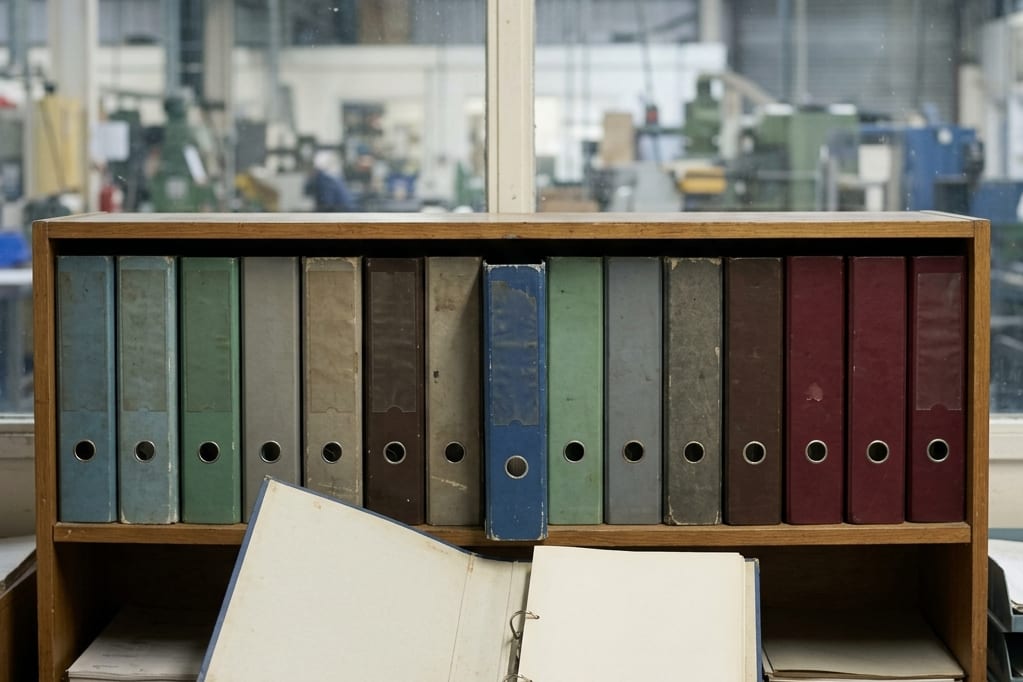
A production office shelf of inspection record binders with one open on the desk below
  1. Know which scheme your regulation specifies before anyone books a date
  2. Have the test reports and technical file on site, not only at head office
  3. Reconcile the critical component list against what is actually on the shelves
  4. Check every piece of production test equipment is calibrated and in date
  5. Be able to trace one finished unit back to its components and its records
  6. Have inspection records for a run of months, not a tidy week
  7. Make sure rejected stock is segregated and its disposition recorded
  8. Record every design or component change since the product was tested
  9. Brief the line supervisors — the auditor will ask them, not only the manager
  10. Confirm product marking on the line matches the certificate and the artwork

Six findings that come up every time

None of these mean a badly run factory. Most of them mean a well-run factory where one change was made without anyone connecting it to a certificate.

A component changed and nobody updated the file

A cheaper equivalent part sourced by purchasing, with no assessment of whether it was safety-critical. The product on the line is no longer the product in the report.

Calibration lapsed on production test equipment

A tester out of calibration for months. Every routine result recorded in that period becomes unusable, which turns one small finding into a gap in your evidence trail.

Records written for the audit

Inspection sheets completed in one hand, in one sitting, the week before the visit. Auditors recognise it immediately and it converts a procedural finding into a credibility problem.

The certified model is built on an unlisted line

Capacity moved to a second unit or a subcontractor that is not in the certificate scope. Everything about the product is fine and the consignment is still uncertified.

Rejects back in the flow

Nonconforming units unsegregated, or reworked with no record of what was done. It raises the question of what has already shipped, which is a worse question than the finding.

Marking on the line does not match the certificate

A model designation or rating printed differently from the scope and the artwork. Caught at audit it is a correction; caught at the border it is a held container.

Factory inspection questions

Whether you need one, what is checked, ISO 9001, contract manufacturers and what happens after a finding.

Does my factory need an inspection for Saudi certification?

It depends on the certification scheme the technical regulation specifies for your product family, not on the conformity body or on your size. Lower-risk families are certified on sample testing alone. Higher-risk families require the production system to be assessed and then re-checked periodically. Establish which scheme applies at the same time as the HS code.

What is the difference between a factory audit and a pre-shipment inspection?

A factory audit assesses whether your production system can reproduce the tested article consistently, and its outcome affects every consignment. A pre-shipment inspection checks one consignment for quantity, packing, marking and visible condition before it leaves. They answer different questions, and passing one says nothing about the other.

Does ISO 9001 certification mean I will pass?

It helps materially — the disciplines overlap, and a factory running a real quality system has most of the records an auditor asks for. But ISO 9001 assesses a management system in general, while this audit asks a specific question: does what comes off your line match what was tested. A certified factory can still fail on a substituted component.

What does the auditor actually look at?

Incoming material control, the critical component list against what is physically present, in-process and final inspection and their records, calibration of your production test equipment, traceability from a finished unit back to its batch, handling of nonconforming product, change control, and the product on the line compared to the test report.

Can the audit be done remotely?

Documentation review is routinely done in advance and remotely, and that is the part that makes a site visit efficient. Whether the physical assessment itself can be conducted remotely depends on the scheme and the product family, and it is the exception rather than the arrangement to plan around.

How long does a factory audit take?

A single-site audit for one product family is typically a day on site, plus the documentation review beforehand and the findings closure afterwards. Multiple product families, multiple lines or a full quality system assessment extend it. The closure of significant findings, not the visit, is usually what sets the certificate date.

What happens if we fail?

Audits produce findings rather than a verdict. Significant findings must be corrected and the correction evidenced before a certificate is issued; lesser ones are closed to an agreed timetable. Corrective action means addressing the cause — a resourced component put through change control, not simply swapped back for the visit.

We use a contract manufacturer. Whose factory is audited?

The site that actually produces the goods. That is the site named in the certificate scope, so it is the site that is audited — which means your contract manufacturer has to agree to admit an auditor before you can be certified. Agree that in writing before you take the order.

We produce at more than one site. Do they all need auditing?

Every site that may produce the certified goods has to be in scope, and scope generally means assessment. Listing all of them at the outset is far cheaper than adding one mid-season, and a consignment made at an unlisted site is uncertified however it was made.

How often will we be audited after certification?

Where the scheme includes surveillance, periodically for as long as the certificate is maintained, sometimes with samples drawn from the line or the market. Schemes based on sample testing alone have no revisit — which places the entire burden of keeping production matched to the test report on your own change control.

Find out whether you are audited before you promise a date

Send the HS code and the sites that will produce the goods. We will tell you which certification scheme applies, whether an audit is in scope, and what to have ready if it is.