SASO Certificate for Electrical Appliances

Three test reports, one certificate

Electrical goods are the most heavily regulated category Saudi Arabia certifies, and the one where exporters most often arrive holding evidence that covers part of the requirement. Safety, electromagnetic compatibility and energy efficiency are assessed separately — the file moves at the speed of whichever is missing.

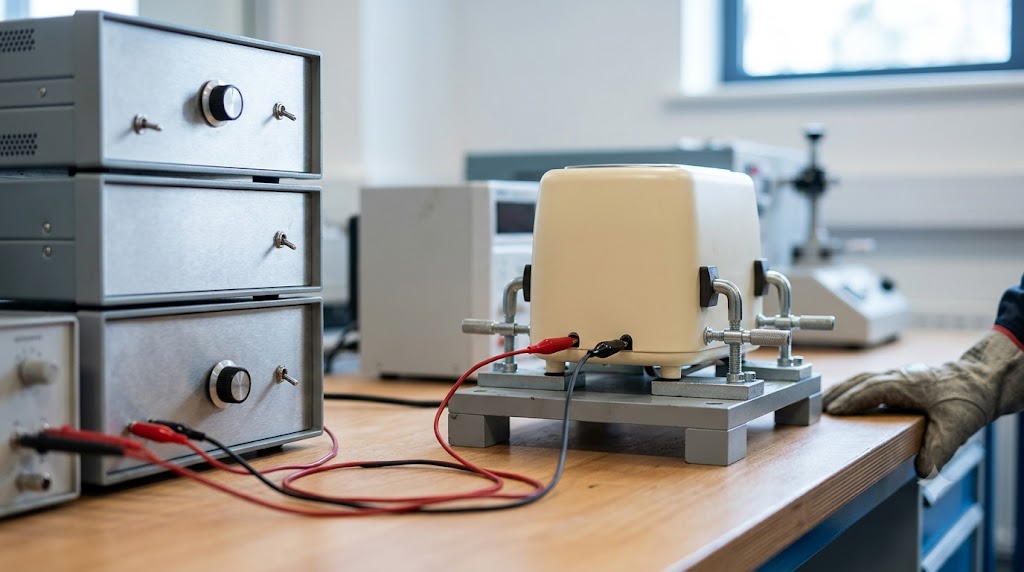
An unbranded appliance clamped in a test fixture on an electrical safety bench

Send to scope an electrical file:

  • Model list
  • Saudi HS code
  • Existing test reports
Check Your Electrical Product

What this category demands

Six things that decide the shape of an electrical programme, all of them settled before a sample is dispatched.

Almost everything electrical is regulated

Mains-powered and battery-powered goods sit inside a Saudi technical regulation in nearly every case. The useful question is not whether you are regulated but which regulation applies, because that choice sets the testing and the assessment route.
Testing comes before certification

Electrical categories are assessed on laboratory evidence, not on a declaration. A report from a laboratory accredited for the exact standard is the first thing a conformity body asks for, and the longest item in the schedule.

Safety, EMC and energy are three files

One appliance can need a safety report, an electromagnetic compatibility report and an energy efficiency result. They come from different tests and sometimes different laboratories, and missing one holds the certificate as surely as failing all three.

The rating plate is part of the assessment

Voltage, frequency, power, model reference, country of origin and importer details are checked against the report. Saudi supply is 220–240 V at 60 Hz, and a plate written for a 50 Hz market is a visible mismatch.

One product certificate, many models

Variants that share a platform and a test basis are normally grouped under a single product certificate. Grouping well is the difference between one certificate and nine, and it is decided before testing rather than after.

The shipment certificate is separate

The product certificate lasts a year. Each consignment then needs its own shipment certificate raised against it, matched to the invoice, before the goods reach the port.

Where your product sits

The electrical families we certify most often for Saudi entry, and what is distinctive about each one's file.

Household appliances

Kettles, mixers, irons, vacuum cleaners, fans and water heaters across the small domestic range, assessed against the IEC 60335 series. The highest-volume electrical family in Saudi entry and the most heavily surveilled in market.

Air conditioning and refrigeration

Split units, window units, chillers, refrigerators and freezers. Safety is the smaller half of the work here — the energy efficiency requirement and its label decide both the schedule and whether the model is sellable at all.

IT and audio-visual equipment

Laptops, monitors, routers, televisions, audio equipment and their power supplies, assessed against IEC 62368. Anything carrying a radio needs telecom type approval on top of the conformity file.

Power tools

Drills, grinders, saws and transportable tools under the IEC 60745 and 62841 families. Mechanical safety documentation is normally requested alongside the electrical report.

Wiring devices and switchgear

Sockets, switches, breakers, distribution boards and protective devices. Construction detail carries as much weight as the pass result, and the socket configuration in use is its own requirement.

Cables and accessories

Flexible cords, fixed wiring cable, extension assemblies and connectors, regulated tightly and with traceability marking rules that catch exporters out more often than the testing does.

Batteries, chargers and adapters

Cells, packs, external power supplies and charging accessories, with transport requirements sitting alongside the conformity file. Sold-separately accessories need their own cover, not the host product certificate.

Motors, pumps and small machines

Where an electrical product also performs a mechanical function, two regulations can apply at once. The HS code decides which one leads and whether both files are needed.

Five steps, in this order

The first two take hours and decide the cost of the remaining three. Reversing them is the single most expensive habit in this category.

  1. Classify and confirm the regulation

    The Saudi HS code selects the technical regulation, and with it the standards, the risk band and the assessment route. Electrical codes sit close together, so a neighbouring code can change the whole programme. Settle this first, in writing.

  2. Audit the evidence you already hold

    Existing CB, CE or national reports are read against what the Saudi regulation names, at the edition in force. Most exporters hold more usable evidence than they expect and less complete evidence than they assume.

  3. Test what is missing

    Only the uncovered scope goes to an accredited laboratory — often national differences, EMC or the energy result rather than a full safety programme. Worst-case samples are selected so one test run covers a family.

  4. Fix the artwork before submission

    Rating plate, Arabic labelling, packaging text, the energy label where it applies and the manual are proofed together. Artwork corrections found at technical review cost more than the review itself.

  5. Certify and register

    The conformity body issues the product certificate against the model list, and it is registered on the SABER platform under the Saudi importer account. Shipment certificates follow per consignment.

What a conformity body reads

Ten items. A file missing any one of them is not a slow file — it is a file that has not started.

  • Safety test report against the standard the regulation names, at the current edition
  • EMC report where the technical regulation calls for one
  • Energy efficiency test result for regulated appliances, with the label artwork
  • Laboratory accreditation scope covering the exact standard, not merely the product
  • Full model and variant list, with the differences between variants stated
  • Rating plate artwork showing 220–240 V, 60 Hz and the model reference
  • Circuit diagram, critical component list and construction detail
  • Arabic packaging artwork and user manual
  • Manufacturer declaration naming the production site that appears on the report
  • Commercial invoice and packing list, for the shipment stage
The blank underside of an unbranded appliance beside an open test report

Clean files against stalled ones

The same product, the same regulation, six weeks apart. The distinction is almost always in the left column.

Where electrical files pass cleanly

  • A current CB certificate with its full test report released
  • One platform, clearly documented variants, one worst-case sample
  • Accreditation scope checked before the sample was dispatched
  • A rating plate rewritten for 60 Hz at the artwork stage
  • Energy testing started in parallel with safety, not after it

Where they stall

  • A report against a superseded edition of the right standard
  • EMC assumed to be covered by the safety report
  • Accessories sold separately with no certificate of their own
  • An energy result that arrives after the container has sailed
  • A model list that grew after the certificate was issued

Fourteen models, two regulations

A manufacturer of small kitchen appliances entering Saudi Arabia with fourteen models across three platforms, holding CB certificates for two of them.

  1. Codes checked

    Fourteen models resolved to two technical regulations, not one. The split changed the testing plan before anything was quoted.

  2. Evidence read

    Both CB reports were live, but one sat an edition behind. The gap came to four named clauses rather than a retest of the platform.

  3. Grouped for testing

    Three worst-case samples covered all fourteen models. Tested individually it would have been nine, with the cost following.

  4. Artwork corrected

    Every rating plate read 50 Hz. Corrected at artwork stage, before the technical review, where it would have cost a resubmission.

  5. Certified

    Two product certificates covering all fourteen models, and a first shipment certificate raised the week the goods were invoiced.

Where electrical files come unstuck

Six failures that account for most of the wasted laboratory time we see in this category.

The edition moved

IEC standards are revised, and a good result against a retired edition buys very little. This is the most common reason a well-tested electrical product still needs laboratory time.

Fifty hertz on the plate

A product built for a 50 Hz market carries it on the rating plate. Saudi Arabia runs at 60 Hz, and the mismatch is visible to a reviewer in seconds and to a market inspector later.

The accessory left uncovered

A charger, adapter or spare battery shipped as a saleable item in its own right needs its own cover. Packed inside the host carton it is easy to forget until the shipment certificate will not reconcile.

Scope that does not include the standard

A capable laboratory is not the same as an accredited one for that standard. The scope is published and checkable, and checking it takes minutes against weeks of retesting.

Energy left until last

For air conditioning, refrigeration and several appliance families the energy result governs the schedule. Started after the safety result, it adds its full duration to the end of the programme.

Grouping decided after testing

Variants tested piecemeal cannot always be pulled back under one certificate afterwards. The family is defined before samples go out, or it is not defined at all.

Electrical certification questions

This category specifically. The platform itself is answered on the SABER pages.

Do electrical appliances need a SASO certificate for Saudi Arabia?

Nearly always. Electrical and electronic goods fall under a Saudi technical regulation in almost every case, which means a product certificate registered on the SABER platform, supported by accredited laboratory testing, and then a shipment certificate for each consignment. The exact regulation follows from your HS code, and it decides how much testing is involved.

What standards apply to electrical products in Saudi Arabia?

Saudi technical regulations adopt the relevant IEC standards, usually through their GSO equivalents — the IEC 60335 series for household appliances, IEC 62368 for IT and audio-visual equipment, IEC 60598 for luminaires, IEC 62841 for power tools, and dedicated requirements for cables, wiring devices and switchgear. Which edition applies is set by the regulation in force, not by the date your report was issued.

Is a CE mark enough to sell electrical goods in Saudi Arabia?

No. CE is a European declaration and carries no standing in Saudi Arabia. The underlying test evidence behind a CE file is often reusable, which is where its value lies, but market entry still needs a product certificate from a SASO-approved conformity body registered on SABER.

Does my IECEE CB certificate cover the Saudi requirement?

It covers a substantial part of the safety scope where the assessment scheme accepts it, leaving national differences, EMC, energy efficiency and Arabic labelling outside. The CB route is worth using, but it is evidence toward a Saudi certificate rather than a substitute for one.

Do I need EMC testing as well as safety testing?

Where the technical regulation calls for electromagnetic compatibility, yes, and it is a separate report from a laboratory accredited for the EMC standard. Treating the safety report as covering EMC is one of the most common reasons an otherwise complete electrical file is returned.

What about the Saudi energy efficiency label?

Air conditioners, refrigerators, freezers, washing machines and several other appliance families carry a mandatory energy efficiency requirement with its own test evidence and its own label. For those categories the energy result often decides the schedule, so it runs alongside the safety work rather than after it.

Can one certificate cover all my models?

Usually yes, where variants share a platform, a standard and a test basis. Grouping is agreed before samples are dispatched, because a worst-case sample chosen for a defined family covers the family, while models tested individually cannot always be consolidated afterwards.

How long does electrical certification take?

The testing dominates. With usable existing evidence, a delta programme and certification often runs in two to four weeks; starting from nothing on a regulated appliance, laboratory queue and test duration typically put it at six to ten. Energy efficiency testing on refrigeration and air conditioning is the longest single item in the plan.

Does the voltage and frequency on the rating plate matter?

It does. Saudi supply is 220–240 V at 60 Hz, and the rating plate is checked against the test report and the declared market. A plate carrying only 50 Hz signals that the product was assessed for a different supply, and it is visible both at technical review and to market surveillance afterwards.

Are chargers, adapters and spare batteries certified separately?

If they are sold as items in their own right, yes — each needs cover under a product certificate. Where they are supplied only as part of the host product and appear on its evidence, they are assessed with it. The distinction surfaces at the shipment stage, when the certificate has to reconcile against the invoice line by line.

Find out what your electrical file actually needs

Send the model list, the HS codes and whatever test reports exist. We read them against the regulation in force and come back with the testing that remains — before anyone quotes you a programme.