SFDA Compliance Services

SFDA registers the factory before it registers the product

Food, cosmetics, devices, supplements and feed all sit outside SABER, on a track that starts with your manufacturing site and never really ends. We run the whole lifecycle — establishment, notification, artwork, release and the obligations that follow launch.

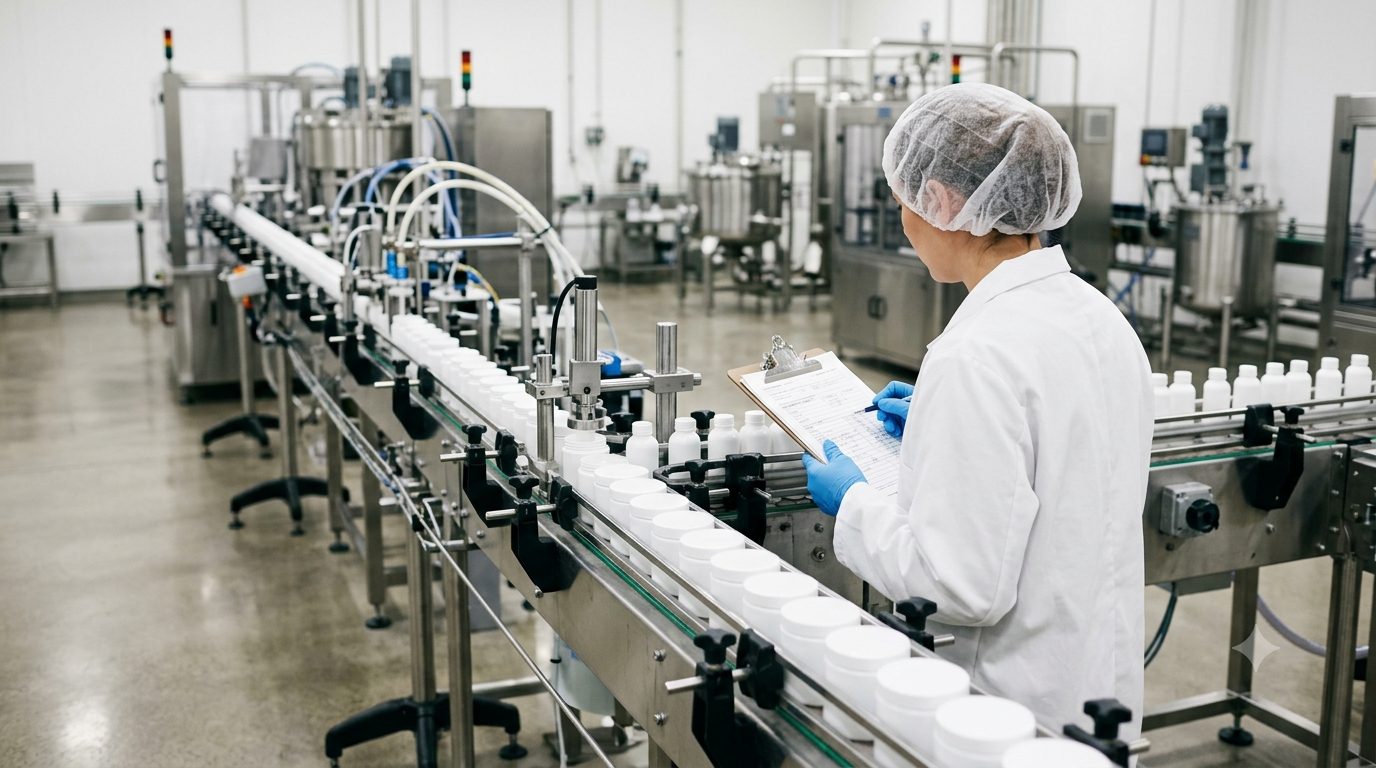
Filling line inspection inside a food and cosmetics manufacturing facility

To scope an SFDA file we need:

  • Product category + full ingredient or spec list
  • Manufacturing site details
  • Saudi importer, if appointed
Start an SFDA File

SFDA is not a different platform for the same process

Exporters arriving from SABER expect a familiar shape: certify the product once, then raise something per shipment. SFDA does not work that way. The regulator licenses the entity behind the product first, records each SKU individually, and keeps the file open long after the first container clears.

That difference is structural rather than administrative. It changes what you prepare, who holds the account, how early you have to start, and what happens at the factory when a formula quietly changes two years later.

Six sectors, one regulator

SFDA’s estate is wider than most exporters expect, and the tracks inside it share a regulator but very little else.

Food & beverages

Packaged food, grains, oils, dairy, confectionery, preserved goods and drinks for human consumption.

  • Facility registration
  • Product listing
  • Shelf-life rule
  • Halal where applicable

Foreign manufacturing facility registered first, then the product itself, then each consignment presented for SFDA release at the port.

Cosmetics & personal care

Skincare, haircare, colour cosmetics, fragrances, oral care and personal hygiene products.

  • Per-SKU notification
  • Ingredient screening
  • Artwork approval
  • Barcode registration

Establishment account, then notification per product with full ingredient disclosure and artwork, before any unit is shipped.

Medical devices & IVD

Devices across all risk classes, in-vitro diagnostics, and their accessories and software.

  • Authorised representative
  • Risk classification
  • Device authorisation
  • Post-market duties

An authorised representative inside Saudi Arabia is mandatory, holding the establishment licence before any device authorisation can be sought.

Supplements & special foods

Health supplements, sports nutrition, infant formula, fortified foods and foods for special dietary use.

  • Claim review
  • Dose thresholds
  • Formula assessment
  • Borderline products

Assessed on composition and claims rather than product name — the same formula can be a food or a medicine depending on dose and claim.

Animal feed & veterinary

Compound feed, feed additives, pet food and veterinary products.

  • Separate track
  • Additive review
  • Origin evidence

Runs on its own registration track with its own evidence set, separate from the human-food route despite the overlap in raw materials.

Pesticides & biocides

Agricultural pesticides, household insecticides and disinfectant products.

  • Active substance
  • Registration first
  • Market-specific limits

Active-substance review and registration precede any import, with restrictions that differ from those in your home market.

Establishment, product, consignment, then maintenance

Eight stages in a fixed order. The ones exporters plan for are at the end; the ones that decide the timeline are at the start.

  1. Scope confirmation

    Establish that SFDA genuinely owns the product, and which of its sectors. Borderline goods are settled here, on composition and claims, before any account is opened.

  2. Establishment registration

    The manufacturing facility is registered with SFDA. This is the step exporters most often discover late — no product record can exist until the site behind it does.

  3. Saudi-side account

    A Saudi importer with a valid CR, or an authorised representative for medical devices, holds the account the submissions are made under. Nothing is filed from outside.

  4. Product notification

    Each SKU is filed on its own: composition, specification, shelf life, manufacturer and artwork. A variant is a separate product, not a footnote on an existing one.

  5. Label & Arabic artwork

    Artwork is reviewed against the notified composition before print. Getting this order wrong is the single most expensive reprint in the process.

  6. Barcode & traceability

    Product barcodes are registered and matched to the notified SKU so that what scans at the port is what was filed months earlier.

  7. Consignment release

    Each shipment is presented to SFDA at the port with documents reconciled to the product record. This is the only step SABER-trained exporters expect, and it is the last one.

  8. Post-market obligations

    Renewals, reformulations, artwork changes and adverse-event reporting continue after launch. An SFDA file is maintained, not completed.

What SABER experience gets wrong here

Every one of these is a habit carried over from a process that works differently.

Filing an SFDA product on SABER

The platforms are not alternatives. A cosmetic filed through SABER does not get rerouted — it gets rejected, and the real track starts from zero afterwards.

Starting at the product

The facility comes first. Exporters who begin with the SKU discover the establishment requirement at the point they can least afford the delay.

Printing artwork before notification

Artwork is checked against what was actually notified. Printing first turns a review comment into a full reprint of every carton in the run.

Treating variants as one product

A shade, a flavour, a size or a reformulation is its own record. A single notification covering a family leaves most of the family uncovered.

Ignoring remaining shelf life

Goods are assessed on the shelf life left when they arrive, not when they shipped. Slow freight can make compliant stock unacceptable at the port.

Claims written for another market

A phrase that passes elsewhere can reclassify a product as a medicine here. Claim review belongs before the filing, not after the query.

The label is part of the filing

Artwork is not packaging decoration reviewed at the end. It is assessed against the notified composition, which is why it has to be drafted before the print run is booked.

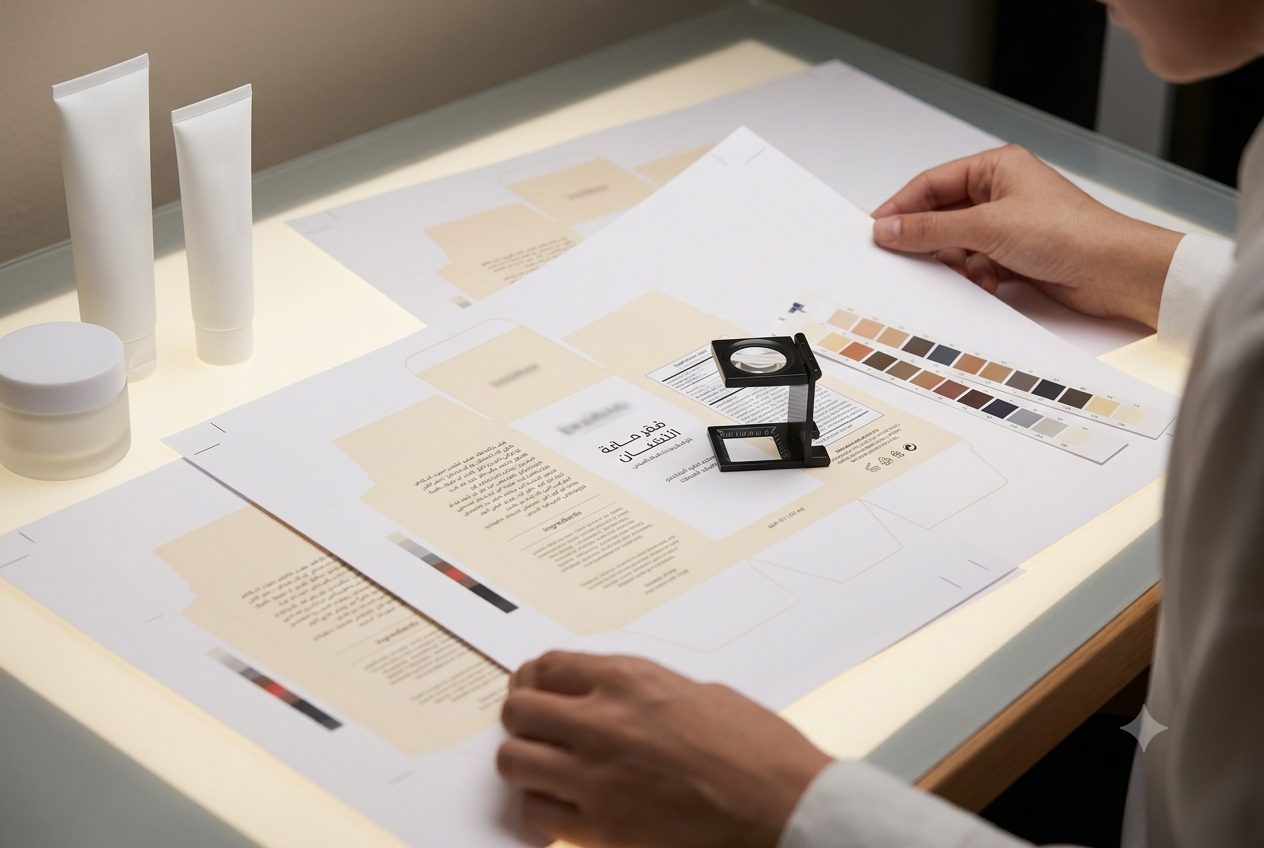
Printed carton proofs with Arabic label content checked against the notified composition

Arabic is not a translation layer

Required content must be present in Arabic on the pack itself. A sticker applied at the port is a fallback, not a plan, and not every category tolerates one.

Composition must match the filing

Every ingredient, percentage and allergen on the artwork is read against the notified record. A late formula tweak that never reached the file stops the consignment.

Dates in the expected format

Production and expiry dates must be legible, permanent and in the accepted format. Ink-jetted codes that smudge in transit are treated as absent.

Claims within scope

Health, functional and comparative claims are assessed against the product category. A therapeutic claim on a cosmetic changes what the product is.

Origin and manufacturer stated

Country of origin and the responsible manufacturer must appear and agree with the invoice, the certificate of origin and the product record.

One artwork per variant

Shared artwork across sizes or shades is the most common reprint cause. Each notified SKU carries its own approved file.

Documents, by sector

There is no single SFDA document list. What a cosmetic needs and what a device needs overlap far less than the shared regulator suggests.

Food & beverages

  • Full ingredient list with percentages
  • Nutritional analysis and shelf-life study
  • Manufacturing site details and process flow
  • Halal certificate for applicable categories
  • Health or free-sale certificate from origin authority
  • Artwork with Arabic label content

Cosmetics & personal care

  • Complete ingredient disclosure with INCI names
  • Product information file and safety assessment
  • Manufacturer details and GMP evidence
  • Free-sale certificate from the country of origin
  • Artwork, claims and pack shots for every variant
  • Barcode details per SKU

Medical devices & IVD

  • Risk classification rationale
  • Quality system certificate for the manufacturer
  • Approvals held in the origin or reference market
  • Instructions for use and technical documentation
  • Authorised representative appointment letter
  • Labelling, including Arabic where required

Tested against SFDA’s parameters

SFDA assesses categories against its own parameter sets, and a report written for another market frequently covers the right product against the wrong list. Existing reports are checked for scope, laboratory accreditation and validity before anything is quoted — if they hold, they are used.

Where gaps exist we scope only the missing parameters. Blanket retesting is the default when nobody reads the original report carefully, and it is almost always avoidable.

Analytical laboratory preparing food and cosmetic samples against SFDA parameters

Who holds which half

Nothing is filed from outside the Kingdom, but nearly all the evidence originates outside it. Splitting that clearly is what keeps a file moving.

What the exporter owns

  • Complete, honest composition and specification data
  • Manufacturing site information for establishment registration
  • Artwork drafts before print, not after
  • Notification of any reformulation, however small
  • Origin-country certificates within validity

What the Saudi side owns

  • A valid Commercial Registration and SFDA account
  • Submissions filed under that account, per product
  • Authorised representative duties for medical devices
  • Presenting the consignment for release at the port
  • Holding the local record for post-market obligations

The six reasons submissions sit waiting

None of these are product problems. All of them are avoidable before the file is opened.

Establishment not registered

The most common full stop. Product work cannot begin, and the facility file has its own evidence requirements and its own queue.

Ingredient disclosed as a blend

“Fragrance compound” or “proprietary base” is not a disclosure. Filings pause until the composition behind the blend is provided.

Free-sale certificate mismatch

The product name on the origin-country certificate must match the name being notified. Near-enough is not enough.

Artwork filed as a mockup

Low-resolution or placeholder artwork is returned. The file needs the print-ready asset with legible Arabic content.

No authorised representative

Medical device files cannot proceed without an appointed representative inside the Kingdom holding the establishment licence.

Shelf life already spent

Stock manufactured months before shipping can arrive below the acceptable remaining shelf life and be refused despite a clean file.

One range, six product records

One brand, one factory, six SKUs — and six product records, which is where the plan usually breaks.

  1. What was assumed

    The exporter expected one notification for the range, artwork already printed in English with an Arabic sticker planned for the port.

  2. What scope review found

    Two shades carried a brightening claim that reads as therapeutic. Left in, those two would have been assessed as a different product class entirely.

  3. Sequence corrected

    Factory registered first. Claims reworded on the two affected shades. Six separate notifications prepared, each with its own artwork and barcode.

  4. Artwork before print

    Arabic content moved onto the carton itself rather than a sticker, and checked against each filed composition before the print run was released.

  5. Result

    First consignment released without a hold. The reprint that was avoided cost more than the entire compliance file.

SFDA questions

Registration and lifecycle questions. SABER and shipment questions live on the compliance and import pages.

Can SFDA products go through SABER?

No. They are separate systems with separate accounts and separate evidence. A product inside SFDA scope filed through SABER is rejected, and the correct track then starts from the beginning — which is why confirming scope before filing matters more than filing quickly.

What has to happen before we can register a product?

The manufacturing facility is registered first, and a Saudi-side account must exist to file under — an importer with a valid Commercial Registration, or an authorised representative for medical devices. Product notification comes after both, not before.

Do we need a separate registration for every variant?

In most categories, yes. A shade, flavour, size or reformulation is treated as its own product record. Planning on one filing for a range is the most frequent cause of a partially compliant launch.

Is an Arabic sticker applied at the port acceptable?

Treat it as a fallback rather than a plan. Required content is expected on the pack, and tolerance for relabelling varies by category and by consignment. Designing the Arabic content into the artwork is cheaper than discovering it is not accepted.

How much shelf life must remain on arrival?

A defined proportion of the total shelf life must remain when the goods reach Saudi Arabia, and it varies by product category. It is calculated on arrival rather than on dispatch, so production date and transit time both need planning around.

Do we need a Saudi importer before we start?

You need one before anything is filed, since submissions run under a Saudi-side account. Establishment registration and document preparation can run in parallel while the commercial side is settled, so the two need not be sequential.

What makes a product borderline between food and medicine?

Dose and claim, not the name on the pack. The same formula can be a supplement at one concentration and a medicine at another, and a single functional claim can move it. Borderline products are assessed before filing, because the two routes share almost nothing.

How long does the whole SFDA track take?

Establishment registration is the long pole and should be started first. Product notification is faster once the facility exists and the evidence is complete. Ranges take longer than single products because each SKU is filed separately — we give a per-stage timeline before work begins.

Do you handle medical devices as well as food and cosmetics?

Yes. Devices run on their own track with an authorised representative requirement, risk classification and post-market obligations that food and cosmetics do not carry — it is a different process under the same regulator, and we scope it as such.

What happens after the product is registered?

The file is maintained, not closed. Renewals fall due, reformulations and artwork changes must be filed, and device products carry ongoing reporting duties. Most post-launch problems come from changes made at the factory that never reached the Saudi record.

Tell us the product and the factory — we will map the whole track

Category, ingredient or specification list and manufacturing site is enough to scope it. You get the sector, the sequence and the stage-by-stage timeline in writing.