Export Compliance for Saudi Arabia

Everything the filing needs is made in your factory

Your Saudi buyer raises the paperwork. What it stands on — test evidence in the right scope, a model list that matches the carton, print-ready Arabic artwork, documents that agree with each other — is produced at your plant, months earlier. This page is about that half of the job: what an exporter owns, and how to build it once instead of once per buyer.

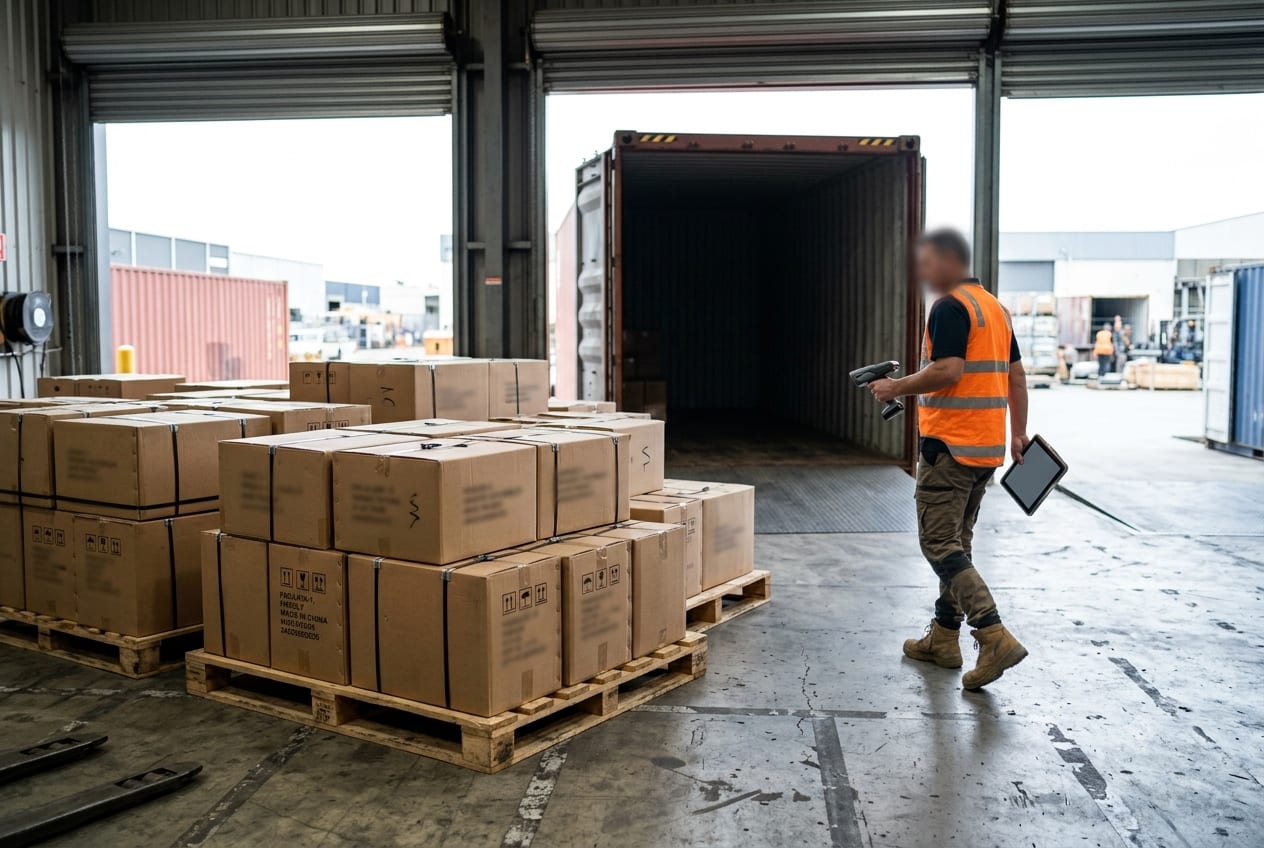
Marked export cartons on pallets in a manufacturer’s despatch bay beside a waiting container

To scope an export review we need:

  • What you manufacture
  • Which Saudi buyers you ship to
  • Certificates you already hold
Review Our Export File

The obligation sits in Riyadh. The evidence sits with you.

How a SABER filing is raised — who opens the account, what a product certificate covers, how a shipment certificate is issued against it — is our SABER desk’s subject, and it is set out in full there. This page starts one step earlier, with the part of the file that never leaves your factory.

Every stalled Saudi file we are asked to unblock is waiting on the same kind of thing: a test report in the wrong scope, a model list nobody maintains, artwork signed off before anyone asked what had to be in Arabic. None of those are filings. All of them are manufacturing decisions, taken months before a consignee is even named.

Treating Saudi compliance as a shipping formality works until the second buyer asks for the same product and gets a different answer. Treating it as a product programme — classified once, tested once, documented once — is what makes the market repeatable.

Who can actually do what

Not a division of labour you negotiate. One column is fixed by Saudi law; the other is fixed by where the goods are made.

Only the Saudi importer can do this

  • Hold the Commercial Registration the file is filed under
  • Open and operate the SABER account the certificate is issued into
  • Act as importer of record and answer to customs on arrival
  • Hold SFDA establishment registration for food, cosmetics and devices
  • Pay duty, settle port charges and release the consignment
These are yours, wherever you sit

  • The technical file and test evidence the certificate is issued against
  • The HS code the whole file is built on
  • Arabic artwork, markings and pack copy as printed at your plant
  • Invoice, packing list and origin documents that agree with each other
  • Telling the buyer what is required before they quote a landed price

Six things no buyer can do for you

Each one originates at the plant. Each one is a common reason a Saudi file stops moving.

Test evidence in the right scope

Reports must be against the Saudi technical regulation and the standards it cites, from a lab whose accreditation covers that scope. A valid report against the wrong standard buys nothing.

A technical file that survives review

Datasheets, circuit or composition detail, model lists and declarations, assembled once and reused across buyers — not rebuilt from email attachments each time a buyer asks.

Arabic artwork printed at source

Country of origin, importer details, mandatory Arabic content and category-specific markings are applied at your plant. Relabelling in a Saudi warehouse is the expensive version of this step.

Model and variant discipline

Certificates cover named models. Every variant, private-label version and mid-year revision either sits inside the certified family or needs its own evidence — decided before the order, not at the port.

Commercial documents that agree

Consignee name, HS code, model, quantity, weight and value carry identically across invoice, packing list, origin certificate and conformity document. Customs reads them as one statement.

Factory readiness

Some routes require an audit, an inspection at your premises, or evidence that the production site named on the certificate is the site that made the goods. Plan for the visit before you promise a date.

Building an export programme that repeats

The order matters more than the speed. Steps one to three are what turn a third shipment into a document exercise.

  1. Classify before you quote

    The HS code sets the duty your buyer pays, the regulation you test against and the certificate route. Quote a landed price on an assumed code and one of those three will be wrong.

  2. Establish the regulatory route

    SASO via SABER, SFDA, MIM or a sector regulator — determined once per product family and recorded, so the answer does not change with whichever buyer asks.

  3. Build the evidence once

    Testing, technical file and declarations assembled at product level rather than order level. The second shipment should cost days, not weeks.

  4. Fix the artwork at source

    Arabic content, origin marking and category markings approved as print-ready artwork before the production run, not proofed against a live order.

  5. Agree who pays for what

    Certification cost, testing cost and who applies for the shipment certificate are commercial terms. Settle them in the contract or they surface as a dispute at the port.

  6. Brief the buyer

    Your Saudi importer has to file under their CR. Give them the code, the route and the evidence pack so they can act rather than ask.

  7. Run the pre-shipment gate

    Draft documents reconciled against the certificate before the container is booked. This is where a repeatable programme stops being theoretical.

  8. Maintain the file

    Certificates expire, regulations are revised and product designs change. A programme that is not maintained reverts to firefighting within about a year.

Incoterms move cost and risk. They do not move evidence.

How the sale is structured changes who waits and who pays — not who has to produce the test report.

EXW and FOB

The buyer carries freight and clearance, but the compliance evidence is still yours. Exporters assume these terms transfer the certificate problem too. They do not.

CIF and CFR

You control the sailing but not the release. A conformity document that is not live before arrival puts demurrage on a clock you cannot stop from your side.

DDP into Saudi Arabia

You have taken on duty and clearance in a market where you may hold no legal presence. Workable, but only with a nominated importer of record and the cost modelled beforehand.

Selling through a distributor

One appointed distributor usually means one certificate holder. Check what happens to your file — and your artwork — if the relationship ends.

Multiple buyers, one product

Product-level certification can be reused across buyers; shipment-level documents cannot. Structure the file so a new buyer is an addition, not a restart.

Private label and OEM supply

When the brand on the carton is not yours, the certificate, artwork and declarations follow the brand owner. Agree early who holds what, and who reprints when a rule changes.

How exporters lose a Saudi file

None of these are technical failures. They are timing and ownership failures, and they are all avoidable at the quotation stage.

Testing done for the wrong market

CE or BIS reports are good work against a different regulation. Where the Saudi standard diverges, the report is not evidence — and the gap is usually found after the order is confirmed.

Compliance started after the PO

The buyer confirms, the production slot is booked, and only then does anyone ask what certificate is needed. Testing lead time does not compress to fit a shipping schedule.

Assuming the importer has it covered

Most Saudi buyers can file. Very few can produce your test reports, your model list or your technical file — which is what the filing actually needs.

Artwork approved without the Arabic

A pack signed off in English and translated later fails twice: once on layout, once on mandatory content the translator was never told to include.

A model number that quietly changed

Engineering revises a suffix, production ships the new one, and the certificate now names a model that is no longer in the carton.

Invoice written for the wrong reader

Descriptions written for your accounts system rather than for customs. The goods are fine; the statement about them does not match the certificate.

What an export compliance file contains

Built once at product level, reissued per buyer. If your file only exists as an email thread, it will be rebuilt under time pressure at least once a year.

Product evidence

  • Test reports against the applicable Saudi regulation and standards
  • Datasheet or technical specification per model
  • Bill of materials or full composition breakdown
  • Model, variant and private-label list with what differs between them
  • Declaration of conformity signed by the manufacturer
  • Production site address as it should appear on the certificate

Commercial set

  • Draft commercial invoice with Saudi HS codes
  • Packing list reconciled to the invoice line by line
  • Certificate of origin issued in the country of manufacture
  • Purchase order or contract naming the Incoterm agreed
  • Consignee name and CR exactly as registered in Saudi Arabia

Saudi-facing artwork

  • Print-ready label artwork with mandatory Arabic content
  • Country of origin marking on product and carton
  • Category-specific markings, where the regulation requires them
  • Shipping marks matching the packing list
  • Instruction or safety material in Arabic, where required

Arabic content is a production decision

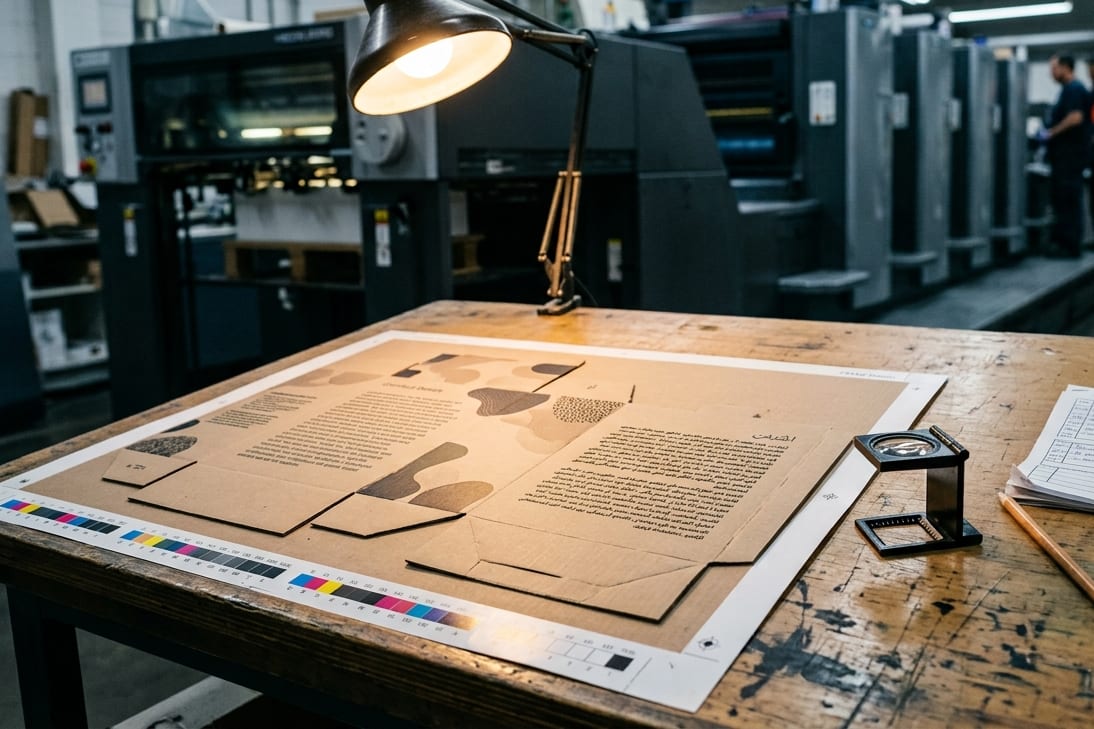
Labelling is the one requirement that is cheap at the plant and expensive everywhere else. Mandatory Arabic content, origin marking and category-specific markings all have to be on the pack that leaves your line — and the pack is printed weeks before anyone looks at the shipping documents.

Once goods have landed, the alternatives are relabelling in a bonded warehouse, re-export, or a consignment that does not clear. We review artwork as a print proof, against the regulation the product actually falls under, before the run is committed.

Bilingual Arabic-English carton proof under a task lamp on a press-side proofing table

One product, three buyers, three different files

A mid-size manufacturer with three Saudi buyers and, unintentionally, three different compliance positions on the same product.

  1. What was happening

    Each buyer had arranged their own certification. Same product, three files, three sets of test reports commissioned at different times against different revisions of the regulation.

  2. Where it broke

    One buyer’s file named a model suffix the other two did not carry. A consignment shipped against the wrong buyer’s paperwork was held while the mismatch was unpicked.

  3. What we changed

    Classification confirmed once. One technical file and one test package built at product level, with the model family defined explicitly rather than inferred from whichever order came first.

  4. How the buyers were handled

    Each importer still files under their own CR — that cannot be centralised. What changed is that all three now file against the same evidence pack, issued from the manufacturer.

  5. What it was worth

    Adding a fourth buyer became a documentation exercise rather than a re-certification. The duplicated testing spend was the part the finance director noticed first.

Export readiness summary

Ten points. If all ten are true, a new Saudi buyer is a commercial conversation rather than a compliance project.

  1. The Saudi HS code is confirmed in writing, not carried over from another market.
  2. The regulatory route — SASO, SFDA, MIM or sector — is established for the product family.
  3. Test reports exist against the Saudi regulation, from a lab accredited for that scope.
  4. The technical file is assembled at product level and can be reissued to any buyer.
  5. Every model and variant you sell is named, and each sits inside a certified family or has its own evidence.
  6. Arabic artwork is print-ready and approved before the production run.
  7. Invoice, packing list and origin certificate carry identical descriptions, codes and quantities.
  8. The Saudi consignee’s CR details are confirmed as registered, not as typed on the PO.
  9. Who pays for certification and testing is written into the commercial terms.
  10. A pre-shipment check is scheduled before freight is booked, not after it sails.

Exporter questions

Supplier-side questions. Consignment and clearance questions live on the import requirements page.

Can we get Saudi certification without a Saudi importer?

Product-level work — classification, testing, the technical file and product certification — can be completed by the manufacturer. The shipment certificate and customs clearance cannot: they are filed under a Saudi Commercial Registration by the importer of record. If you have no buyer yet, do the product-level work now; it is the part with the lead time.

We already hold CE marking. Does that help in Saudi Arabia?

It helps as engineering evidence and sometimes as a shortcut to the right test house, but it is not recognised as Saudi conformity. Where the Saudi technical regulation cites the same standard your CE testing used, parts of the report may be reusable. Where it diverges, testing has to be repeated against the Saudi requirement.

Our buyer says they will handle all the compliance. Is that enough?

It is enough for the filing, and not enough for the evidence. Your importer can open the request and pay the fee, but the test reports, technical file, model list and artwork all originate with you. When a file stalls, it is almost always waiting on something only the manufacturer can produce.

Who pays for certification — exporter or importer?

There is no rule; it is a commercial term. Product-level certification is commonly carried by the manufacturer because it is reusable across buyers, while shipment certificates are commonly carried by the importer because they are filed under their account. What matters is that it is agreed in writing before the first order, not negotiated while a container waits.

Do we need a different certificate for every buyer?

Product certification travels with the product and can generally support multiple buyers. Shipment-level certification does not — it is issued per consignment against a named consignee. Structuring your file at product level is what keeps a new buyer from becoming a new project.

We ship EXW. Doesn’t that make compliance the buyer’s problem?

Incoterms allocate cost, risk and transport duties. They do not move the origin of the evidence. Under EXW the buyer arranges everything from your gate onward and still cannot produce your test reports. In practice the exporter’s obligations are almost identical across terms; what changes is who pays and who waits.

How far ahead should we start?

Work backwards from testing, which is the long pole — commonly a few weeks, longer where samples must travel or a scope is unusual. Classification and route determination take days. Artwork should be settled before a production run. Starting at PO stage means the schedule is already set by someone else.

Does this apply to exporters shipping from India?

Yes, and a large share of our work is India-origin. The Saudi-side requirements are identical regardless of origin; what changes is the origin documentation, the local testing options and the freight pattern. Those are handled in the same file rather than as a separate exercise.

What if our product turns out to be unregulated?

That is a useful answer and we state it plainly. Unregulated goods still need a correct code, a clean document set and, in most cases, a shipment-level declaration — but no technical regulation, no testing and no product certificate. Knowing this early saves the testing budget rather than spending it defensively.

Send one product and we will tell you what is yours to fix

A datasheet, your current certificates and the name of one Saudi buyer is enough. You get the route, the evidence gaps and the artwork findings before the next order lands.