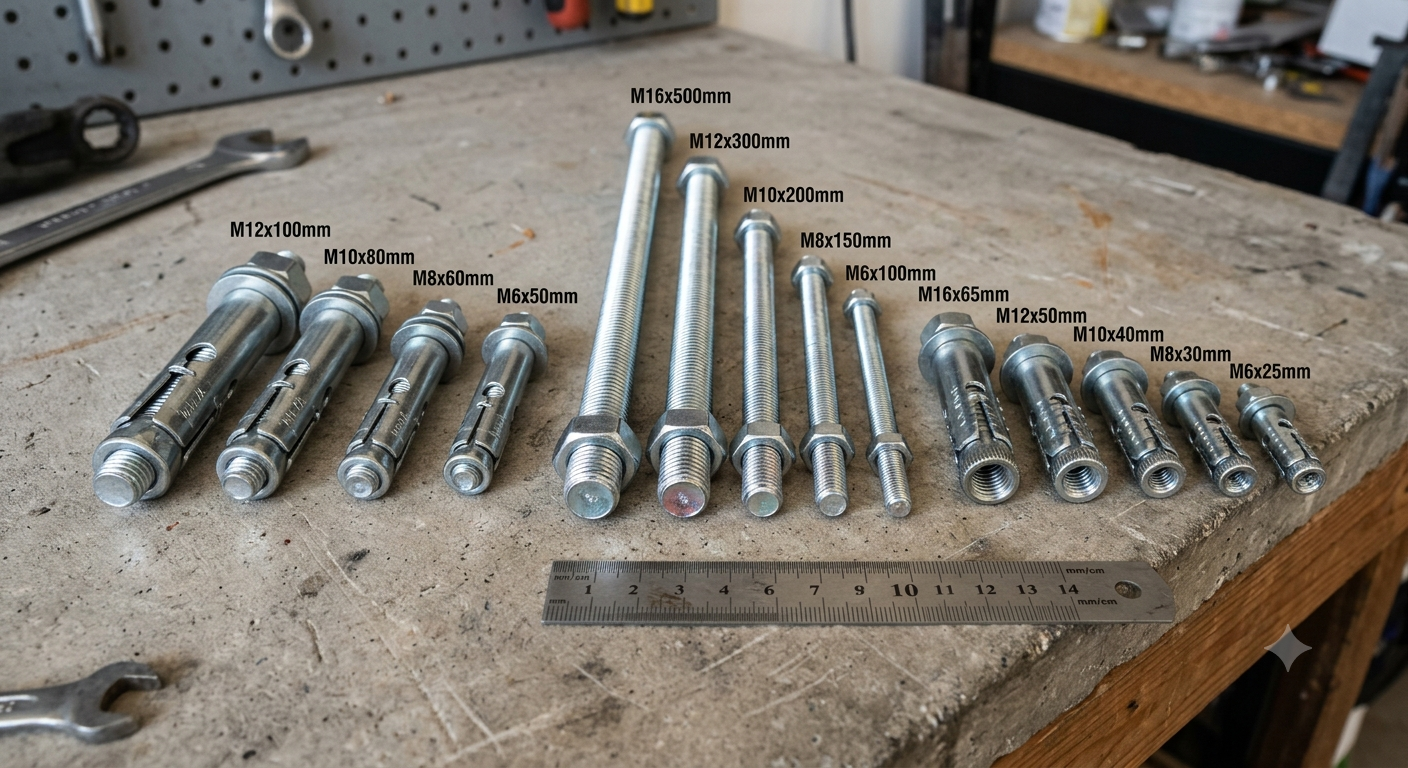
Sleeve anchors
Expansion anchors set into masonry or concrete, where the function is anchorage performance in a base material — a different question from the strength of a bolt.
Exporting anchors or threaded rods to Saudi Arabia? BenzilaCert helps review the correct HS code classification, load data, applicable standards and SABER certification requirements — preventing the catchall HS code errors that delay shipments.
Send to scope an anchor file:
Sleeve anchors, drop-in anchors, threaded rods and chemical anchor systems are not the same product for classification.
Expansion anchors set into masonry or concrete, where the function is anchorage performance in a base material — a different question from the strength of a bolt.
Internally threaded anchors set flush into concrete and used with bolts or threaded rod. Assessed on the anchorage, the base material and the installed condition.
Continuously threaded bar supplied in lengths or cut to size. The steel grade and the thread specification carry the declaration.
Single-expansion anchors for heavy-duty concrete fixing, where the pull-out and shear values define the product alongside the material grade.
Resin-based systems where the performance depends on the resin, the stud, the cure time and the base material together — not the rod alone.
Washers, nuts, couplers and base plates supplied alongside anchors and threaded rod. Each may carry its own classification.
Anchorage products and threaded fixings can fall under different requirements depending on their function.
Anchoring products used in building and construction may fall within the scope of the Technical Regulation for Building Materials. However, a sleeve anchor is not a hex bolt, and the applicable standard follows the product function — anchorage performance in a base material — rather than a generic fastener property class.
Threaded rods used for general fixing or suspension may classify under a different heading. See fasteners certification for the wider threaded products category.
The single most common error in anchor shipments.
Sleeve anchors, drop-in anchors, threaded rods and standard bolts classify under different Saudi HS headings. Declaring the whole invoice under one catchall — 731815 or similar — places products under the wrong requirements and delays clearance.
Confirm the exact Saudi HS code for each product type before assigning the conformity route — see our HS code check.
Anchorage is not tensile strength
A pull-out test in concrete is not the same as a bolt tensile test. Applying a bolt standard to an anchorage product means the wrong performance characteristic is assessed.
A preliminary list — the final evidence set depends on the product and the applicable standard.
Send the product type, material, size list and intended use. We will check the classification before committing to a route.
Five steps, from product identification to shipment documentation.
Separate the anchorage products from the ordinary fixings — sleeve anchors, drop-in anchors, wedge anchors, chemical systems and threaded rod are not one product for classification.
Assign the correct code to each product type. Using a single catchall across the group is the error this step prevents.
Check that the declared performance, the base material, the size range and the test reports match.
Prepare the technical file and coordinate with the approved certification body for the product certificate.
Reconcile the certified sizes and types against the commercial invoice, then coordinate the shipment certificate.
Driven by the product mix and the number of distinct classifications.
The total depends on the SABER platform charges, the certification body’s review, any testing, and the agreed professional support. A mixed anchor and threaded rod invoice usually costs more when the products classify under different headings.
We quote per file and do not give guaranteed completion dates. See SABER certificate cost for how a quotation is itemized.
Six recurring issues in anchor and threaded rod files.
Sleeve anchors, drop-in anchors, threaded rods and chemical capsules on one invoice under 731815 or another catchall. They can classify differently and follow different routes.
Anchorage products need declared performance in a specified base material. A tensile test on the rod alone is not the same as an anchor pull-out test in concrete.
A sleeve anchor is not a hex bolt. Applying a bolt standard to an anchorage product means the wrong performance characteristic is being tested.
Sizes shipped that were never tested or declared. Each diameter and length combination needs to be within the assessed scope.
A resin capsule submitted without the matching stud, or vice versa. The system is assessed together, not as separate consumables.
Anchorage products commonly require installation guidance — drill diameter, embedment depth, torque and curing conditions. Generic text is not equivalent.
The parent fasteners category, the building materials regulation, and the certificates an anchor file is assessed toward.
HS codes, load data, grouping, factory inspection and using existing reports.
Where the Saudi HS code falls under an applicable technical regulation, the product generally needs certification registered on SABER and a shipment certificate per consignment. The position is confirmed from the code and declared use, not the product name.
Sleeve anchors, drop-in anchors, threaded rods and standard fixings classify under different headings. A single code across the group can place products under the wrong requirements.
For anchorage products, the declared performance in a specified base material is part of the declaration. Whether independent pull-out testing is required depends on the applicable standard and the certification body.
Where the construction and material are the same and the test evidence covers the range, grouping is often possible. Markedly different sizes or a change in material generally mean separate evidence.
Only where the applicable scheme calls for it. It is not a general obligation for every anchor product. Where it does apply it needs scheduling early.
Existing reports may support the assessment where they cover the applicable standard and the product as supplied. Whether they are accepted is confirmed by the approved certification body, not assumed.
The anchor or rod type, the material and grade, the complete size list, the manufacturer, the Saudi HS code if you have it, and any existing test reports. With those we can outline the likely route before quoting.
Send the product types, materials, sizes and load data. We will check the classification, the applicable standard and what evidence is needed.
Tell us the anchor type, material, size range and intended application. We reply within one business day with the likely route and what to send next.