Reinforcement bar
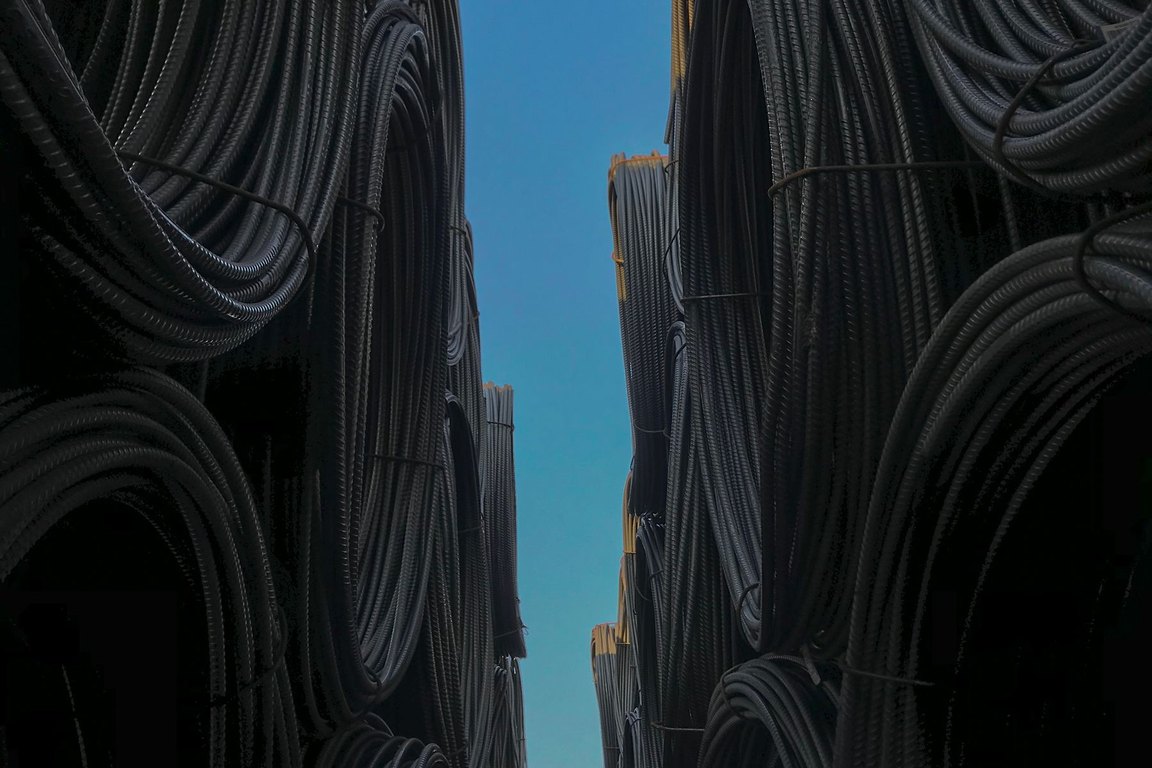
Deformed and plain rebar for concrete reinforcement. The category most often associated with Quality Mark obligations.
Exporting steel products to Saudi Arabia? BenzilaCert helps manufacturers and Saudi importers assess the applicable Saudi building-material regulations, Saudi Quality Mark requirements, laboratory testing, factory inspection and SABER certification.
Send to scope a steel file:
Construction steel, industrial steel items and fabricated components are not the same thing for certification purposes.
Deformed and plain rebar for concrete reinforcement. The category most often associated with Quality Mark obligations.
Beams, columns, angles, channels and profiles supplied for structural use in building and construction.
Flat products, including coated and galvanized material, where grade, thickness and coating all form part of the declaration.
Welded and seamless steel pipe. The applicable requirements depend heavily on the declared service and pressure rating.
Manufactured steel items and assemblies, which may be assessed as products in their own right rather than as construction steel.
Drawn wire, welded mesh and related products, classified separately from bar and section.
Construction steel is commonly assessed under the building materials regulation — where the product falls within its defined scope.
The Technical Regulation for Building Materials — Part 1 covers relevant metals and alloys used in building and construction. Whether a particular steel product falls within its defined scope is a classification question, settled from the Saudi HS code and the declared use.
Steel supplied for industrial rather than construction use, and fabricated steel components, may be assessed differently. See building materials certification for the wider construction category.
The question that most often decides how a steel file is built.
Some steel product categories are subject to Saudi Quality Mark requirements, including reinforcement iron and specified iron flat products. Where that applies, the route involves the factory as well as the product, and it is not something a product certificate alone addresses.
The Quality Mark and a SABER product certificate are separate schemes with separate processes. Where both apply, both are handled — see Saudi Quality Mark certification.
Confirm the obligation first
A PCoC alone is not automatically sufficient for every type of steel, and equally, not every steel product carries a Quality Mark obligation. The exact position depends on the current product scope and rules, and is confirmed before the route is chosen.
Bars, profiles, sheets, pipes and fabricated structures classify differently.
A mixed steel invoice can carry several classifications, and with them several conformity routes. Declaring the whole consignment under one code is a common way part of it ends up answering the wrong requirements.
Confirm the exact Saudi HS code before assigning the conformity route — see our HS code check.
Seven checks a steel assessment may draw on, depending on the product and the applicable standards.
| Check | What it looks at |
|---|---|
| Chemical composition | The cast analysis against the declared steel grade |
| Tensile and yield strength | Mechanical performance against the standard claimed |
| Elongation | Ductility against the declared grade |
| Bend testing | Behaviour under bending — commonly applied to reinforcement bar |
| Dimensional tolerances | Section size, thickness, rib geometry and mass per metre |
| Coating and corrosion resistance | Coating mass and adhesion — for galvanized or coated product |
| Weld quality | Weld integrity — where the product is welded or fabricated |
What an MTC establishes, and what it does not.
A material test certificate records the cast analysis and the mechanical results for the heats supplied, traceable to the producing mill. Alongside the product datasheet, the declared steel grade, the manufacturer identification and the product marking, it is the backbone of a steel technical file.
An MTC may support the assessment, but it does not automatically replace every required independent test report or approval. What is accepted is decided by the approved certification body.
Send the product type, grade and Saudi HS code. We will confirm which route applies before you commit to a shipment date.
Five steps, from classification to shipment documentation.
Bars, sections, flat products, pipes and fabricated items classify differently. The Saudi HS code is confirmed before anything else is decided.
Check whether the product falls within the building materials regulation, and whether the category carries a Saudi Quality Mark obligation.
Review what the applicable standard calls for, what the mill test certificates already support, and whether a factory evaluation applies.
Prepare the technical file, grade declarations and size range, then submit for assessment by the approved certification body.
Each consignment is applied for against the certification in place, with the invoice grades and sizes matching what was certified.
Not every steel product needs one. Where it applies, it needs scheduling early.
Where a Quality Mark route or another applicable assessment scheme calls for it, factory evaluation looks at the production process and the quality controls behind it, and usually brings ongoing compliance obligations rather than a one-off visit.
It is settled at classification rather than assumed from the product category. See factory inspection for Saudi certification for how a visit is arranged and what it covers.
Driven by the product category and whether a factory audit applies.
The SABER platform fee, the certification body’s assessment, laboratory testing, factory audit where it applies, any Quality Mark process and professional assistance are charged separately. On steel, a Quality Mark route with a factory evaluation is usually what changes the shape of the project.
We quote per file rather than publishing a steel certification price, and we do not give guaranteed completion dates. See SABER certificate cost for how a quotation is itemized.
Six recurring issues in steel files.
Rebar, sections, flat product and pipe on one invoice, declared under a single code. They can fall under different regulations and different routes.
A mill test certificate is useful evidence of the cast, but it does not automatically replace every independent test report or approval the route requires.
A grade on the datasheet that the chemical and mechanical results do not match is one of the clearest ways a steel file is queried.
Where a category carries a Quality Mark obligation, discovering it after shipment is arranged leaves little room to act. It is a question for classification, not for the port.
The producing mill on the MTC, the manufacturer on the application and the supplier on the invoice should reconcile.
Bundle tags, rolled-in marks and the declared grade are checked against each other and against the documents.
The parent construction category, the Quality Mark scheme, and the certificates a steel file is assessed toward.
Quality Mark versus PCoC, rebar, plates, galvanized product, MTCs, factory inspection and the shipment stage.
Many do. Where the Saudi HS code falls under an applicable technical regulation — for construction steel, commonly the Technical Regulation for Building Materials — the product generally needs certification registered on SABER and a shipment certificate per consignment. The position is confirmed from the code rather than from the product name.
For some steel categories it may be, including reinforcement bar and certain specified flat products. It is not correct to say an ordinary PCoC alone is always sufficient for every type of steel, and it is equally wrong to say every steel product needs the Quality Mark. The exact obligation depends on the current product scope and rules, so it is confirmed before the route is chosen.
They are separate schemes. A PCoC is the SABER product certificate a consignment is cleared against. The Saudi Quality Mark is a licensed mark covering the product and the factory that produces it, usually with ongoing controls. Where both apply, both are handled — see our Saudi Quality Mark page.
MTCs commonly support the assessment, because they record the cast analysis and the mechanical results for the heats supplied. They do not automatically replace independent testing where the applicable route requires it. What is accepted is decided by the approved certification body.
Not for every steel product. Where the applicable scheme — a Quality Mark route in particular — calls for factory evaluation, it applies and usually brings ongoing compliance controls with it. It is settled at classification and needs scheduling early.
Potentially, where the grades share the same standard and the test basis supports it, subject to the certification body’s approval. Different standards or markedly different grades generally mean separate evidence.
They can be. Coating mass, adhesion and corrosion performance may be assessed in addition to the base material requirements, depending on the product and the standard claimed.
The commercial invoice and packing list with grades and sizes as certified, the certificate number, the MTCs for the heats shipped, and the transport and origin documents as they become available. See our SABER documents checklist for the full list.
Send the product types, steel grades, standards claimed and your mill test certificates. We will review the likely classification, whether a Quality Mark obligation applies and what evidence is missing.
Tell us about the steel products, grades and standards you ship. We reply within one business day with the likely route and what to send next.