PPR pipes (polypropylene random)
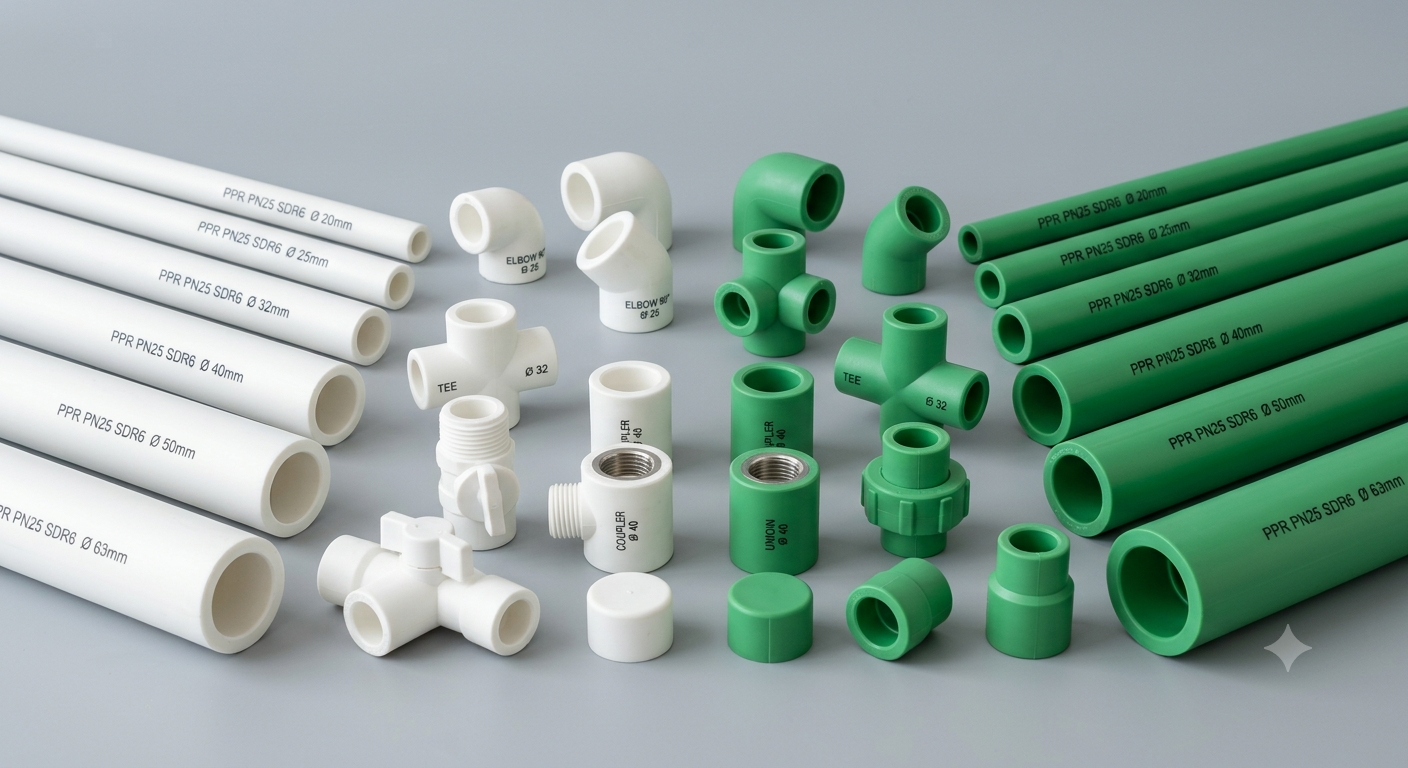
Hot and cold water supply pipes joined by socket fusion. The material grade, the SDR and the pressure class carry the declaration.
Exporting PPR, PVC-U or PE pressure pipes to Saudi Arabia? BenzilaCert helps review the polymer classification, hydrostatic test evidence, factory audit requirements and SABER certification for each pipe system.
Send to scope a pipe file:
PPR, PVC-U, PE-HD and composite pipes are different products with different standards.
Hot and cold water supply pipes joined by socket fusion. The material grade, the SDR and the pressure class carry the declaration.
Elbows, tees, couplers and valves in matching PPR material, supplied alongside the pipe system. Each fitting type may need to be within the assessed scope.
Rigid unplasticized PVC pipes for cold water supply and pressure applications, classified by nominal size and pressure rating.
High-density polyethylene pipes for water supply and gas distribution. The PE grade, the SDR and the application are all classification factors.
Aluminium-core or fibre-reinforced pipes combining polymer layers. The composite construction may affect the applicable standard.
Compression fittings, flanges, valves and transition joints. Where supplied on a separate invoice line, each carries its own classification.
The polymer and the application together determine the applicable requirements.
Plastic pressure pipes used in building water supply commonly fall within the scope of the Technical Regulation for Building Materials. The exact requirements follow the polymer type, the pressure class and the declared application — not the word “pipe” on the invoice.
See pipes and fittings certification for the wider category and building materials certification for the parent regulation scope.
The primary classification factor for plastic pipes.
PPR, PVC-U, PE-HD and composite pipes classify under different Saudi HS headings and follow different standards. Within each polymer, the SDR, the nominal pressure class and the application further refine the requirements.
Confirm the exact Saudi HS code for each pipe and fitting type before assigning the conformity route — see our HS code check.
Fittings are not automatically inside the pipe scope
PPR fittings invoiced as separate line items may carry their own classification and their own assessment. The scope is confirmed with the certification body, not assumed from the pipe system.
A preliminary list — the final evidence set depends on the polymer and the applicable scheme.
Where a factory-based scheme applies, factory quality control records and production data are requested in addition to the product evidence. See factory inspection for how a visit is arranged.
Send the polymer type, size range and pressure class. We will confirm whether a factory-based route applies before you commit.
Five steps, from polymer identification to shipment documentation.
PPR, PVC-U, PE-HD and composite pipes are different products. The polymer, the pressure class and the intended application are confirmed first.
Assign the correct code to each pipe and fitting type. Different polymers and applications classify under different headings.
Check hydrostatic pressure test reports, material certificates and dimensional data against the applicable standard.
Prepare the technical file and coordinate with the approved certification body. Where a factory-based scheme applies, coordinate the audit.
Reconcile the certified sizes and pressure classes against the commercial invoice, then coordinate the shipment certificate.
Driven by the size range, the pressure classes and whether a factory audit applies.
The total depends on the SABER platform charges, the certification body’s review, hydrostatic and material testing, factory audit where it applies, and the agreed professional support.
We quote per file and do not give guaranteed completion dates. See SABER certificate cost for how a quotation is itemized.
Six recurring issues in plastic pressure pipe files.
A PPR pipe classified under a PVC heading, or PE-HD entered as general plastic. The polymer is the primary classification factor.
A claimed pressure class with no hydrostatic test data behind it. The test must cover the rating at the declared temperature.
Fittings invoiced separately may need their own assessment. A PPR elbow is not automatically inside the pipe scope.
Diameters and wall thicknesses shipped that were never tested. The range on the certificate must cover the range on the invoice.
Where a Type 3 or factory-based route applies, the audit sits on the critical path and needs scheduling before the shipment date.
Plastic pipes are commonly required to carry continuous marking — manufacturer, standard, size, pressure class and production traceability. Missing marking is queried.
The parent pipes category, the building materials regulation, and the certificates a pipe file is assessed toward.
PPR vs PVC-U, fittings scope, factory audit, size grouping and using existing certifications.
Where the Saudi HS code falls under an applicable technical regulation — for building water supply, commonly the Technical Regulation for Building Materials — the product generally needs certification on SABER and a shipment certificate per consignment.
Not automatically. Fittings invoiced as separate line items may carry their own classification and need their own assessment. The scope is confirmed with the certification body.
Where the applicable scheme — a Type 3 route or a Quality Mark in particular — requires factory evaluation, it applies. It is settled at classification, not assumed from the product name.
Where the polymer and construction are the same and the test evidence covers the range, grouping is often possible. A change in material grade or a different pressure system generally means separate evidence.
The applicable standard specifies the test pressures, temperatures and durations. Reports must cover the declared sizes and pressure classes. Whether existing reports are accepted depends on the certification body.
Existing marks and reports may support the assessment where they cover the applicable standard and the product as supplied. They do not automatically transfer to the Saudi scheme.
The pipe system and polymer, the size and pressure range, the manufacturer, the Saudi HS code if you have it, and any existing test reports or certifications. With those we can outline the likely route.
Send the polymer type, size range, pressure classes and any existing certifications. We will confirm the classification, the factory position and what evidence is needed.
Tell us the polymer, size range, pressure classes and manufacturer. We reply within one business day with the likely route and what to send next.