SABER Certificate forEmergency Rescue Equipment
Stretchers, Spine Boards, Hydraulic Rescue Tools, Tripods & Retrieval Kits
Rescue equipment is a purchasing category, not a product class: the stretcher is a medical device, the cutter is machinery and the tripod is lifting gear, all on one invoice. We take the order apart before any rescue evidence is collected.
- CertificatePCoC / SCoC*Product Certificate of Conformity & Shipment Certificate
- PCoC CostUSD 300
- Processing Time2–3 Working Days
- SADAD FeesPaid by Importer
Product & Regulation
HS Code
HS 9402
Medical, surgical and similar furniture, which is where a stretcher, a scoop stretcher and a casualty trolley sit — and the heading is itself a signal that the item may be read as a medical device. Hydraulic rescue tools fall under 8412, 8413 or 8479 depending on construction, hand tools under 8205, a rescue tripod and winch under 8425 or 7326, webbing harnesses, slings and lines under 6307, dressings and first-aid consumables under 3005, and lamps under 8513. The Saudi code runs longer than four digits and is confirmed from the construction and the declared function, not from the product name.
Regulation
Route depends on which authority reads the product: an SFDA medical device route for patient-handling and first-aid items, machinery and pressure requirements for powered hydraulic rescue tools, lifting requirements for retrieval tripods and winches including man-riding duty, and personal protective equipment requirements at the highest risk class for rescue harnesses, lines and anchor devices; candidate pending verification
Candidate review point, not a declaration that this route applies. Confirmed against the current regulation and model scope before anything is claimed.
Product
Equipment held in store for use in an emergency — patient handling, powered extrication, confined-space retrieval or first aid. Which of those it is decides the authority; the fact that all of it is ordered as rescue equipment does not
What the assessment reads the product as, which decides the evidence it asks for.
Types of Emergency Rescue Equipment
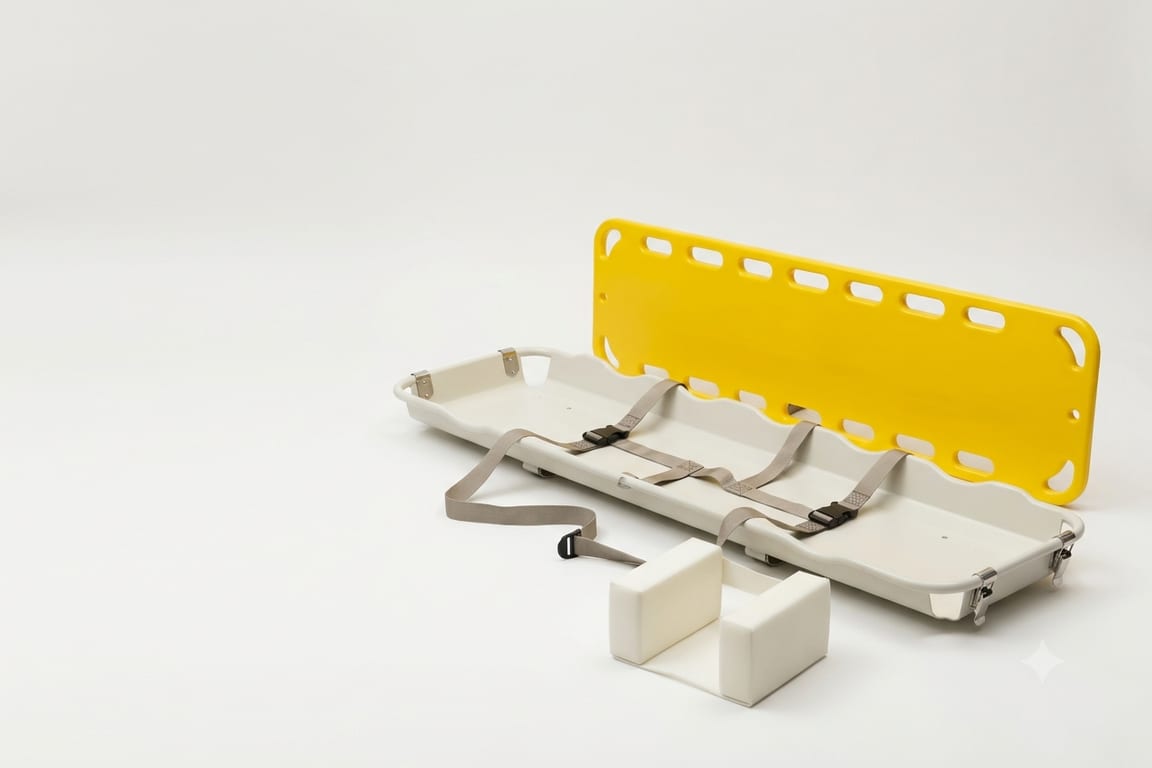
Stretchers, scoop stretchers and spine boards
Patient handling and immobilisation equipment, including collars, head blocks and vacuum splints. Most of this is read as a medical device, which takes it to the SFDA and out of the ordinary route.
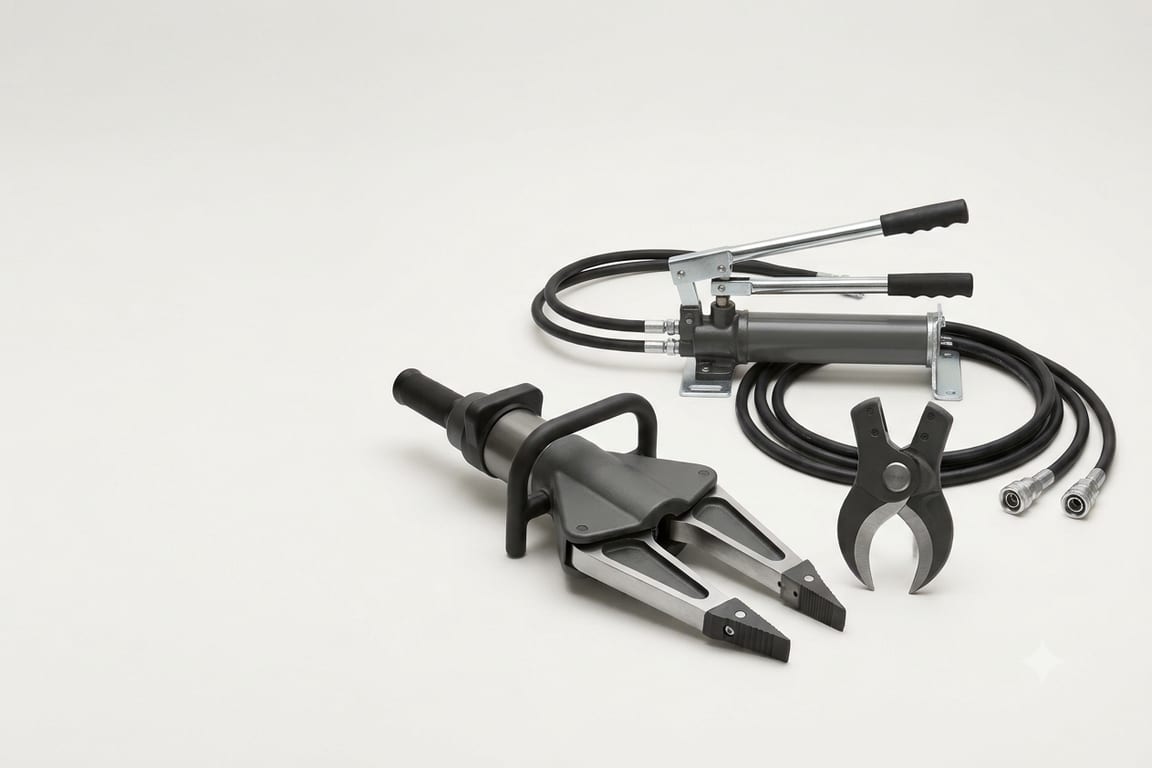
Hydraulic spreaders, cutters and rams
Powered extrication tools with their pumps and hoses. Machinery with a pressure element, where the hose and coupling age independently of the tool.
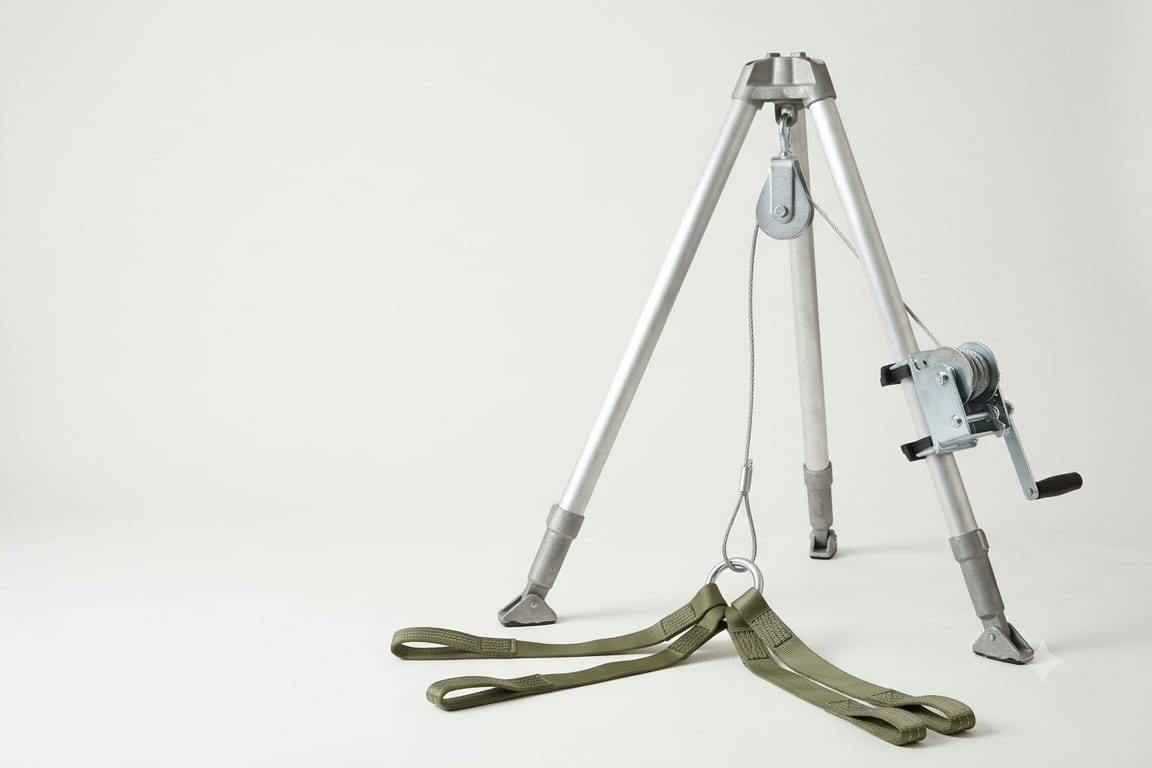
Rescue tripods, winches and retrieval kits
Confined-space tripods, davit arms and man-riding winches. Lifting equipment where the duty — a person rather than a load — is declared and not inferred from the capacity.
Rescue harnesses, lines and descent devices
Rescue harnesses, lowering and evacuation devices and their connectors. Personal protective equipment at the highest risk class, certified as a tested combination.
First aid kits and resuscitation consumables
Dressings, burn products, airways and resuscitation supplies. Sterile barriers and expiry dates, so the remaining shelf life at arrival is part of what is being bought.
Cordless tools, lighting and signalling
Battery-powered cutters, scene lighting and signalling devices. The cell is a separate product with its own transport classification, and it arrives part-charged.
Each type is confirmed on its own classification and evidence. Which of them a single certificate can cover depends on how closely the constructions and test reports match.
Documents Required
- Product Details & Model List(split by authority, not by order line)
- Datasheet & Manufacturer Details
- Lab Test Report(No report? We can arrange testing.)
- Commercial Invoice & Packing List(needed at the shipment stage, not to start)
The core set. On rescue equipment the file also turns on whether the item is read as a medical device and therefore leaves the ordinary route, the working pressure and relief setting of a hydraulic tool and the age of its hoses, the rated load and whether man-riding duty is declared on a retrieval winch, the tested combination for any harness and line, the cell chemistry and transport classification of a cordless tool battery, the sterile barrier and shelf life of a consumable, and the inspection interval the product is supplied with. Which further documents apply varies with the confirmed classification and the model scope, so the full list is issued per file rather than per category.
Sample Certificate
Illustrative layout only — not an issued certificate, and not a reproduction of one. Certificates are issued by approved conformity assessment bodies, not by BenzilaCert.
Application Examples
Typical files in this product family and the support they call for. Illustrative scenarios, not completed engagements.
- Example 01
Maker shipping a hydraulic rescue set
An illustrative manufacturer sending a spreader, a cutter, a pump and hoses as one kit. One kit, several products, because the pressure parts and the hoses are not assessed with the tool bodies.
- Example 02
Supplier importing a mixed rescue container
An illustrative civil defence supplier bringing in stretchers, tripods, cordless cutters and first-aid stock together. The stretchers and dressings are separated first, because they leave the route entirely.
Get Your SABER Certificate
Send the Saudi HS Code if you have it, the product specification and a commercial invoice, and we will come back with the likely route and what is missing.
* Where applicable. Timelines and charges shown are indicative and subject to documentary review, and government and SADAD fees are separate from conformity body, testing and consultancy charges. The applicable Saudi regulation and the exact HS code must be confirmed from the product specification against the current SABER and ZATCA classification.
BenzilaCert is an independent consultancy providing application and documentation support. It is not SASO, SABER or a certificate-issuing authority, and does not issue conformity certificates.