SABER Certificate forConveyor Systems
Belt, Roller, Chain & Modular Conveyors and Drive Units
A conveyor usually arrives as sections, a drive and a control panel on separate pallets, and becomes one machine only once it is bolted down. The conveyor you want certified is not what crosses the border, so we settle what the consignment actually is before anything is applied for.
- CertificatePCoC / SCoC*Product Certificate of Conformity & Shipment Certificate
- PCoC CostUSD 300
- Processing Time2–3 Working Days
- SADAD FeesPaid by Importer
Product & Regulation
HS Code
HS 8428
Lifting, handling, loading or unloading machinery, which is where a conveyor and its sections sit. Belting shipped by the roll falls under 4010 for rubber or 3926 for modular plastic, a loose motor under 8501 and a control panel under 8537, so one conveyor order routinely spans four headings. The Saudi code runs longer than four digits and is confirmed from the construction and the declared function, not from the product name.
Regulation
Conveyor machinery safety requirements (guarding of nip and shear points, emergency stop and isolation, belt and drive enclosure) with electrical requirements applying separately to the drive and control equipment; treatment of site-assembled lines under review
Candidate review point, not a declaration that this route applies. Confirmed against the current regulation and model scope before anything is claimed.
Product
A complete conveyor supplied ready to run, sections and components shipped loose for assembly on site, or a drive unit, control panel or belting supplied on its own
What the assessment reads the product as, which decides the evidence it asks for.
Types of Conveyor Systems
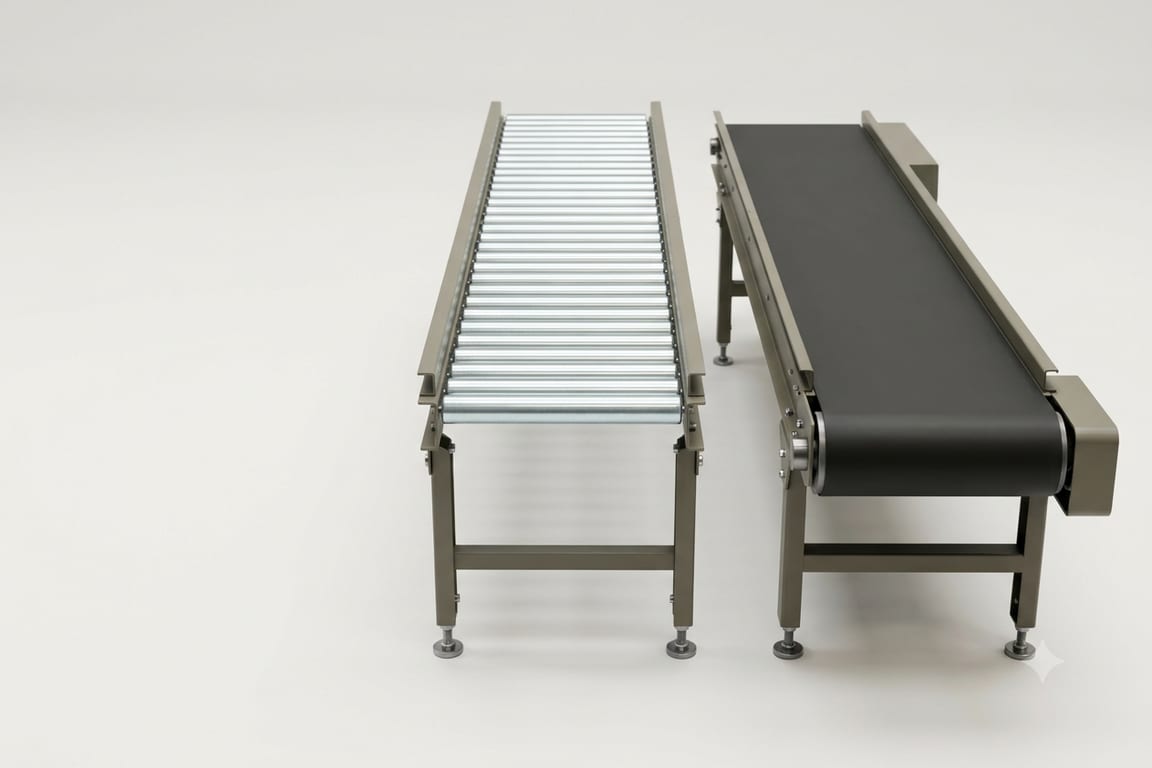
Belt conveyors
Powered flat and troughed belt lines. Rated on belt width, speed and load per metre, and the belting is a consumable listed apart from the machine.
Roller and gravity conveyors
Unpowered roller tracks and powered roller sections. The gravity sections carry no electrical content at all, which puts them on a different footing from the rest of the order.
Chain, slat and modular belt conveyors
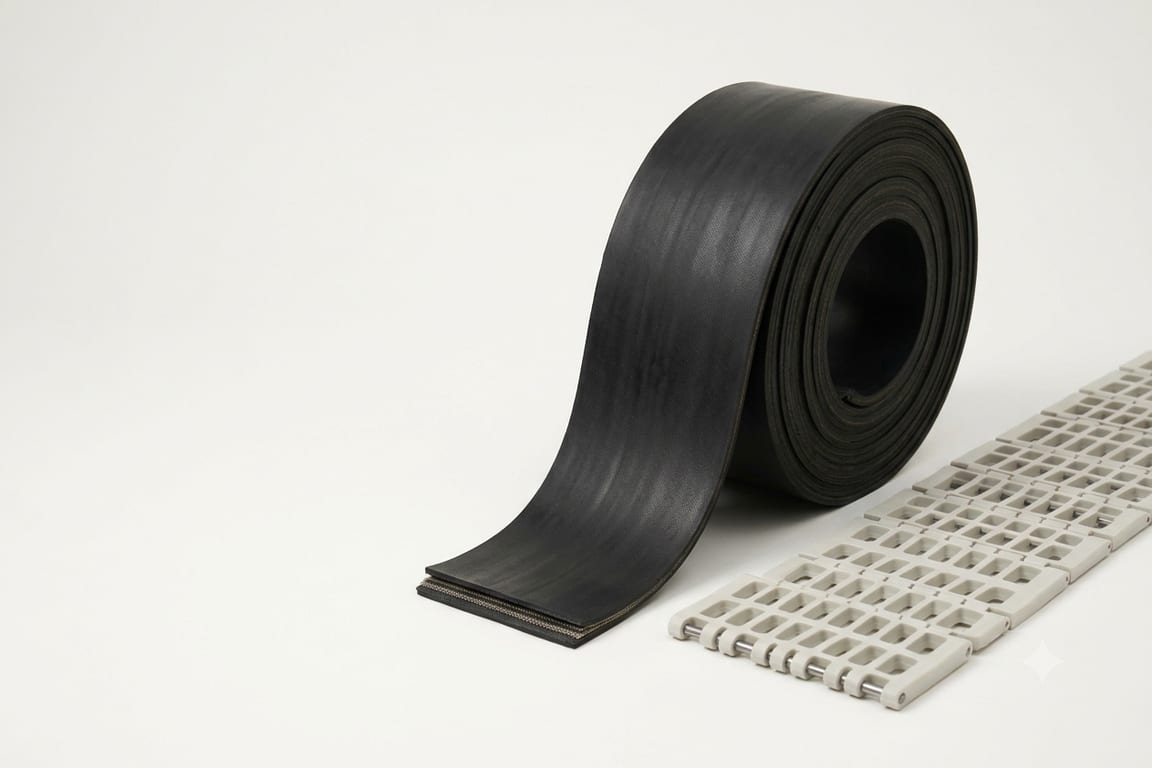
Chain-driven slat lines and interlocked plastic modular belt. Common in food and bottling, where the belt material is a food-contact question as well as a mechanical one.
Screw, bucket and vibrating conveyors
Enclosed conveying for bulk powders, grain and aggregate. Fully enclosed by design, so dust and the sealed housing carry the file rather than open guarding.
Drive units, motors and control panels
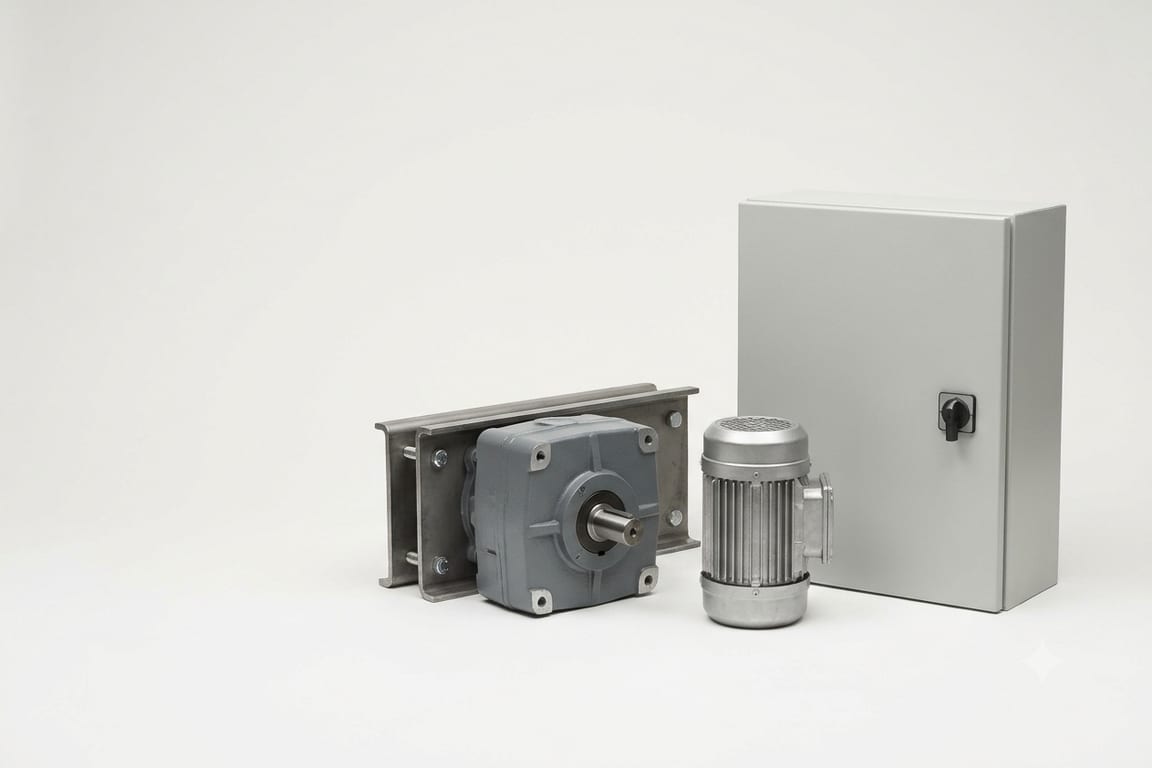
Geared drive units, variable-speed drives and the conveyor control panel. Separate electrical products inside the same crate, and usually the items that hold a consignment up.
Belting, rollers and idlers
Rubber and modular belting by the roll, plus rollers, pulleys and idlers supplied loose. Declared as material and spares, not as a machine.
Each type is confirmed on its own classification and evidence. Which of them a single certificate can cover depends on how closely the constructions and test reports match.
Documents Required
- Product Details & Model List(with the drive, control panel and belting listed as their own items)
- Datasheet & Manufacturer Details
- Lab Test Report(No report? We can arrange testing.)
- Commercial Invoice & Packing List(needed at the shipment stage, not to start)
The core set. On conveyors the file also turns on the conveying method and frame construction, the belt width, length and speed, the rated load per metre, the drive rating and supply voltage, the control and emergency-stop arrangement, and whether the line ships complete, in sections for site assembly, or as components only. Which further documents apply varies with the confirmed classification and the model scope, so the full list is issued per file rather than per category.
Sample Certificate
Illustrative layout only — not an issued certificate, and not a reproduction of one. Certificates are issued by approved conformity assessment bodies, not by BenzilaCert.
Application Examples
Typical files in this product family and the support they call for. Illustrative scenarios, not completed engagements.
- Example 01
Builder shipping a line in sections
An illustrative conveyor builder sending a 60-metre packing line as 14 frame sections, two drive units, one control panel and belting on the roll. The sections, the electrical products and the belting are declared as three different things on one invoice.
- Example 02
Importer stocking standard sections
An illustrative distributor bringing in catalogue gravity roller sections and short powered modules for resale from stock. The unpowered sections and the powered ones are separated first, because only one side of the range carries electrical evidence.
Get Your SABER Certificate
Send the Saudi HS Code if you have it, the product specification and a commercial invoice, and we will come back with the likely route and what is missing.
* Where applicable. Timelines and charges shown are indicative and subject to documentary review, and government and SADAD fees are separate from conformity body, testing and consultancy charges. The applicable Saudi regulation and the exact HS code must be confirmed from the product specification against the current SABER and ZATCA classification.
BenzilaCert is an independent consultancy providing application and documentation support. It is not SASO, SABER or a certificate-issuing authority, and does not issue conformity certificates.